Huîtres et Dom Pérignon 1990 samedi, 24 mars 2018

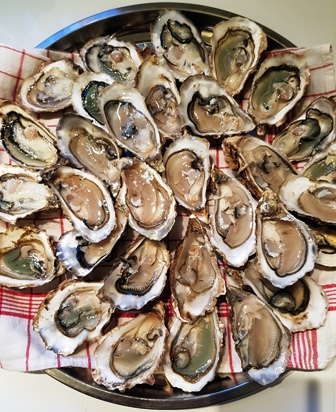
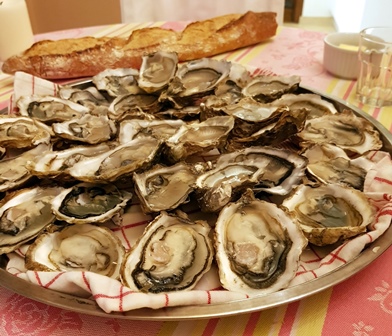
Ma femme est allée faire des courses. Elle revient et me dit : je vais avoir besoin de toi et ça commence par un « H ». Depuis que je me suis trouvé un talent d'écailler, je sais que H veut dire huître. Je vais voir de quoi il s'agit et mon intuition est bonne. Il y a une trentaine d'huîtres car le marchand a arrondi les douzaines. Je cherche le couteau qui m'a fait découvrir que je savais ouvrir les huîtres et je commence. A la deuxième huître, la pointe d'acier se casse et je n'ai plus qu'un couteau qui ne peut pas pointer. Il y a dans le tiroir un autre couteau à huître avec lequel je n'ai jamais eu de bons résultats. La suite des évènements est un chemin de croix. Toutes des demi-minutes, je maudis ce sort contraire qui me pousse à ouvrir des huîtres avec un mauvais outil. Je ne cesse de répéter qu'un bon ouvrier ne peut agir s'il n'a pas les bons outils. Je peste, et quand je peste, ça s'entend. Ma femme m'encourage tout en disant que je radote et rongeant mon frein, j'arrive au bout de l'ouverture non sans avoir laissé en route –et pas sur les huîtres – quelques gouttes de sang.

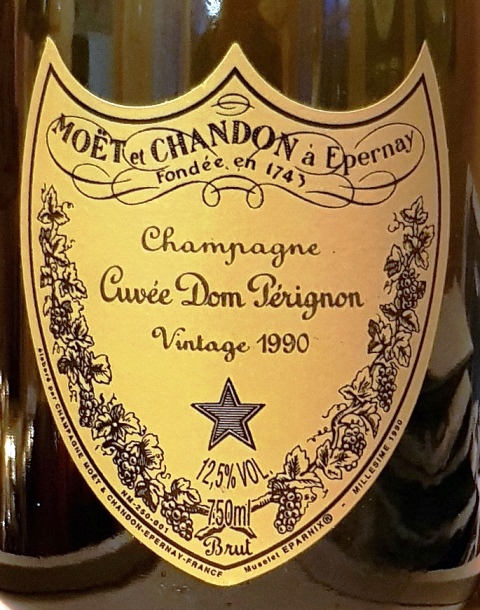
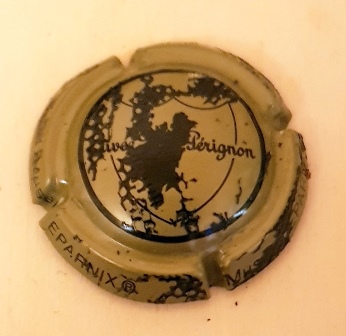
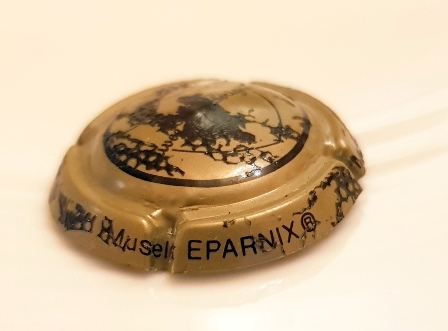
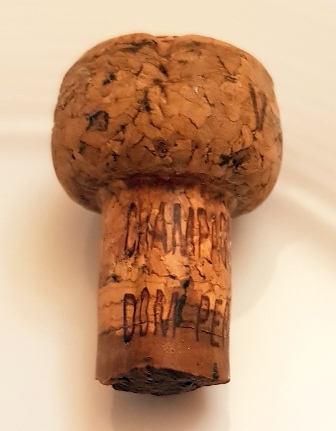
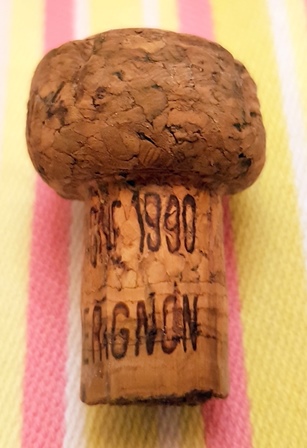
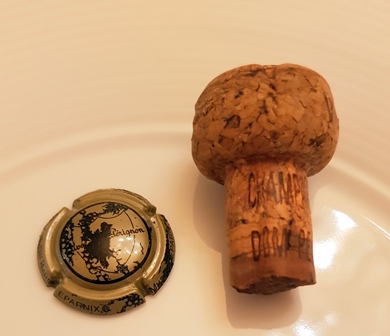
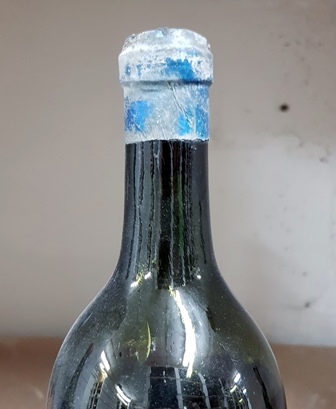
Le plateau est prêt et l'énergie que j'ai déployée mérite, à mes yeux, d'être récompensée. J'ouvre un Champagne Dom Pérignon 1990. Le bouchon est coiffé par un muselet de couleur vert olive inhabituel. Le bouchon vient sans histoire avec un beau pschitt. La couleur du champagne est claire, à peine ambrée. Dès le premier contact, je suis face à une immanence. Ce champagne est parfait. Et face à la perfection, point n'est besoin d'analyser. Ce Dom Pérignon est là, parfait, et l'important est d'en jouir. Avec l'iode de l'huître, il y a une multiplication d'énergie et d'intensité. Le champagne est électrique tant il est vif. Il y a en lui des accents floraux et romantiques mais il est aussi vineux. Ce qui me fascine c'est l'équilibre et la sérénité et la profondeur du message. J'avais aimé récemment le Dom Pérignon 2009 qui me semble avoir l'âme de Dom Pérignon, mais là, avec ce 1990, je bois la gloire de Dom Pérignon. Quelle grandeur, quelle grâce. C'est la perfection du champagne de charme et de persuasion. Avec les huîtres il n'y a aucun accompagnement, seulement du pain et du beurre. Et il faut absolument boire le champagne juste après les huîtres pour que l'iode se multiplie dans le champagne. La force vineuse est là, mais c'est le charme qui triomphe.

Je me sens prêt à ouvrir d'autres huîtres, s'il y a de telles récompenses !

qu'est ce muselet Eparnix ?
Déjeuner au Cercle Interallié dimanche, 18 mars 2018

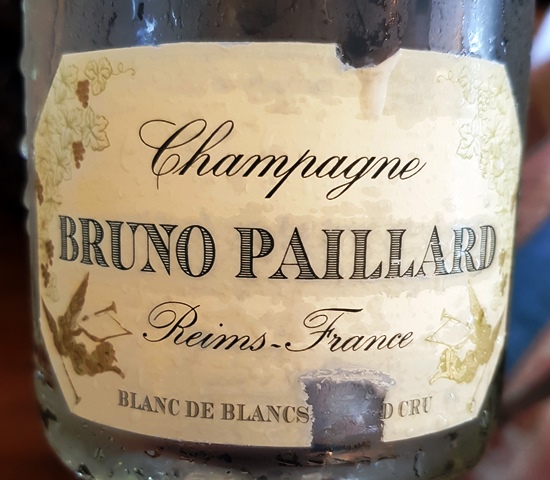
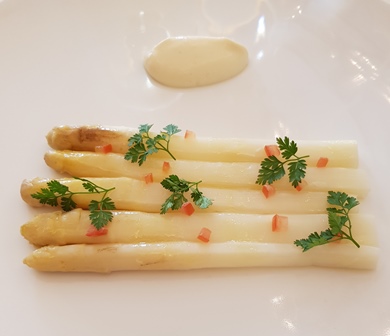
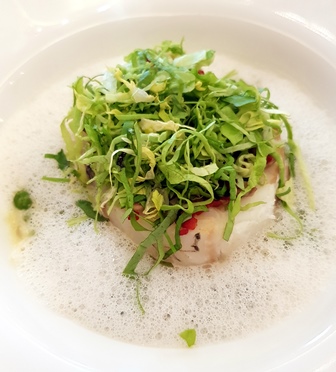
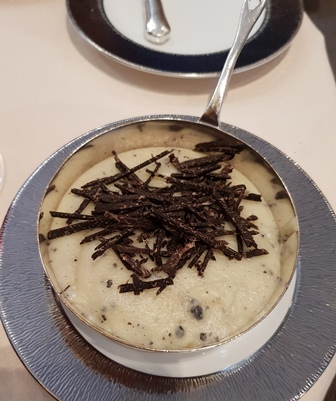
Déjeuner au Cercle Interallié à l'invitation d'un membre. L'immeuble qui abrite le Cercle est imposant et d'une décoration raffinée. Tout y est élégant. Nous allons dans la belle salle à manger du premier étage et pour une fois il fait beau et le soleil illumine le jardin. Nous prenons un champagne au verre. C'est le Champagne Bruno Paillard Blanc de Blancs sans année. J'ai une petite réserve que mes amis n'ont pas. Car même si ce champagne a une certaine ancienneté, même s'il est agréable, il lui manque une petite étincelle de génie. Nous commandons la même entrée, des petites asperges blanches qui seront les premières de l'année. Elles sont délicieuses. Personnellement je prends un cabillaud et mes amis du saumon.

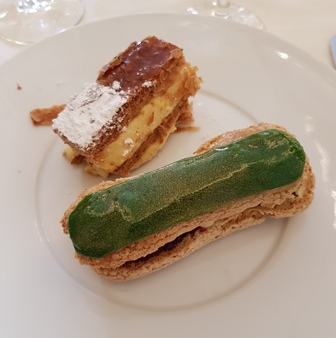
Je suggère que nous prenions du champagne et dans la belle carte je suggère le Champagne Laurent-Perrier Cuvée Grand Siècle. Et mes amis comprennent mes légères réserves précédentes, car ce champagne floral, romantique, a une forte personnalité. Il est très élégant et prenant. Sur les asperges il est vif et je l'apprécie aussi sur le cabillaud bien traité. Il reste du champagne pour les fromages et pour les desserts présentés sur un chariot, qui sont d'une telle tentation que toutes les résolutions s'effondrent. Le millefeuille est un délicieux péché. L'ambiance de ce Cercle est une des plus agréables qui soient.

Discovery of Salon 2007 dimanche, 18 mars 2018

Didier Depond, president of the Champagnes Salon and Delamotte had suggested that we have lunch together. He is an extremely busy man so the date of the appointment has coughed three times. We meet at the restaurant Le Petit Sommelier which is known for its high quality wine list. What I did not notice until then was that the proximity of the Montparnasse train station means that many travelers come with their suitcases piling up in all the open spaces. My jacket given to the staff was distorted by this pyramid of suitcases.

When I arrive, I ask the table chosen by Mr. Depond and the pretty Manon, sommelière that I did not know, said to me: "I saw your brother last night". I ask her: "Jean Audouze?" And she answers yes, astonished at this coincidence. This supposes that Didier Depond announced that I would be his guest and that she had the information. Being in advance I have time to reread the wine list and dream of a thousand good wines that deserve our interest.

Didier arrives, we kiss, and he asks Manon to serve the wines he has already provided. He serves the Champagne Salon 2007 which he tells me that I will be the first in the world to taste it. We know that the great seducers say to their conquests that this is the first time they fall in love, but why not believe what Didier told me. We choose our menus. For both of us there will be oysters, then the hearty platter of pork and other foie gras. My meat will be a leg of lamb with garlic.

We will compare the 2007 Salon Champagne in two different glasses. With one, the Champagne Salon is wide and friendly. With the other he is sharp and intense. Well, clever who would say which is better but we will continue the other champagnes with the glass that makes the 2007 sharp and intense.

The 2007 Salon's nose is impressive, lively and salty. In the mouth we look at each other because this 2007 is the absolute definition of a big Salon. He has everything for him. Didier willingly compares to the 1997 he loves. I join him. It is not a champagne of affirmation, even if it imposes itself, but it has all the subtle grace of Salon. It's a wonderful champagne. With oysters the association is a treat because it is the salt that brings them together. And the oysters are delicious.

On pork, on foie gras, the Salon is perfect but there are no surprises. With small sardines the agreement is major.

I am thrilled because this 2007 promises to be huge and its DNA is that of the most beautiful Salon.

On the meat Didier served Champagne Delamotte Blanc de Blancs 2008. It is a beautiful champagne wide. We are not at the Salon level but we must not compare because this Delamotte has a very beautiful complexity. It is generous and easygoing.

Didier also serves the Champagne Delamotte Blanc de Blancs Collection 1999. This champagne was disgorged about 18 months ago. He is brilliant. It's good champagne that we taste greedily because we know that we are facing a generous champagne and fine. At this point, the 1999 is much more interesting than the 2008, but the 2008 has a great future. There is in 1999 a certain race that makes it a very flexible champagne for gastronomy and very racy for drinking alone.

I brought in my musette the rest of Cyprus 1869 drunk until then with my son. It is the chocolate cake that will be the least problematic dessert for this wine. It is still amazing, with an amazing freshness and acidity and more velvety mid-palate notes. It did not vary by one gram. It must be said that in 149 years, it had time to assemble itself. I give a glass to Manon who is conquered and other friendly staff members a taste.

The food in the restaurant is simple but good because the products are good. The oysters in particular are superb. The atmosphere is that of a bistro but we can see that there are wine lovers who enjoy the excellent wine list. With Didier we found childhood memories that are common despite the fact that a generation separates us.

Didier was generous and managed to highlight the relevance of Delamotte champagnes. And he made me the gift of making me discover the Salon 2007 which will be in the history of Salon a great romantic and floral Salon, of crazy distinction. It is the soul of Salon that he delivered us in this extremely friendly meal.

(pictures are in the article in French, just below)

Découverte du champagne Salon 2007 deux mois avant sa commercialisation jeudi, 15 mars 2018

Didier Depond, président des champagnes Salon et Delamotte m'avait proposé que nous déjeunions ensemble. C'est un homme extrêmement occupé aussi la date du rendez-vous a toussoté trois fois. Nous nous retrouvons au restaurant Le Petit Sommelier qui est connu pour sa carte des vins de grande qualité. Ce que je n'avais pas remarqué jusqu'alors, c'est que la proximité de la gare Montparnasse entraîne que de nombreux voyageurs viennent avec leurs valises qui s'amoncellent dans tous les espaces libres. Mon blouson s'est vu distordu par cette pyramide de valises.

Lorsque j'arrive, je demande la table retenue par M. Depond et la jolie Manon, sommelière que je ne connaissais pas, me dit : « j'ai vu votre frère hier soir ». Je lui demande : « Jean Audouze ? » et elle me répond oui, étonnée elle-même de cette coïncidence. Cela suppose que Didier Depond ait annoncé que je serais son invité et qu'elle en ait eu l'information. Etant en avance j'ai le temps de relire la carte des vins et d'imaginer mille pépites qui mériteraient notre intérêt.
Didier arrive, nous nous embrassons, et il demande qu'on nous serve les vins qu'il a déjà fait préparer. Il fait servir le Champagne Salon 2007 dont il me dit que je serai le premier au monde à le goûter. On sait que les grands séducteurs disent à leurs conquêtes que c'est la première fois qu'ils tombent amoureux, mais pourquoi ne pas croire ce que Didier me dit. Nous choisissons nos menus. Pour nous deux il y aura des huîtres, puis le copieux plateau de cochonnailles et autres foies gras. Ma viande sera un gigot d'agneau aillé.

Nous allons comparer le Champagne Salon 2007 dans deux verres différents. Avec l'un, le champagne Salon est large et convivial. Avec l'autre il est vif et tranchant. Bien malin qui dirait lequel est préférable mais nous continuerons les autres champagnes avec le verre qui rend le 2007 vif et tranchant.

Le nez du Salon 2007 est impressionnant, vif et salin. En bouche nous nous regardons Didier et moi car ce 2007 est la définition absolue d'un grand Salon. Il a tout pour lui. Didier le compare volontiers au 1997 qu'il adore. Je le rejoins. Ce n'est pas un champagne d'affirmation, même s'il en impose, mais c'est toute la grâce subtile de Salon. C'est un magnifique champagne. Avec les huîtres l'accord est un régal car c'est le sel qui les réunit. Et les huîtres sont délicieuses.

Sur les cochonnailles, sur le foie gras, le Salon est parfait mais il n'y a aucune surprise. Avec de petites sardines l'accord est majeur.

Je suis aux anges, car ce 2007 promet d'être immense et son ADN est celui des plus beaux Salon.

Sur la viande Didier fait servir le Champagne Delamotte Blanc de Blancs 2008. C'est un superbe champagne bien large. On n'est pas au niveau du Salon mais il ne faut pas comparer car ce Delamotte a une très belle complexité. Il est généreux et facile à vivre.

Didier fait aussi servir le Champagne Delamotte Blanc de Blancs Collection 1999. Ce champagne a été dégorgé il y a environ 18 mois. Il est brillant. C'est du bon champagne que l'on goûte goulûment car on sait qu'on est en face d'un champagne généreux et fin. A ce stade, le 1999 est beaucoup plus intéressant que le 2008, mais le 2008 a un grand avenir. Il y a dans le 1999 une race certaine qui en fait un champagne très flexible pour les accords et très racé pour le boire seul.

J'ai apporté dans ma musette le reste du Chypre 1869 bu jusqu'alors avec mon fils. C'est le gâteau au chocolat qui sera le dessert le moins problématique pour ce vin. Il est toujours aussi étonnant, avec en attaque une fraîcheur et une acidité étonnantes et des notes plus veloutées en milieu de bouche. Il n'a pas varié d'un gramme. Il faut dire qu'en 149 ans, il a eu le temps de s'assembler. Je fais goûter à Manon qui est conquise ainsi qu'aux autres membres du personnel extrêmement sympathiques.

La cuisine du restaurant est simple mais bonne car les produits sont bons. Les huîtres en particulier sont superbes. L'ambiance est celle d'un bistrot mais on voit bien qu'il y a des amateurs de vins qui profitent de l'excellente carte des vins. Avec Didier nous nous sommes trouvé des souvenirs d'enfance qui sont communs malgré le fait qu'une génération nous sépare.

Didier a été généreux et a réussi à mettre en valeur la pertinence des champagnes Delamotte. Et il m'a fait le cadeau de me faire découvrir le Salon 2007 qui sera dans l'histoire de Salon un grand Salon romantique et floral, de distinction folle. C'est l'âme de Salon qu'il nous a délivrée en ce repas extrêmement amical.

la bouteille de Salon 2007 que Didier Depond m'a dédicacée les photos prises par Didier pendant le repas

An incredible « unknown soldier » probably prephylloxeric, was immense lundi, 12 mars 2018

An incredible "unknown soldier" probably prephylloxeric, was immense

I bought a cellar which is a cave of Ali Baba, because there are wines that are part of dear desires. All are over 140 years old. The wines arrived in my cellar and I put them in areas that I organized to make me dream. Of course, when my son comes to Paris, I want urgently to show him. We spend long hours looking at the bottles and putting nearby the bottles I already had that are from the same origins. We are talking, we are like in a dream and I think of tonight's dinner. My wife being in the south, we will be two. It is tempting to take a bottle in the new shipment and in a natural way I take the lowest of the many bottles of Cyprus 1869 wines that are one hundred years older than my son. A bottle, the only one, has a level at half height. I take it.

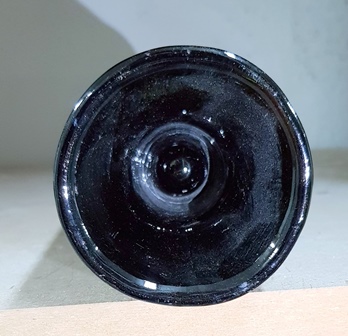
We need big champagne and it will be a beautiful 1973. To begin, we will take champagne more likely without risk and it will be a 2005. It lacks something else. When a young collaborator helped me organize my cellar, she had stored unidentifiable wines in specific places. In one of the places, the bottle ass that I see is likely to be from the 19th century. Depth, irregularity of the circumference of the bottom of bottle, all sign the seniority. I look at the bottle without indication. It must be a white Burgundy whose color is beautiful. Another bottle has the same bottom but not quite. That's when I see a Bordeaux bottle infinitely smaller than the broad and Burgundian dresses, and what strikes me is the incredible finesse of the crease of the bottom of the bottle, between the cylinder and the ass. The ass is deep but everything in the bottle is frail. With the help of a lamp I try to see the color of the wine and I have a click. It is this bottle that must be chosen.

We go home and at 5 pm I open the bottles. The Bordeaux wine capsule is blue, a dragonfly blue softened by the years. And on the top of the capsule there is a marine anchor on which rests a bunch of grapes. Nothing else is visible. Classically the cork is crumbling because there is in the middle of the neck an extra thickness that strangles the cap. We must tear the plug so that it is removed. Even in crumbs we see that the quality of the cork is very beautiful. The level in the bottle is mid-shoulder. When I feel, I am surprised that there is such a generous red fruit. The promise is beautiful too is it appropriate to leave the bottle quiet in a rather cool atmosphere.

The bottle of 1869 Cyprus, which has lost nearly half of its content, has on the contact disc between the surface and the glass a myriad of white bubbles which are frankly uninviting. But it must be said that I chose the most injured of all the bottles. The cap is covered with a huge light wax hat that is cut with a knife. The cap is not two centimeters long and as often with this type of wine, it has twisted, the bottom of the cap having nothing horizontal. The cap smells of vinegar and the wine in the bottle smells of vinegar. It seems bad to me.

For the aperitif we will have small sardines, sausage, pâté, and for the dish we will have delicious ribs of lamb prepared with many spices of the south and for the continuation, we will improvise.

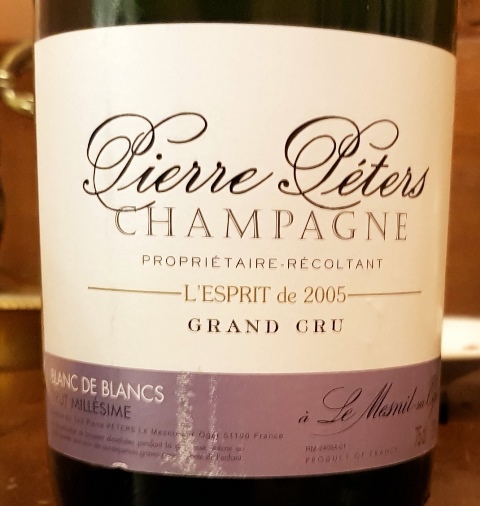
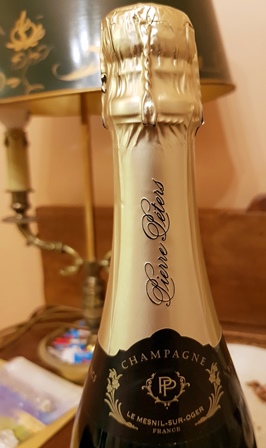
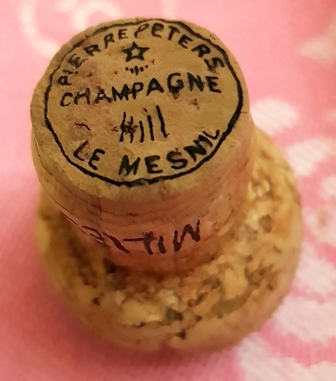
Pierre Péters Blanc de Blancs Grand Cru Champagne The spirit of 2005 has a color that is darker than I could imagine. The bubble is active. The champagne is beautiful, but what is it young! I lost the taste for so young champagnes. The more time passes and the more the qualities of this Blanc de Blancs are shown. It is with the sardines that it is the most alive, more than with the sausage or the pâté. It's really a champagne of gastronomy.

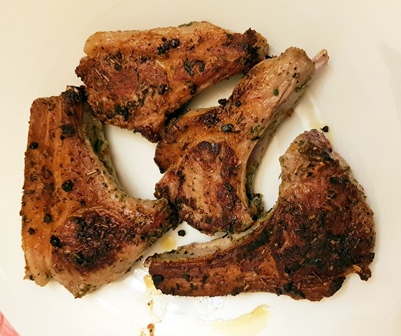
My son cooks lamb chops and we taste the unknown wine. The nose evokes red fruits. It is generous. On the palate, the wine is a miracle. It has intonations of beautiful red fruits with an exemplary freshness. Its length is unreal. Immediately I think of Chateau Margaux 1928 because of the red fruits and the feminine side of the wine, but it is clear that the wine is much older, because the bottle is from the 19th century and cannot be a re-used bottle. So I'm looking for what it is. It is a wine so feminine that it evokes me a Margaux. But it has such an aromatic persistence and such freshness that it must be an eternal wine. And the idea comes to me that it could be a prephylloxeric wine. As it is necessarily the 19th century, as it has the nobility of a first grand cru classé, why not imagine that it is a Chateau Margaux 1870 or a prephylloxeric year of this castle. And that's when I remember that I have a Château Margaux 1887 whose capsule is blue. I'll have to go look in the cellar. But for now I want it to be a Chateau Margaux 1870. No one can contradict me, I do not try to convince anyone, but there is an important point that deserves to be reported. I drink with my son many very great wines. This is the first time I say to him during a meal: "Let's be silent and concentrate on this wine". I would not be far from thinking it's the biggest Bordeaux I've drunk, but if I want to be objective, Mouton 1945 or Lafite 1900 have more presence. But in terms of charm, I do not see any wine that could offer such a beautiful romantic fruit associated with such length. The prephylloxeric character is felt because of the youth of the wine and especially the impression that this eternal wine would be the same if it was open in one hundred years.

My son and I are knocked out. We look at each other as two athletes who have just realized that they have finished running a marathon. We know that we have accomplished a feat. That's what we feel. And all the more so because we do not know what we drink. This moment of grace has a particular importance.

After this unforgettable moment that justifies more than ever the risks that I took to buy bottles that are of no interest to many people, what to drink? The Cyprus wine, which had long held a belt of white bubbles, lost them. The wine looks much more pure. And there is no longer any sketch of vinegar. But after a wine as extraordinary as this Bordeaux, the Cyprus wine, even getting rid of its defects, will not shine. Also, as the aeration makes him progress, let him one more day to aerate.
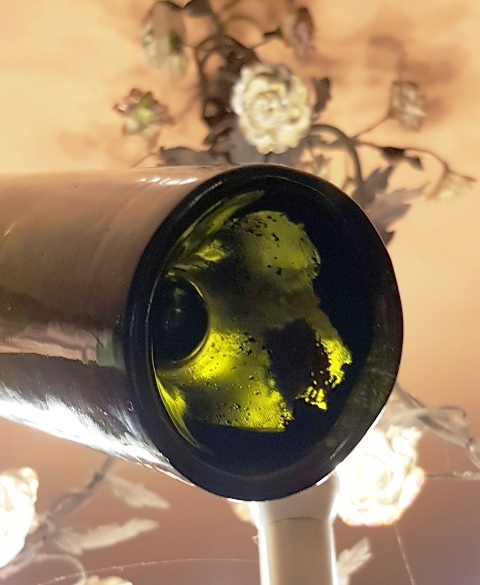
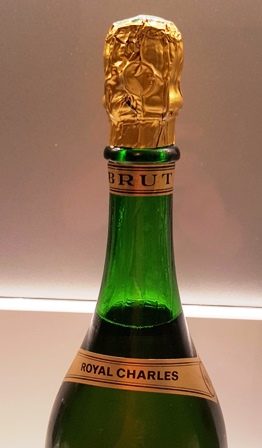
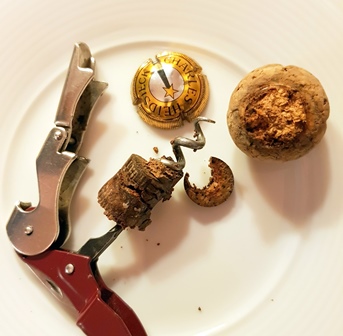
I open the Charles Heidsieck Royal Charles Brut Champagne 1973. The bottle is beautiful and very original. His label is like new. The stopper breaks and even with the corkscrew it cannot be prevented that the cork bottom also breaks. The color of the champagne is magnificent; a light blond gold, the imperceptible bubble at the exit of the cap gives way to a sparkling very clear and very active. The champagne is lively, vibrant, and sharp as the blade of a samurai sword. It is huge and shows that if the champagne Péters has great qualities, it cannot fight against the effect so beneficial of age. I take some Camembert on the Royal Charles. We then nibble biscuits and chat about everything and anything.

It seems to me that we have probably never been so moved by a wine like this unknown Bordeaux with incredible red fruit and the length and freshness of the greatest wines that we have drunk.

(pictures of this dinner are in the article below)

Un incroyable « soldat inconnu » probablement préphylloxérique lundi, 12 mars 2018

J'ai acheté une cave qui est une caverne d'Ali Baba, car s'y trouvent des vins qui font partie de chers désirs. Tous ont plus de 140 ans. Les vins sont arrivés dans ma cave et je les range dans des zones que j'ai organisées pour qu'ils me fassent rêver. Bien évidemment, lorsque mon fils vient à Paris, je n'ai qu'une envie, c'est de lui montrer. Nous passons de longues heures à regarder les bouteilles et à ranger près d'elles les bouteilles que j'avais déjà et qui sont de mêmes origines. Nous parlons, nous nous extasions et je pense alors au dîner de ce soir. Ma femme étant dans le sud, nous serons deux. Il est tentant de prendre une bouteille dans le nouvel arrivage et de façon assez naturelle je prends la plus basse des nombreuses bouteilles de Chypre 1869 vins qui sont plus vieilles de cent ans que mon fils. Une bouteille, la seule, a un niveau à mi-hauteur. Je la prends.

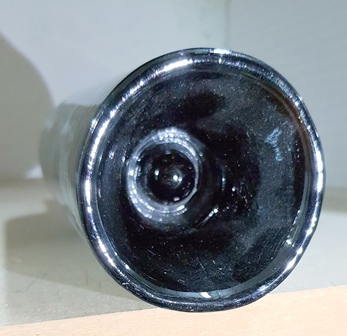
Il faut ensuite un grand champagne et ce sera un beau 1973. Pour commencer, on prendra un champagne plus probablement sans risque et ce sera un 2005. Il manque autre chose. Lorsqu'une jeune collaboratrice m'avait aidé à organiser ma cave, elle avait stocké dans des cases des vins impossibles à identifier. Dans une des cases, le cul de bouteille que je vois a toutes chances d'être du 19ème siècle. Profondeur, irrégularité de la circonférence du bas de bouteille, tout signe l'ancienneté. Je regarde la bouteille sans indication. Ce doit être un blanc de Bourgogne dont la couleur est belle. Une autre bouteille a le même fondement mais pas tout à fait. C'est alors que je vois une bouteille bordelaise infiniment plus menue que les larges et fessues bourguignonnes, et ce qui me frappe, c'est la finesse incroyable du pli de bas de bouteille, entre le cylindre et le cul. Le cul est profond mais tout dans la bouteille est frêle. Avec l'aide d'une lampe j'essaie de voir la couleur du vin et j'ai un déclic. C'est cette bouteille qu'il faut choisir.

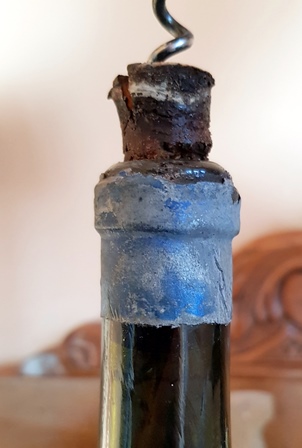
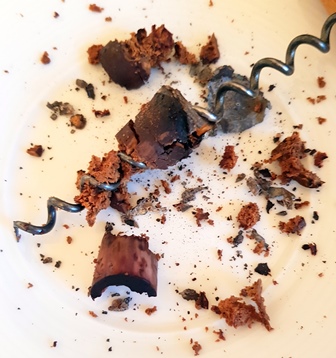
Nous rentrons à la maison et à 17 heures j'ouvre les bouteilles. La capsule du vin bordelais est bleue, d'un bleu de libellule adouci par les ans. Et sur le haut de la capsule il y a une ancre de marine sur laquelle repose une grappe de raisin. Rien d'autre n'est visible. Fort classiquement le bouchon vient en miettes car il y a au milieu du goulot une surépaisseur qui étrangle le bouchon. On doit donc déchirer le bouchon pour qu'il s'extirpe. Même en miettes on voit que la qualité du liège est très belle. Le niveau dans la bouteille est à mi- épaule. Lorsque je sens, je suis surpris qu'il y ait un fruit rouge aussi généreux. La promesse est belle aussi est-ce opportun de laisser la bouteille tranquille dans une atmosphère assez fraîche.

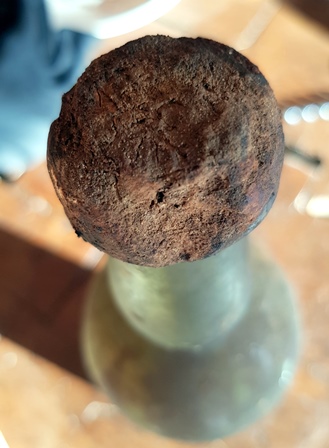
La bouteille de Chypre 1869 qui a perdu près de la moitié de son contenu a sur le disque de contact entre la surface et le verre une myriade de bulles blanches qui sont franchement peu engageantes. Mais il faut savoir que j'ai choisi la plus blessée de toutes les bouteilles. Le bouchon est recouvert d'un énorme chapeau de cire très légère qui se découpe au couteau. Le bouchon ne fait pas deux centimètres de longueur et comme souvent avec ce type de vins, il s'est twisté, le bas du bouchon n'ayant rien d'horizontal. Le bouchon sent le vinaigre et le vin dans la bouteille sent le vinaigre. Ça me paraît mal parti.

Pour l'apéritif nous aurons des petites sardines, du saucisson, du pâté, et pour le plat nous aurons de délicieuses côtes d'agneau préparées avec moult épices du midi et pour la suite, nous improviserons.

Le Champagne Pierre Péters Blanc de Blancs Grand Cru L'esprit de 2005 a une couleur qui est plus foncée que ce que je pouvais imaginer. La bulle est active. Le champagne est beau, mais qu'est-ce qu'il est jeune ! J'ai perdu le goût pour des champagnes si jeunes. Plus le temps passe et plus les qualités de ce blanc de blancs se montrent. C'est avec les sardines qu'il est le plus vif, plus qu'avec le saucisson ou le pâté. C'est vraiment un champagne de gastronomie.

Mon fils cuit les côtelettes d'agneau et nous goûtons le vin inconnu. Le nez évoque des fruits rouges. Il est généreux. En bouche, le vin est un miracle. Il a des intonations de beaux fruits rouges avec une fraîcheur exemplaire. Sa longueur est irréelle. Immédiatement je pense à Château Margaux 1928 à cause des fruits rouges et du côté féminin du vin, mais force est de constater que le vin est beaucoup plus vieux, car la bouteille est du 19ème siècle et ne peut pas être une bouteille de réemploi. Alors je cherche. C'est un vin si féminin qu'il m'évoque un margaux. Mais il a une telle persistance aromatique et une telle fraîcheur que ce doit être un vin éternel. Et l'idée me vient qu'il puisse s'agir d'un vin préphylloxérique. Comme il est forcément du 19ème siècle, comme il a la noblesse d'un premier grand cru classé, pourquoi ne pas imaginer qu'il s'agisse d'un Château Margaux 1870 ou d'une année préphylloxérique de ce château. Et c'est alors que je me souviens que j'ai un Château Margaux 1887 dont la capsule est bleue. Il faudra que j'aille la regarder en cave. Mais pour l'instant j'ai envie que ce soit un Château Margaux 1870. Personne ne pourra me contredire, je ne cherche à convaincre personne, mais il y a un point important qui mérite d'être signalé. Je bois avec mon fils de nombreux très grands vins. C'est la première fois que je lui dis en cours de repas : « taisons-nous et recueillons-nous sur ce vin ». Je ne serais pas loin de penser que c'est le plus grand bordeaux que j'aie bu, mais si l'on veut être objectif, Mouton 1945 ou Lafite 1900 ont plus de charpente. Mais au niveau du charme, je ne vois pas de vin qui pourrait offrir un si beau fruit romantique associé à une telle longueur. Le caractère préphylloxérique est ressenti à cause de la jeunesse du vin et surtout de l'impression que ce vin éternel serait le même s'il était ouvert dans cent ans.

Mon fils et moi, nous sommes KO. Nous nous regardons comme deux athlètes qui viennent de se rendre compte qu'ils ont fini de courir un Marathon. On sait qu'on a accompli un exploit. C'est ce que nous ressentons. Et c'est d'autant plus fort que nous ne savons pas ce que nous buvons. Cet instant de grâce a une importance particulière.

Après ce moment inoubliable qui justifie plus que jamais les risques que j'ai pris d'acheter des bouteilles qui n'intéressent quasiment personne, que boire ? Le vin de Chypre qui avait gardé longtemps une ceinture de bulles blanches les a perdues. Le vin paraît beaucoup plus pur. Et il n'y a plus la moindre esquisse de vinaigre. Mais après un vin aussi extraordinaire que le bordeaux, le Chypre, même débarrassé de ses défauts, ne pourra pas briller. Aussi, comme l'aération lui fait faire des progrès, laissons-lui un jour de plus à s'aérer.

J'ouvre le Champagne Royal Charles Brut Charles Heidsieck 1973. La bouteille est belle et d'une forme très originale. Son étiquette est comme neuve. Le bouchon se brise et même avec le tirebouchon on ne peut empêcher que le bas de bouchon se brise aussi. La couleur du champagne est magnifique, d'un or blond léger, la bulle imperceptible à la sortie du bouchon laisse la place à un pétillant très net et très actif. Le champagne est vif, vibrant, tranchant comme la lame d'un sabre de samouraï. Il est immense et montre que si le champagne Péters a de grandes qualités, il ne peut lutter contre l'effet si bénéfique de l'âge. Je prends un peu de camembert sur le Royal Charles. Nous grignotons ensuite des petits biscuits et nous bavardons de tout et de rien.

Il me semble que nous n'avons probablement jamais été aussi émus par un vin comme ce bordeaux inconnu aux fruits rouges invraisemblables et à la longueur et la fraîcheur des plus grands vins que nous ayons bus.

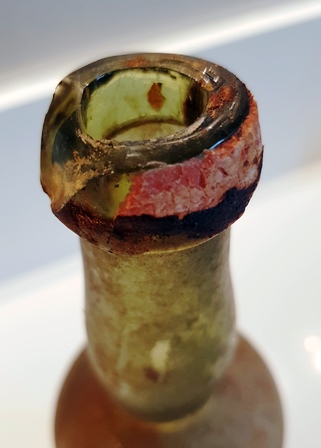
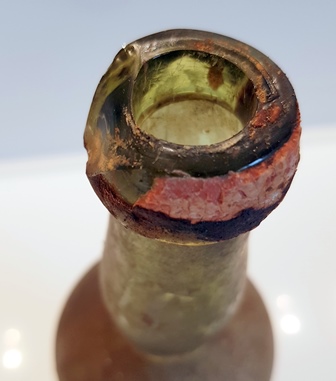
le vin de Chypre 1869 a une cassure de verre sur le goulot qui doit dater de plus d'un siècle photos prises lorsque la bouteille est vide : les deux bouteilles, celle du bordeaux étant vide les côtelettes

Magnificent lunch in restaurant Michel Rostang samedi, 24 février 2018

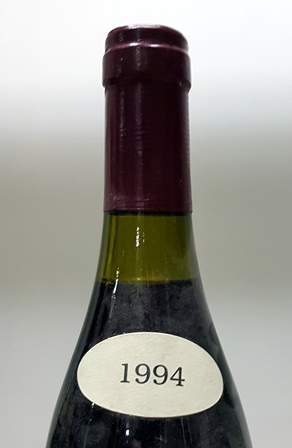
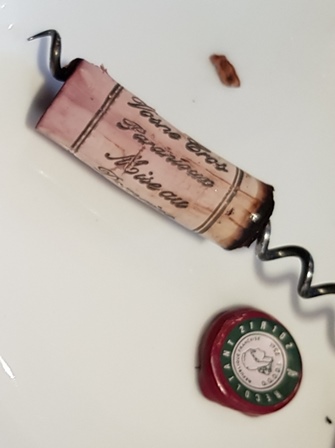
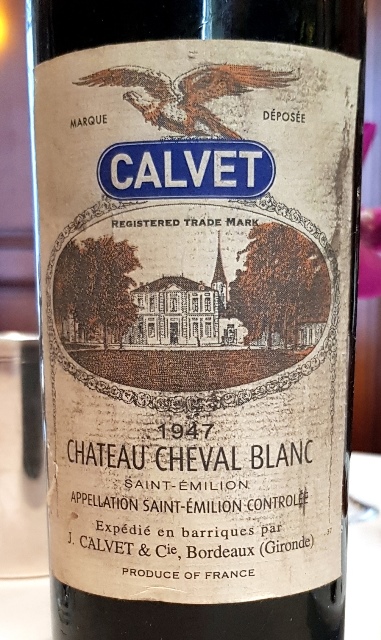
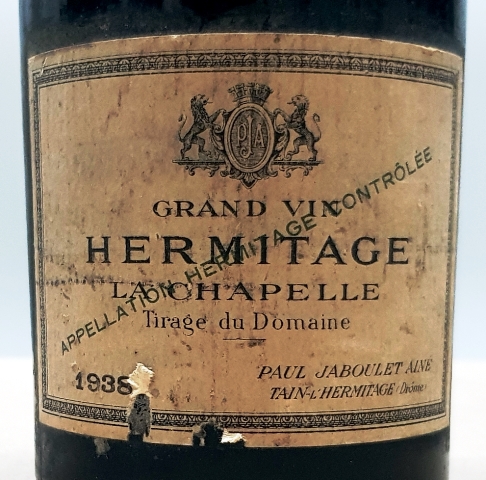
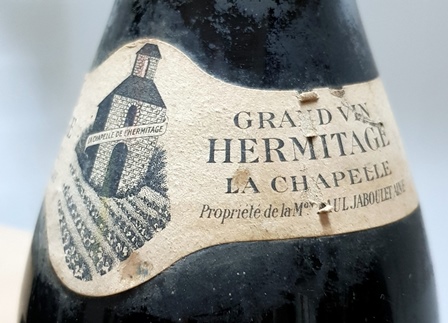
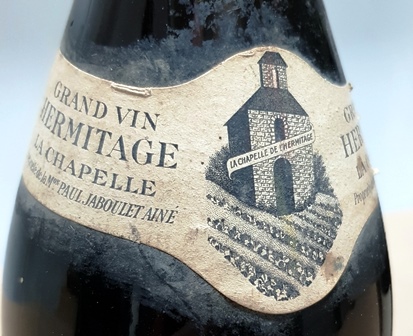
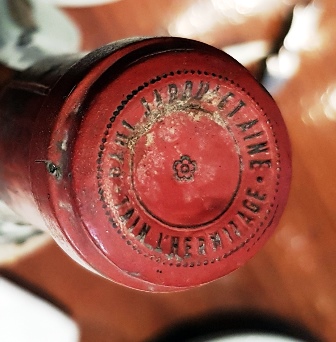
It has been a long time since I had shared beautiful bottles with my friend Tomo. We missed it. So when there is a lack, you have to catch up with prestigious bottles. We'll be two and here's the program: Cheval Blanc 1947, Vosne-Romanée Cros Parantoux Henri Jayer 1994, Hermitage La Chapelle Paul Jaboulet Senior 1938. There are only red wines, but we also need to explore unconventional tracks. I arrive at 11 am at the restaurant Michel Rostang to open the two wines in my possession, the wine of Henri Jayer from my cellar and the Hermitage that we bought together, Tomo and me. The cork of Cros Parantoux is no problem and the nose of the wine has a rare youth. The Hermitage capsule is difficult to remove entirely because the tin is very fragile and stuck to the top of the cork. The cork seems to me to have the same problems as that of the Montrose 1964: cork incredibly friable and soaked, plug stuck to the walls, and "sherry on the cake", extra thickness on part of the neck, which prevents it from going out without tearing. The cork comes in a thousand pieces but I can come out without a crumb falling into the wine. Jasmin, a young assistant sommelier from Baptiste, the excellent sommelier who follows Alain Ronzatti, the restaurant's historic sommelier, filmed the opening of this wine. The perfume of the Rhône wine seems solid and promising. I write these lines while waiting Tomo who will come with a Cheval Blanc 1947 bottled by Calvet who had received this wine in barrels. This is the first time I see this mythical wine in Calvet bottling. In the meantime, waiting for Tomo, I'm putting the menu together with Michel Rostang himself. He had asked by Baptiste which dish would advise the estate for this Hermitage 1938. The estate has no archive before 1945 and the advice given is veal rather than red meat. It turns out that Michel Rostang and his wife have lunch before the service in the room next to the kitchen and I see a nice piece of beef that is sliced to them. I do not hesitate, it will be beef and not veal. Tomo arrives a little after the twelve strokes of noon and I open the bottle. The capsule is neutral which is amazing and the cap is neutral and very short. It is a cork of modest quality. Tomo wonders if the bottle is genuine. I have not the slightest doubt because a forger who wants to make a Cheval Blanc 1947 would do otherwise. To give the Bordeaux time to breathe, we will change the order of the wines and Cros Parantoux will be served before the Cheval Blanc. The Bordeaux nose seems logical to me with the year or at least the period and with the appellation. The delicious small appetizers would be better suited to a champagne than a burgundy as noble but we taste it anyway and we are amazed. The nose of the Vosne-Romanée Cros Parantoux Henri Jayer 1994 is expressive and intense and the mouth combines with great elegance an absolute delicacy and a beautiful power. This wine tunes its complexities in all directions and never a sip is like the previous one. The wine is welcoming us and we feel that we are facing a great wine of Henri Jayer. We are happy. We are now served the truffle sandwiches that have contributed to the reputation of Michel Rostang. They are divine and it seems to me that it would be a shame to eat them with the so subtle Cros Parantoux. I therefore ask that we serve the Château Cheval Blanc 1947. The color in the glass is very dark compared to the color particularly light of the Burgundy. The nose is authentic but discreet. The mouth is lacking in size. It is a beautiful wine but it is not the legend. But you have to know how to wait. The Saint-Emilion is very consistent with the heavily truffled sandwiches and expands with them. The sweetbread that comes almost naked on the plate, which I love, will make shine the Vosne-Romanée Cros Parantoux Henri Jayer 1994. The wine finds in the agreement a beautiful energy. He keeps the delicacy and the subtlety, gains in power, and its complexities are of a rare nobility. The intense taste does not stop to mark the palate. We are thrilled.

For Château Cheval Blanc 1947, I asked Michel Rostang to prepare fillets of red mullet just pan-fried with a small sauce. The dish is served with a simplicity that delights me, with a cannelloni of Jerusalem artichoke. The red mullet plays a role of flavor enhancer for the wine that takes a width beyond measure what it showed until then. We begin to lift the veil of a possible great wine. There is no doubt that this is a real Cheval Blanc 1947, but we only have 80% of what is this legendary wine. We feast, but not the seventh heaven he should offer us.

The beef is served in slices with a truffle puree and a leaded sauce of truffle chips excites its taste. With a particular generosity the butler will cover the meat with thin slices of truffles as if a Pinatubo of truffle wanted to drown the meat. The Hermitage La Chapelle Paul Jaboulet Aîné 1938 is a bottle of rare beauty. The level is very suitable for a bottle of this age to about 5 cm. The wine that is served is quite cloudy and I do not like its earthy color so much. But the nose of the wine is pure and its taste is rich and generous. The domain Jaboulet had told Baptiste that it is likely that this 1938 looks like a 1962 which is very Burgundian and it is true that it has a beautiful delicacy but the wine is resolutely Rhone. There is indeed in the final evocations of terroir that are more Rhône than Burgundy. Meat and truffle transport this wine to beautiful heights. The rich and spontaneous wine, very straight, is of high quality. There is enough wine left for us to ask for the cheese. It will be only the Saint-Nectaire, which is the only cheese that is sufficiently sweet for these subtle wines.

I brought with me the Marc de Rosé domaine d'Ott 1929. I'm sure this Marc will be the winner of this meal. We order a soufflé Grand Marnier which, not flambé, will be suitable for alcohol. I have not to pray Tomo to confirm that the marc is by far the winner of the meal because on a very dry and strong nose it offers in the mouth an incredible sweetness. It's happiness in liquid.

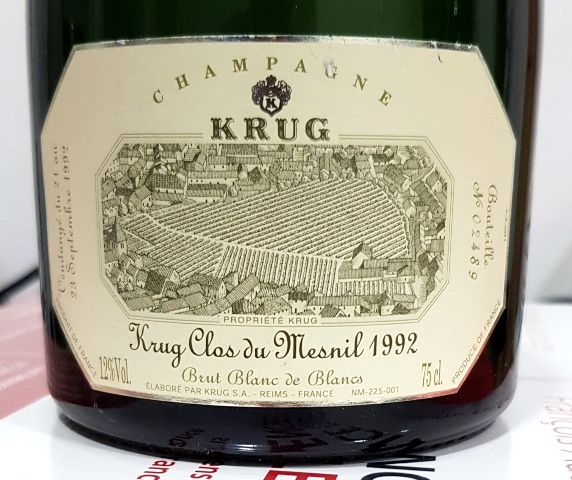
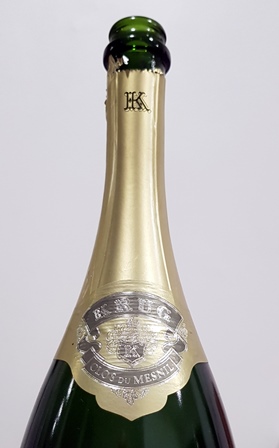
The room has slowly but surely emptied so let us invite Baptiste and Jasmin to join us. Tomo offers a Champagne Krug Clos du Mesnil 1992. It is interesting to think that 1994 which is not a great year gave us an exceptional Cros Parantoux and that 1992 which is not a great year gives us a Clos du Mesnil of a very high quality. The passing years change the situation for the great wines. We continued chatting while drinking this very young, lively champagne, which combines green notes of beautiful acidity with the nobility of a champagne of perfection.

If we have to rank what we drank which is very disparate; it will be 1: Marc de rosé of Ott 1929, 2 - Vosne-Romanée Cros Parantoux Henri Jayer 1994, 3 ex aequo Hermitage La Chapelle Paul Jaboulet Aîné 1938 and Champagne Krug Clos du Mesnil 1992, 5 - Château Cheval Blanc 1947. If a Cheval Blanc 1947 is fifth in a meal, it is that the quality of other wines is exceptional.

The restaurant Michel Rostang has all the nice features of a family home. Before the service, Michel and his wife have lunch while the whole team is struggling all around. The menu was developed with Michel, Baptiste but also with Nicolas Beaumann the chef who could not be present and I had warned that we were opening the Hermitage 1938. All the service was involved for us to have a perfect meal. Each dish highlighted the wine with which it was associated. Everyone fulfilled our wishes. It was one of the best meals we shared, Tomo and me.

(the pictures of this lunch are in the next article just below)

Merveilleux repas au restaurant Michel Rostang samedi, 24 février 2018

Il y a bien longtemps que je n’avais pas partagé de belles bouteilles avec mon ami Tomo. Cela nous manquait. Alors, quand il y a un manque, il faut se rattraper avec des flacons prestigieux. Nous serons deux et voici le programme : Cheval Blanc 1947, Vosne-Romanée Cros Parantoux Henri Jayer 1994, Hermitage La Chapelle Paul Jaboulet Aîné 1938. Il n’y a que des vins rouges, mais il faut savoir explorer aussi des pistes non conventionnelles.

J’arrive à 11 heures au restaurant Michel Rostang pour ouvrir les deux vins en ma possession, le vin d’Henri Jayer de ma cave et l’Hermitage que nous avons acheté en commun, Tomo et moi. Le bouchon du Cros Parantoux ne pose aucun problème et le nez du vin est d’une rare jeunesse. La capsule de l’Hermitage est difficile à enlever entière car l’étain est très fragile et collé au bouchon. Le bouchon me semble présenter les mêmes problèmes que celui du Montrose 1964 : liège incroyablement friable et imbibé, bouchon collé aux parois, et cerise sur le gâteau, surépaisseur sur une partie du goulot, qui l’empêche de sortir sans se déchirer. Le bouchon vient donc en mille morceaux mais j’arrive à tout sortir sans qu’une miette ne tombe dans le vin.

Jasmin, une jeune sommelière adjointe de Baptiste, le sympathique sommelier qui fait la suite d’Alain Ronzatti, l’historique sommelier du restaurant, a filmé l’ouverture de ce vin.

Le parfum du vin du Rhône me semble solide et prometteur. Je rédige ces lignes en attendant Tomo qui va venir avec un Cheval Blanc 1947 de mise Calvet qui avait reçu ce vin en barriques. C’est la première fois que je vois ce vin mythique en mise Calvet.

En attendant Tomo je mets au point le menu avec Michel Rostang lui-même. Il avait fait demander par Baptiste quel plat conseillerait le domaine pour cet Hermitage 1938. Le domaine n’a pas d’archive avant 1945 et le conseil donné est du veau plutôt que de la viande rouge.

Il se trouve que Michel Rostang et son épouse déjeunent avant le service dans la salle qui jouxte la cuisine et je vois une belle pièce de bœuf qui leur est servie en tranches. Je n’hésite pas, ce sera bœuf et non pas veau.

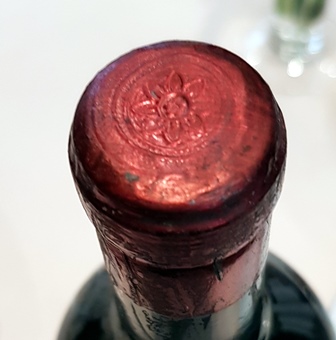
Tomo arrive un peu après les douze coups de midi et j’ouvre la bouteille. La capsule est neutre ce qui est étonnant et le bouchon est neutre et très court. C’est un bouchon de modeste qualité. Tomo se demande si la bouteille est authentique. Je n’ai pas le moindre doute car un faussaire qui voudrait faire un Cheval Blanc 1947 s’y prendrait autrement. Pour laisser au bordeaux le temps de s’aérer, on changera l’ordre des vins et le Cros Parantoux sera servi avant le Cheval Blanc. Le nez du bordeaux me paraît logique avec l’année ou du moins la période et avec l’appellation.

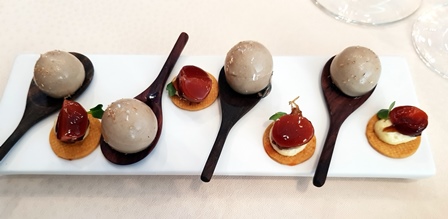
Les délicieux petits amuse-bouche seraient mieux appropriés à un champagne qu’à un bourgogne aussi noble mais nous le goûtons quand même et nous sommes émerveillés. Le nez du Vosne-Romanée Cros Parantoux Henri Jayer 1994 est expressif et intense et la bouche combine avec une grande élégance une délicatesse absolue et une belle puissance. Ce vin pianote ses complexités dans toutes les directions et jamais une gorgée ne ressemble à la précédente. Le vin est chaleureux et nous sentons que nous sommes face à un grand vin d’Henri Jayer. Nous sommes heureux.

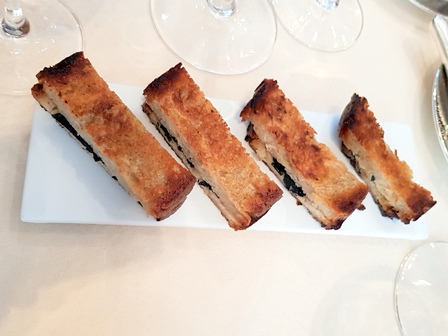
On nous sert maintenant les sandwiches à la truffe qui ont contribué à la réputation de Michel Rostang. Ils sont divins et il me semble que ce serait dommage de les manger avec le si subtil Cros Parantoux. Je demande donc qu’on nous serve le Château Cheval Blanc 1947. La couleur dans le verre est très sombre comparée à la couleur particulièrement claire du bourgogne. Le nez est authentique mais discret. La bouche manque d’ampleur. C’est un beau vin mais ce n’est pas la légende. Mais il faut savoir attendre. Le saint-émilion est très cohérent avec les sandwiches lourdement truffés et s’étoffe avec eux.

Le ris de veau qui arrive presque nu sur l’assiette, ce que j’adore, va faire briller le Vosne-Romanée Cros Parantoux Henri Jayer 1994. Le vin trouve dans l’accord une belle énergie. Il garde la délicatesse et la subtilité, gagne en puissance, et ses complexités sont d’une rare noblesse. Le goût intense n’en finit pas de marquer le palais. Nous sommes aux anges.

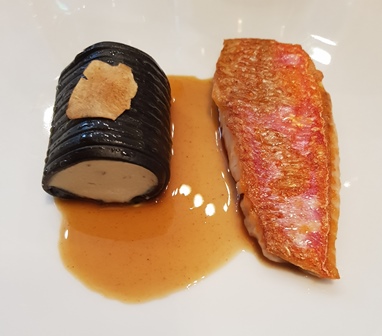
Pour le Château Cheval Blanc 1947, j’ai demandé à Michel Rostang de préparer des filets de rougets juste poêlés avec une petite sauce réduite. Le plat est servi avec une simplicité qui me ravit, avec un cannelloni de topinambour. Le rouget joue un rôle d’exhausteur de goût pour le vin qui prend une largeur sans commune mesure avec ce qu’il montrait jusqu’alors. Nous commençons à lever le voile d’un possible grand vin. Il ne fait aucun doute qu’il s’agit d’un vrai Cheval Blanc 1947, mais nous n’avons que 80% de ce qu’est ce vin de légende. Nous nous régalons, mais pas au septième ciel qu’il devrait nous offrir.

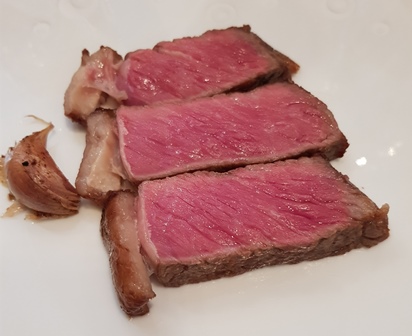
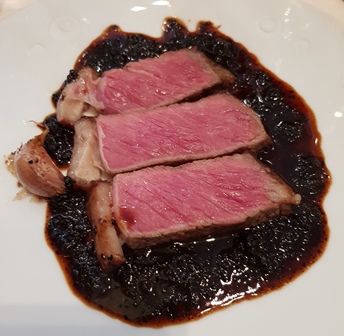
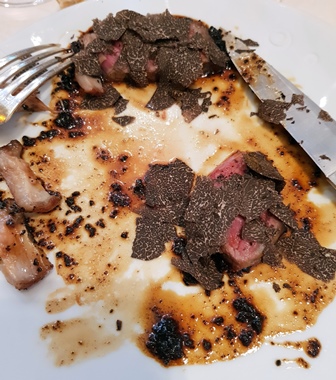
La viande de bœuf nous est servie en tranches avec une purée aux truffes et une sauce plombée de copeaux de truffe excite son goût. Avec une générosité particulière le maître d’hôtel va recouvrir la viande de fines lamelles de truffes comme si un Pinatubo de truffe voulait noyer la viande. L’Hermitage La Chapelle Paul Jaboulet Aîné 1938 est d’une bouteille d’une rare beauté. Le niveau est très convenable pour une bouteille de cet âge à 5 cm environ. Le vin qui est servi est assez trouble et je n’aime pas tellement sa couleur un peu terreuse. Mais le nez du vin est pur et son goût est riche et généreux. Le domaine Jaboulet avait dit à Baptiste qu’il est probable que ce 1938 ressemble à un 1962 qui est très bourguignon et c’est vrai qu’il a une belle délicatesse mais le vin est résolument rhodanien. Il y a en effet dans le finale des évocations de terroir qui sont plus du Rhône que de la Bourgogne. La viande et la truffe transportent ce vin à de belles hauteurs. Le vin riche et spontané, très droit, est de grande qualité. Il reste suffisamment de vin pour que nous demandions les fromages. Ce sera uniquement le saint-nectaire, qui est le seul fromage suffisamment doux pour ces vins subtils.

J’ai apporté avec moi la bouteille de Marc de rosé d’Ott 1929. Je suis sûr que ce Marc sera le gagnant de ce repas. Nous commandons un soufflé au Grand Marnier qui, n’étant pas flambé, conviendra à l’alcool. Il ne faut pas prier Tomo pour qu’il confirme que le marc est de loin le gagnant du repas car sur un nez très sec et fort il offre en bouche une invraisemblable suavité. C’est du bonheur en liquide.

La salle s’est lentement mais sûrement vidée aussi invitons-nous Baptiste et Jasmin à venir nous rejoindre. Tomo offre un Champagne Krug Clos du Mesnil 1992. C’est intéressant de penser que 1994 qui n’est pas une grande année nous a donné un Cros Parantoux exceptionnel et que 1992 qui n’est pas une grande année nous donne un Clos du Mesnil d’une qualité de très haut niveau. Les années qui passent changent la donne pour les grands vins. Nous avons continué à bavarder en buvant ce champagne très jeune, vif, qui combine des notes vertes d’une belle acidité avec la noblesse d’un champagne de perfection.

Si nous devons classer ce que nous avons bu qui est très disparate ; ce sera 1 : Marc de rosé d’Ott 1929, 2 - Vosne-Romanée Cros Parantoux Henri Jayer 1994, 3 ex aequo Hermitage La Chapelle Paul Jaboulet Aîné 1938 et Champagne Krug Clos du Mesnil 1992, 5 - Château Cheval Blanc 1947. Si un Cheval Blanc 1947 est cinquième dans un repas, c’est que la qualité des autres vins est exceptionnelle.

Le restaurant Michel Rostang a toutes les agréables caractéristiques d’une maison familiale. Avant le service, Michel et sa femme déjeunent alors que toute l’équipe se démène tout autour. Le menu a été mis au point avec Michel, Baptiste mais aussi avec Nicolas Beaumann le chef qui ne pouvait être présent et que j’avais prévenu du fait que nous ouvrions l’Hermitage 1938. Tout le service s’est impliqué pour que nous ayons un repas parfait. Chaque plat a mis en valeur le vin auquel il était associé. Tout le monde exauçait nos souhaits. Ce fut un des plus beaux repas que nous ayons partagés, Tomo et moi.

La Saint-Valentin au restaurant l’Ecu de France jeudi, 15 février 2018

La Saint-Valentin, c'est la Saint-Valentin, ça ne se discute pas, comme la saucisse de Morteau, le lièvre à la Royale ou la crêpe Suzette : lorsque l'on est face à face, il est interdit de se dérober. C'est ma femme qui a le choix des armes et ce sera le restaurant l'Ecu de France. On pourrait penser que nous aurions une table sans difficulté mais Madame Brousse m'annonça que le restaurant est complet et me passa au téléphone son mari qui eut la bonne réaction : « on s'arrangera ». Lorsque nous nous présentons à 20 heures, le parking du restaurant est déjà bien rempli. Monsieur Brousse nous accueille et nous dit : « je vous ai attribué la table que vous aimez ». Elle est tournée vers la Marne et malgré la nuit nous voyons que le niveau de l'eau est très élevé, ayant masqué une bonne partie du jardin. La cave a été inondée, mais comme les Brousse sont habitués aux crues hivernales, les bouteilles sont à l'abri et celle que je prendrai ce soir est impeccable.

Nous nous asseyons à notre table et le menu de la Saint-Valentin est ainsi composé : amuse-bouche, homard en habit rouge / foie gras truffé au caramel de betterave, espuma de mangue / velouté de potimaron, coquille Saint-Jacques et langoustines rôties, confiture de rose, caviar de hareng / baronnade de pigeonneau truffé, beurre Suzette au piment d'Espelette / pomme d'amour confite en coque de chocolat et praline rose, glace à la rose et au litchi.

L'idée de mettre des tons de rouge ou de rose sur tous les plats est charmante. Peter Delaboss le chef, est né en Haïti et sa cuisine généreuse s'est épanouie. Il garde ses penchants exubérants mais les plats sont très cohérents, fondés sur de bons produits. Le homard enveloppé dans de fines tranches de betteraves rouges arrive un peu froid, mais le plat est bon. Le foie gras est superbe, goûteux et gourmand, les coquilles dans le velouté sont parfaites. Le pigeon est d'une chair idéale, et le foie qui l'accompagne, très différent du premier, est d'une rare gourmandise. Quant à la pomme, elle est exquise. Tout fut grand, charmant, joyeux. C'est ce qu'il faut pour une Saint-Valentin.

Avant de commencer le repas, je prends un Champagne Bollinger sans année au verre. Comme la bouteille a été ouverte il y a un certain temps, le champagne est large et très plaisant, paraissant plus vieux que son âge ce qui lui convient. Il se boit bien.

J'ai choisi un Grands-Echézeaux Domaine de la Romanée Conti 2010. La bouteille arrive froide et Hervé Brousse me demande si je souhaite qu'on carafe ou qu'on réchauffe le vin. Je préfère laisser faire la nature pour que le vin s'ébroue à son rythme. Le premier contact est effectivement froid. Le nez exhale d'abord l'alcool du vin et en bouche on ne reconnaît pas le domaine. Comme une rose qui s'éveille au soleil du matin, le vin va progressivement me conquérir. Je dis « me » car je suis seul à boire. Ma femme qui a un nez pertinent pour jauger les vins sans les boire, va commenter avec moi l'éclosion du vin.

La première approche est assez dure, car le vin est froid. L'alcool est sur le devant de la scène. Ensuite viennent des fruits discrets et délicats. L'amertume est marquée, annonçant que les grappes entières sont abondantes, non éraflées. Puis progressivement, on ouvre les portes de la Romanée Conti. Le sel combiné au goût de rafle, sont les premiers marqueurs du domaine et je commence à me sentir bien. Le vin prend la bonne température et comme le chef a eu l'heureuse idée de mettre de la rose dans presque tous les plats, j'attrape au vol les beaux symboles de la Romanée Conti, la rose et le sel. Je me sens de mieux en mieux et le vin s'épanouit et devient joyeux. Attention, c'est une joie très intérieure car dans ce domaine on n'extériorise pas ses sentiments. Je bois un vin d'une rare élégance et d'une rare délicatesse. C'est si élégant et raffiné que la question de l'âge ne se pose même pas. Le vin est là, à cet instant béni par le calendrier, et mon plaisir est total.

Je verse un verre pour qu'Hervé le goûte. Hervé s'empresse d'en faire goûter à son père et je vois que le verre se retrouve sur la table d'un habitué, bien connu des Brousse.

Pour finir mon vin je demande un peu de fromage avant le dessert qui exclut tout accord et un Brie fourré à la noix est un très beau compagnon des derniers verres. C'est alors qu'arrive sur ma table un verre de Château Latour 1975 servi en demi-bouteille. C'est l'ami des restaurateurs, d'une table lointaine, qui avait goûté le bourgogne. Il me renvoie la balle avec ce bordeaux. Les deux vins ne s'excluent pas, quel que soit le sens de la dégustation. Le bordeaux est plus carré, solide, concentré. Le Grands Echézeaux a la narine plus frémissante. Le bordeaux est un seigneur en arme, le bourgogne est un poète romantique. Pour ce soir, c'est le bourgogne qui pianote de rares complexités qui emporte mon cœur, mais le Latour est un beau vin, de belle charpente et de belle vibration.

Avant de partir nous allons chaudement féliciter le chef qui a réalisé un repas très sensible, généreux, au cœur innombrable. Bravo au chef et à la famille Brousse d'avoir permis que nous passions un repas de grand bonheur.

les beaux verres gravés

dinner with friends in restaurant Pages mercredi, 31 janvier 2018

Alain, Didier, Julien and Patrice are faithful of the academy of ancient wines and among the most generous members. The excuse to meet up is that Patrice bought a nice bottle of Yquem 1947 that we agree to finance in common. Didier takes the initiative to create a dinner around large bottles brought by everyone and his friend Sintija joins us. She has no experience of ancient wines but she will learn very quickly during this meal.

I am responsible for finding a restaurant and quite naturally the choice is that of the restaurant Pages. Didier makes sure that all the bottles reach either the restaurant or my office so that I can open them at 5 pm at the restaurant. We are so crazy that there are more than three wines per person. So I will eliminate some of them based on the results of the openings. The corks are quite difficult and break into several pieces so that the opening operation lasted an hour and a half. There are very motivating fragrances.

The Champagne Comtes de Champagne Taittinger Magnum 1964 of Julien has a low level. The cape that covers the cork is eaten by mold around the top of the neck. It takes me several minutes to clean around the cork so that no dirt falls into the wine. When I can grasp the cork it comes instantly because the bottom cap disc is so narrowed that it has a size of less than half of what it should. The color is unappealing, earthy and gray. On the palate champagne without bubble is flat. Drinking gives no emotion so Julien asks for a bucket so that we can empty our glasses. I'm the only one to keep my glass because I want to see how this champagne with pale accents can evolve. During the meal I could see that the platitude of the champagne disappears, that the wine is growing, but without being able to offer a sufficient emotion. But it became drinkable.

From memory and without support of a menu that would have been printed, the menu that I developed with the chef Teshi during the opening session of the wines is: amuse-bouche in five flavors including a broth, a raw fish , a piece of onion, a piece of cauliflower and another preparation that I have not memorized / Ozaki beef in carpaccio / raw scallops with a risotto / monkfish with shells and cabbage leaves / cod with a meat sauce and small potatoes / three pieces of beef, Simmental, Charolais and Wagyu, the three having had a long-ripening / just pan-fried mangoes / dessert of the day with red fruit sorbet, pomegranate seeds and caramels.

The champagne of 1964 having had a short life on our table, I open the Champagne Brut Imperial Moët & Chandon 1959 which is one of my contributions. Under the pretty cape the cap exudes a black glue. My fingers are getting dirty quickly. When I turn the cap it breaks and the bottom gets stuck in the neck. I try to sting with my long wick but I cannot push in as the cork is dense. With a normal corkscrew I finally lift the lower part. The wine could not be in contact with the black glue. The wine served has beautiful bubbles and a magically clear color. We drink and this champagne is superb, balanced, serene, glorious like all the old Imperial Brut of Moët. He accompanies amuse-bouche who are a little too intellectual for the champagne who would like more sweet flavors. The champagne is excellent but it may be a little too classic and not enough scoundrel.

We start the series of whites. When Julien announced a Chablis Faiveley 1928, I wanted to confront him to a Chablis Faiveley 1926 that I had in cellar. The level of 1926 is low so I had taken a 1955 White Hermitage in case it would be necessary, which we will not need. Raw shells are ideal for showcasing these two whites. What strikes me right away is that these two wines have identical DNA. They have the same freshness, the same chiseled precision of the message and they differ only in volume, the 1928 being wider and the body more assertive. I had fun saying that I still prefer my wines and that the more graceful and romantic 1926 I like more but in fact both are of immense purity, the 1928 being, thanks to its year, more conquering. The performance of both wines is impressive.

Didier insisted that I open the Côtes du Rhône Brézème Domaine Pouchoulin white 1952 low and whose cork wax had been decapitated a long time ago. At the point of pointing the corkscrew the cork slipped, impossible to prevent from falling. It had to be decanted and the color was not very inviting. Served now it is drinkable but its emotion is very weak after the two chablis. Didier, defending his baby told us the esteem he has for this domaine which the 1906 he drank is a marvel. As he repeated at least ten times it was necessary to remind him that what we drink is not the 1906 but the 1952, wine rather weak.

For monkfish, it is the Bâtard-Montrachet domaine Claude Ramonet 1964 of Sintija which is served. His color is beautifully young. The wine is pure, merry with good acidity. It is delicious with the monkfish and it is especially the hulls that make it vibrate the most. It is a beautiful wine but I think it does not have the full panache of a Ramonet. He is tall but not dazzling.

We now go to the reds and I let serve three wines, two of 1928 and one of 1929. This is to be noted because these two years are legendary. The Château Carbonnieux red 1928 of Alain is an absolute marvel. Its color is blood red. The wine is rich and heavy, with an infinite velvet and a heavy grain of truffle and charcoal. This Carbonnieux is at the top of Bordeaux wine. It is absolutely huge. I am deeply moved.

When I have my lips on the Hautes Côtes de Beaune Bouchard Ainé 1929 of Didier, I get a punch to the heart. Because this wine is a seduction of an unbelievable sensuality. The Carbonnieux is King François 1st commanding the troops in combat. This Côtes de Beaune is Suzanne in the bath, it is the Odalisque of Ingres, it is the absolute seduction. I am so charmed that I lose all objectivity. We are faced with the absolute seduction of Burgundy but especially of the year 1929.

The third wine that accompanies the cod that subjugates everyone by its relevance on wines is the Corton-Grancey Grand Cru Louis Latour 1928 of Patrice. After the other two, he has a lot more trouble positioning himself. If he were alone in a meal, we would be ecstatic, but after the two sacred monsters, he lacks a little vivacity and emotion. He is still rich enough. We are thrilled to taste these three wines so perfect.

For the three pieces of beef we add two more reds. Clos Vougeot Bouchard Père & Fils 1955 of Sintija creates a fascinating break. Because all of a sudden we discover a wine 'young' (everything is relative) and incredibly Burgundy. He has this exciting rasp of wild Burgundy wine. He is lively, active and does not leave anyone indifferent. I love it.

The Châteauneuf du Pape Henri Bonneau Réserve des Célestins 1976 of Julien is struggling to pass after the other four. Julien is sad but I think he has no reason because this Châteauneuf is good. It is very good but its message seems simple after the wines of Burgundy. For him too we can say that if he was drunk alone in a meal, as for the Corton Grancey 1928, we would feast, because it has a coherence and a nice chew that are pleasant. Meats are delicious and Simmental is the most suitable for wines because it combines firmness and intensity of taste. Wagyu would be better suited to young and rich wines.

The three sauternes are served at the same time on mangoes. I start with the Château d'Yquem 1947 which we are all co-contributors since we shared the cost. This Yquem is royal, deep, complex with myriad complexities, but above all it has a boldness, a fatness, that differentiates it from the other 1947.

The Château Suduiraut 1947 of Patrice has a color as dark as the Yquem. It is powerful and very close to the quality of the Yquem. The difference is the diabolical fat of the Yquem, while the Suduiraut is an exemplary purity and a beautiful complexity too.

After these two legends, the Château La Tour Blanche 1920 that I brought is a gringalet. Its color is much clearer than that of both 1947 and it is translucent while the other two are opaque. In the mouth he is graceful, he ate some of his sugar and he is a romantic that I love. He too would be a star if he was alone on the table.

We are a little groggy not by the alcoholic load of wines but by the conjunction of so many perfect and legendary bottles. Several times we had in front of us together perfection and eternal wines, which we would find in the same state and with the same emotion if we could taste them again in fifty years from now.

Didier would be very happy if this dinner he had initiated could be counted among my wine-dinners. It would be more logical to count it as a session of the academy for ancient wines but as I opened all the wines and as I composed the menu with the chef we can make an exception for this dinner which will be the 221st. Because of this, we have to vote.

We are six to vote for our five favorite wines among the 14 of the meal. Three wines had the honors of the first place. The Yquem was nominated four times first, the Hautes Côtes de Beaune Bouchard Ainé 1929 once and the Brut Imperial Champagne Moët & Chandon 1959 once also. Ten wines out of fourteen were in the votes which is particularly brilliant.

The vote of consensus would be: 1 - Château d’Yquem 1947, 2 - Hautes Côtes de Beaune Bouchard Ainé 1929, 3 - Clos Vougeot Bouchard Père et Fils 1955, 4 - Château Carbonnieux rouge 1928, 5 - Champagne Brut Imperial Moët & Chandon 1959.

My vote is: 1 - Hautes Côtes de Beaune Bouchard Ainé 1929, 2 - Château d’Yquem 1947, 3 - Château Carbonnieux rouge 1928, 4 - Clos Vougeot Bouchard Père et Fils 1955, 5 - Château La Tour Blanche 1920.

It could stop there, but Julien takes in his bag a bottle of a Marc de rosé Domaine d'Ott 1929, in a bottle of rare beauty which is the historic bottle of wines of the estate. On the nose, the alcohol seems strong and dry. On the palate it is of a softness and a sweetness which makes that one would drink without stopping. This marc is diabolical, I love it.

Chef Teshi made dishes that stuck perfectly to the wines. Thibaut has done an intelligent service of wines and despite the smallness of the table I was able to line up the 14 glasses of wines plus alcohol in front of my place. Apart from the champagne of the beginning, all the wines presented themselves to the best of themselves. None of us imagined such a success. It was a memorable dinner that proves that the 90-year old wines still have a lot of energy.

(pictures can be seen in the next article in French)