Votes of the consensus compared to my votes for 186 dinners dimanche, 24 juin 2018

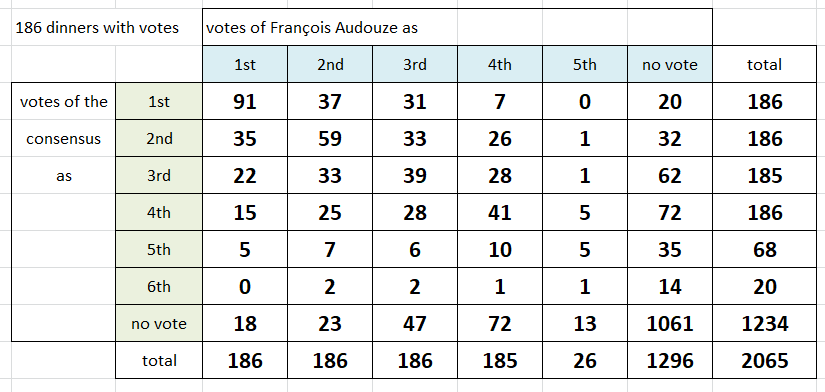
Of the 226 dinners, there were 186 dinners where there were votes, concerning 2065 wines or 11.1 wines per meal. I have kept the votes of the participants and for each dinner I have the vote of consensus and my vote. We voted generally for four wines and 26 dinners had five votes. For consensus I sometimes counted on more votes than the number of wines voted by each. The table shows the distribution of votes between my vote and the vote of consensus. This sheet reads as follows: out of 186 wines that I have classified in 2, there are 37 that are first for the consensus, 59 voted second also by the consensus and 23 that do not appear in the vote of the consensus. Thus, only 91 wines out of 186 dinners are at the same time first for me and for the consensus, ie only half. If we consider the wines that are in the first three for me and are in the top three of the consensus, there are 380 out of 558 possible wines, which makes 68% of consistency betwwen the consensus and me. The wines of the 186 dinners have an average age of 51 years. The 1061 wines that are neither in my vote nor in the consensus vote have an average age of 44.3 years whereas the 91 wines which are first for the consensus and for me are 73.3 years old. In my dinners, the oldest wines are the stars. If we take the wines of Romanée Conti, there were 113 in 186 dinners. 67 are in my vote and 87 are in the consensus vote. And if 23 are first for me, 30 are first for consensus. For many guests, the novelty effect of Romanée Conti's discovery plays. It is the same for Yquem, present 122 times in these dinners, 47 times in my votes and 70 times in the votes of the consensus. The magic of the labels plays.

Les votes de 186 dîners comparaison du vote du consensus avec mon vote dimanche, 24 juin 2018

Sur les 226 dîners réalisés, il y a 186 dîners où il y a eu des votes, concernant 2065 vins soit 11,1 vins par repas. J'ai conservé les votes des participants et pour chaque dîner j'ai le vote du consensus et mon vote. Au début, on ne votait que pour quatre vins et 26 dîners ont eu cinq votes. Pour le consensus je comptais parfois un classement sur plus de votes que le nombre de vins votés par chacun. Le tableau montre la répartition des votes entre mon vote et le vote du consensus. Le tableau se lit ainsi : sur 186 vins que j'ai classés en 2, il y en a 37 qui sont premiers pour le consensus, 59 votés deuxièmes aussi par le consensus et 23 qui ne figurent pas dans le vote du consensus. Ainsi, seulement 91 vins sur 186 dîners sont à la fois premiers pour moi et pour le consensus, soit une moitié seulement. Si l'on considère les vins qui sont dans les trois premiers pour moi et qui sont dans les trois premiers du consensus, il y en a 380 sur 558 vins possibles, soit 68 % de cohérence. Les vins des 186 dîners ont un âge moyen de 51 ans. Les 1061 vins qui ne sont ni dans mon vote ni dans le vote du consensus ont un âge moyen de 44,3 ans alors que les 91 vins qui sont premiers pour le consensus et moi ont un âge de 73,3 ans. Dans mes dîners ce sont les vins les plus anciens qui tiennent la vedette. Si on prend les vins de la Romanée Conti, il y en a eu 113 dans les 186 dîners. 67 sont dans mon vote et 87 sont dans le vote du consensus. Par ailleurs 23 sont premiers pour moi et 30 sont premiers pour le consensus. Pour beaucoup de convives, l'effet nouveauté de découverte de la Romanée Conti joue. Il en est de même pour Yquem, présent 122 fois dans ces dîners, 47 fois dans mes votes et 70 fois dans les votes du consensus. La magie des étiquettes joue.

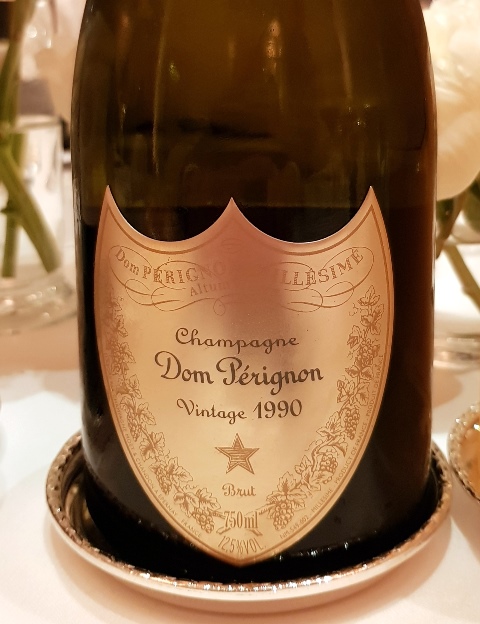
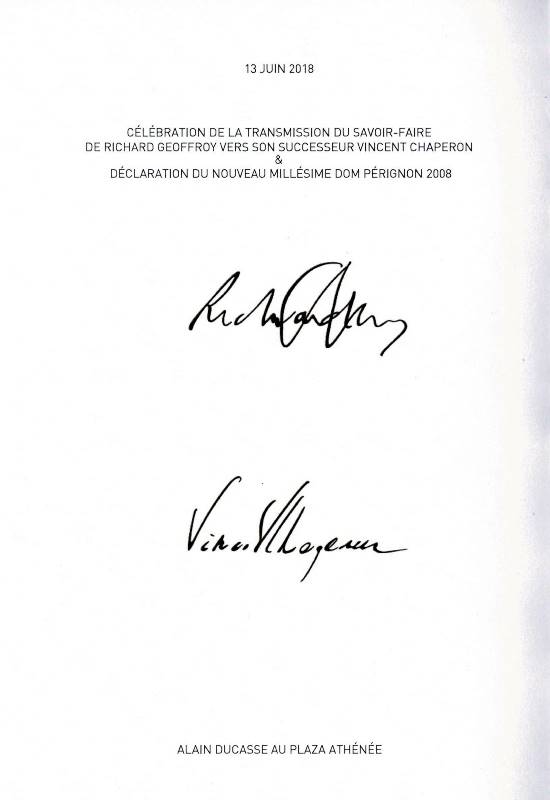
Vincent Chaperon is the successor of Richard Geoffroy at the head of Dom Pérignon vendredi, 15 juin 2018

Richard Geoffroy the cellar master of Dom Pérignon had called me to announce his next departure from his post, to go explore new ways in the world of drinks. He announced a day to me in Hautvillers then to Paris to celebrate the transfer of function with Vincent Chaperon whom I have known for years because he accompanied Richard's approach for a long time.
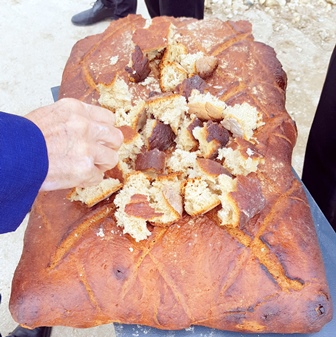
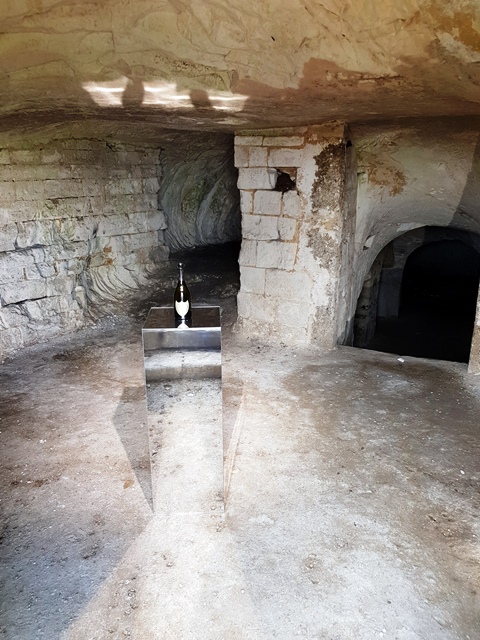
When the day comes, Richard Geoffroy welcomes a group of about a hundred people to the Thomas cellar, located slightly below the abbey of Hautvillers and offering an infinite view of the champagne vineyards. In the middle of June after repeated rains, armies of winegrowers are busy in the vineyards. Going down to the Thomas cellar, the place where the whole history of Champagne began, a superb chalky cellar used by Pierre Pérignon to create the champagne, we are given pecking pieces of a friendly country bread which we soak crumb in olive oil. Before sharing the wine, we share the bread.
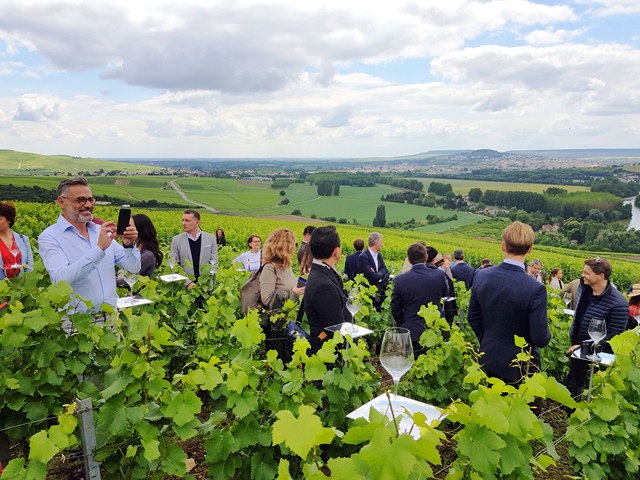
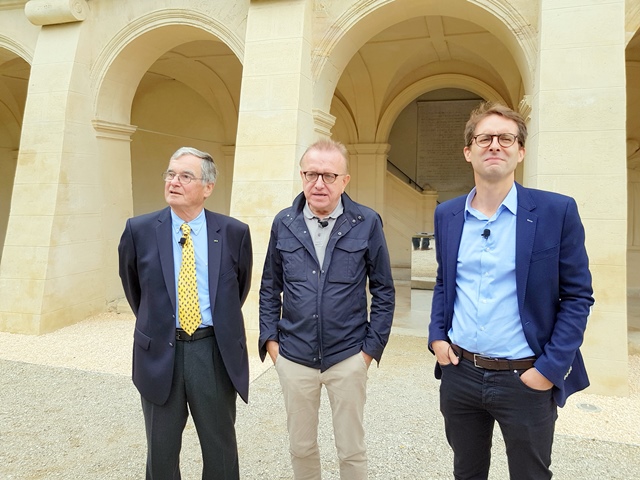
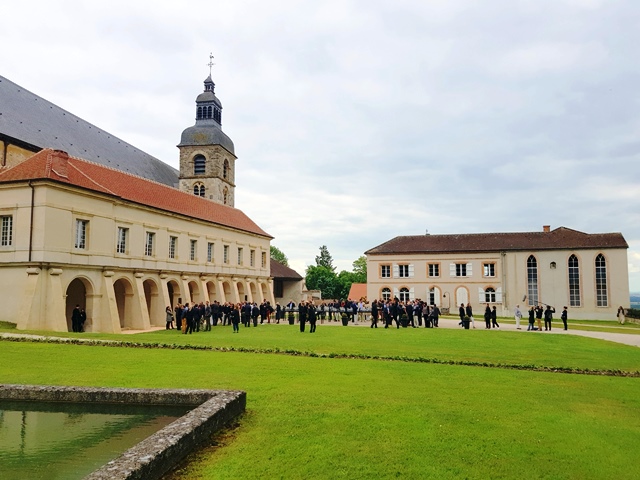
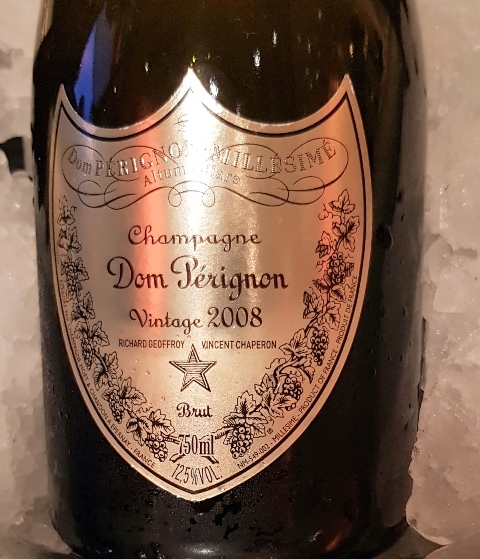
Richard makes a happy welcome address in front of the Thomas cellar, presents his successor but also his predecessor Dominique Foulon, to mark the continuity of the story and we are all divided into the rows of vines where were arranged small easels distant of two or three meters on which glasses rest. It is in the vineyard around the Abbey that the tasting of the new vintage, presented for the first time today, Champagne Dom Pérignon 2008.
A delicate fresh air licks the vine leaves, so to taste this champagne in these conditions helps us to like it. For many, the 2008 stands out for its energy. For me, in this bucolic and romantic setting, it is the white fruits and the white flowers that move me. At this moment of his life, this champagne presents himself as a very large Dom Perignon, in the historical line of the great Dom Perignon. He is promised a bright future. He is fresh, energetic while being romantic, vinous and lively but also charming. He has all the qualities.
We go up the harmonious slopes of the vineyard paths to follow a gastronomic route in three different stages, to verify the gastronomic qualities of 2008. The imagination of the chef of the place is infinite and the complex flavors are excellent. Hams, foie gras, mushrooms, fish, vegetables, all flavors worked in a thousand ways are proposed to us and the 2008 is pleasant to drink on these delicacies, but the time is also in discussions because the world of the friends of Richard is a small group of people who count in the world of wine which we know inevitably certain that one is happy to find here and others that one discovers.
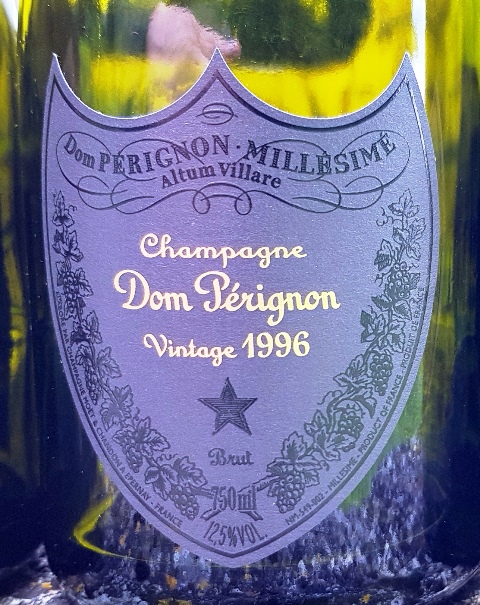
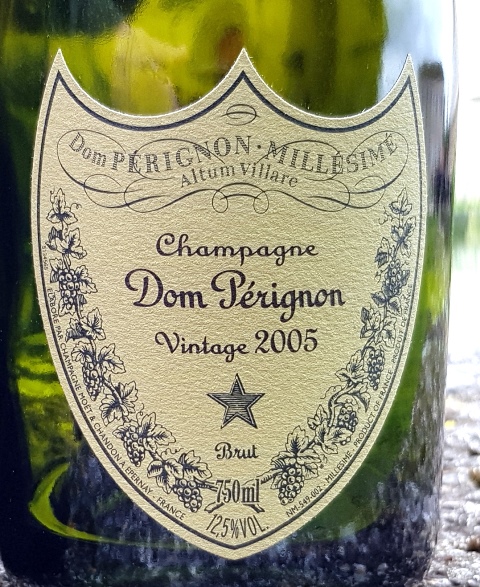
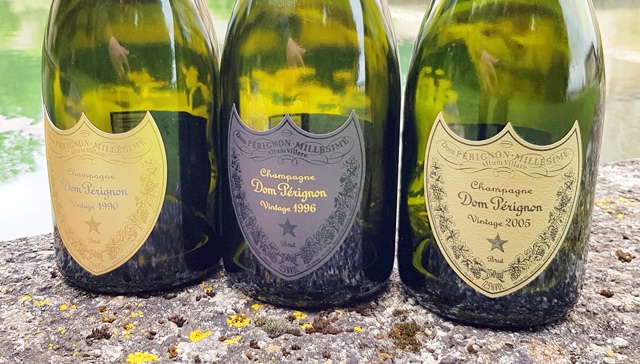
At 13:00 serious things begin because we will taste under the cloister outdoor three champagnes that correspond to significant dates: 1990 is the year of the arrival of Richard alongside Dominique Foulon, 1996 is the first vintage made by Richard alone and 2005 is the year when Vincent Chaperon arrived alongside Richard. During the tasting, the three cellar chefs will make comments or quote anecdotes.
Dom Pérignon Champagne P3 1990 has an extremely powerful nose. It is salty and has beautiful fruits and hazelnuts. The finish has a nice freshness. Dominique evokes ripe fruit and faded flowers, while pointing out that it is not pejorative.

It turns out that for my palate, the champagnes that were originally disgorged when they were commercialised have more emotion than the disgorged wines when they reach their second fullness, plénitude (P2) or their third fullness (P3). I do not like champagne too rejuvenated but I sometimes love delicately awakened champagnes like the 1966 or 1962 Oenotheque.

This 1990 P3 has beautiful elements of power but which are not sufficiently integrated. The lack of coherence embarrasses me a little, while around me people enjoy. My taste is probably very personal. I feel a final a little roasted and a dosage may be a little too marked.

Dom Pérignon P2 Champagne 1996 has an absolutely superb first nose. The taste is also superb. This champagne is franker, fresher, nature, simple and readable. It is direct and I would very much like it as much as in its original version.

Vincent had made a nice speech to announce that it would be the rosé of 2005 that we drink but what is served is the white Champagne Dom Pérignon 2005. His first nose is milky. What strikes me in this champagne is its purity. It has a nice minerality, it lacks perhaps a little width, but it has such a charm that I am conquered because it is the charm of Dom Pérignon.

It is planned to program inside the church the ceremony of handover between Richard Geoffroy and Vincent Chaperon. Having come by car and having to leave by the same means, I leave the ceremony to rest before going to the Plaza Athénée where will be held the gala dinner of the function transmission.

To share the bread, to discover a new vintage by tasting it in the vineyards, to nibble infinite flavors with a great champagne and to drink three vintages which show the continuity of the human action of the cellar leaders, there is in all this something of deeply human and friendly. That's all Richard Geoffroy.


Back in Paris, having lost myself in the vineyards following the indications of a GPS that had desires of rural escapes, I hardly have time to rest and prepare myself to go to the celebration dinner the transmission of Richard Geoffroy's know-how to his successor Vincent Chaperon.

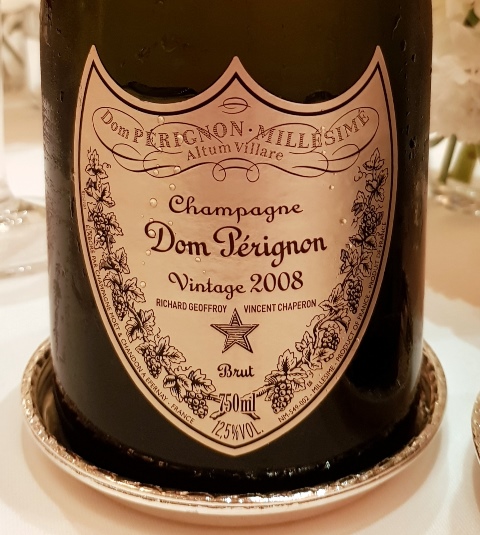
The welcome is at the bar of the Plaza Athénée hotel which has been decorated so that Dom Pérignon 2008 is the star of the place. We chat with friends of Richard Geoffroy of all nationalities. Japan, Korea, Singapore, Hong Kong, United States of the west and east coasts, Germany, Belgium, Australia and I forget some probably. The aperitif is made with Champagne Dom Pérignon 2008 with small appetizers varied extremely subtle flavors like carrots and chips of fennel dipped in magic elixirs.

Dom Pérignon has booked all the gourmet restaurant Alain Ducasse plus the famous indoor terrace for a dinner of 140 people. Dinner is placed and I find myself away from collectors my brothers. I am at the journalists' table with whom I shared memories and had a great evening.

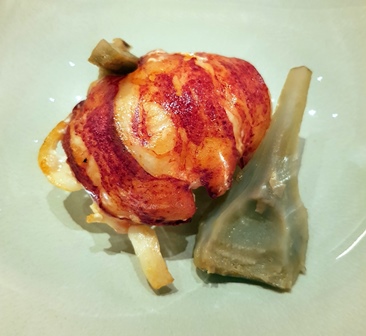
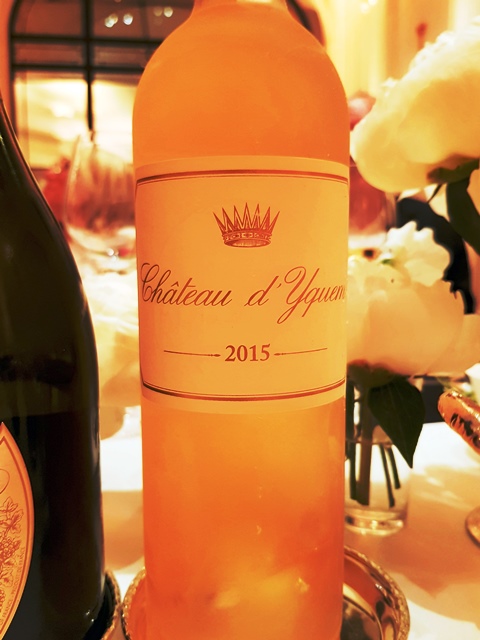
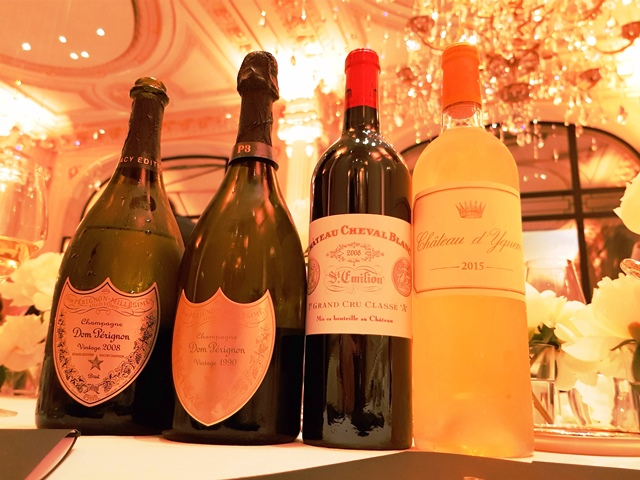
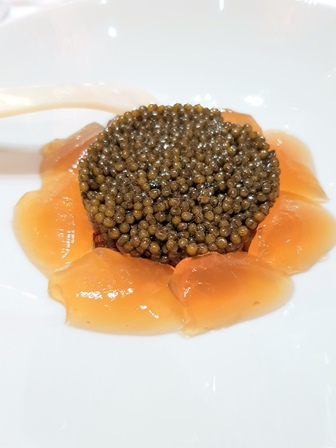
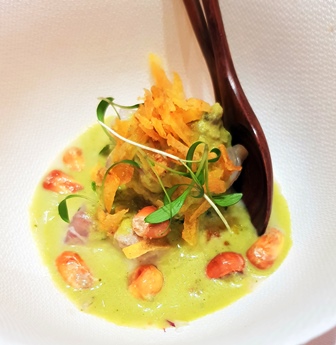
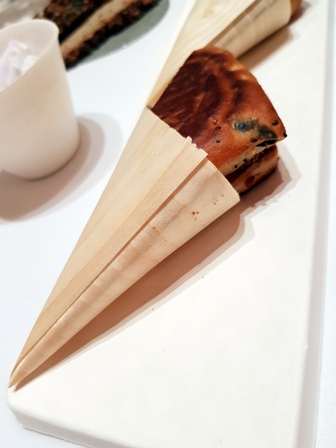
The statement of the menu prepared by the teams of Alain Ducasse is long as a novel : green lentils of Puy and caviar, delicate eel jelly / ceviche clams and maigre (fish), tiger leche coriande-aji charapita (Gaston Acurio) / bread with toasted cereals, vegetables from the Château de Versailles, spicy condiment / lobster from the Cotentin, green melon, elderberry flowers and berries / marinated Atlantic bass, betel leaves, golden caviar (David Thomson) / white asparagus from Anjou, sea anemone, vegetable cornet / turbot from the Bay of Gascogne, radishes and poppies with Champagne / hemp from Brittany, smoked sardines, young leeks, black fruit olives / roast langoustines, red and green algae, vanilla (Tetsuya Wahuda) / cherries Natural cherry, laurel ice cream / Miss Gla'Gla sorbet Ispahan (Pierre Hermé) / snow Château d'Yquem 2015 / chocolates and strawberries from Jouy-le-Châtel.

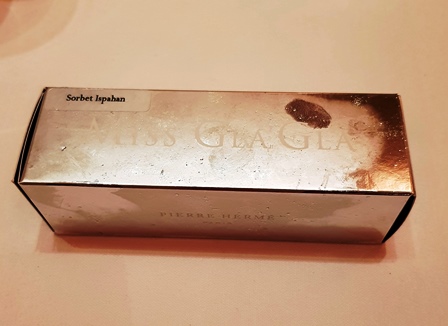
The names in parenthesis must be those of the creators of the dishes. There is in this menu an obvious desire to make big. Richard wanted to make great for us. But the accumulation of multiple flavors sometimes goes against the desired effect. Thus, the abnormally spicy clam dish burns the mouth beyond the next dish. Another example, the idea of putting vanilla with langoustines deliciously cooked that is to say almost raw, is good. But the excess vanilla kills langoustine while vanilla creates a superb bridge with the Dom Perignon P3 1990. Another curious idea is to present the Miss Gla'Gla in a cardboard box without it being on a plate. We remove the sorbet from the box and when it warms the pastry frays and jumps fingers. I had to drop it in the cup for the cherries. Except these small details the cuisine is inventive, the dishes are good and this dinner planned for so many people is impressive for its quality.

Champagne Dom Pérignon 2008 accompanies the appetizers, the lobster and the bar. The delicate eel jelly finds in him a remarkable resonance. The lobster recipe really sticks to champagne, which has the assurance and elegance of a crooner. It is very successful. This champagne will conquer all the lovers and faithful of Dom Pérignon.

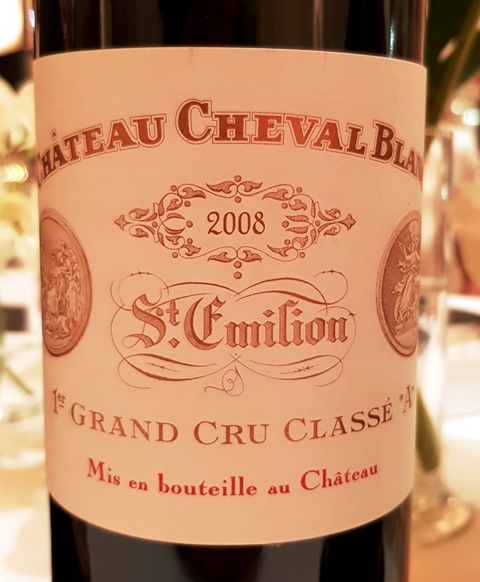
The Château Cheval Blanc 2008 chosen to be the same year as the new champagne is of an extreme quality. His attack is frank, his grain is heavy and noble. He is full in the mouth as if he were more than twenty years old. He is ten years old in a state of grace and great refinement. I love it and the agreement with the bar is perfect. Its typicity Saint-Emilion will assert itself with time. He will be very great.

Champagne Dom Pérignon P3 1990 is much more pleasant than this morning because it is associated with dishes. I still find that there is a slight lack of coherence and balance in this wine, but it is very pleasant on dishes yet less friendly, the hemp dish is not greedy and rough and vanilla taking too much on the langoustines so beautiful.

The taste of Ispahan is magical, recognizable immediately as Pierre Hermé has succeeded for a long time creating it and fits well with the Château d'Yquem 2015 who is clear as a toddler. The snow of Yquem is not very catchy because one has the impression to suck an ice cube, but that does not prevent the Yquem to shine. He starts shy in the mouth, young virgin and it is in the finale he exposes diabolically beautiful complexities. He is too young, we know, but the festival of exotic flavors that he is able to offer in the finale delight me.

I have such a penchant for pure tastes that the association of wild strawberries with Champagne 2008 delighted me to the highest point, so the champagne becomes smiling.

If here or there I criticize details, I am totally delighted with this great meal. Dom Pérignon has obviously tried to create original agreements and to honor ourselves with a very high-level menu. The very numerous service did a great job. At the end of the meal nobody wanted to leave his friends or new friends. We kissed each other, so much was the friendship transpiring on all sides.

It was planned an "after-dinner" at the Plaza Bar but I preferred to go home, the heart happy to have shared this day with Richard Geoffroy, become over the years a friend, who made, once more, proof of his generosity. Interesting and promising meetings enriched this day. Long life and success to Richard and welcome Vincent to concoct Dom Perignon anthology.


(see pictures in the article in French)

Célébration de la passation de pouvoir à Dom Pérignon à Hautvillers et au Plaza jeudi, 14 juin 2018

Richard Geoffroy le maître de cave de Dom Pérignon m'avait appelé pour m'annoncer son prochain départ de son poste, pour aller explorer des voies nouvelles dans le monde des boissons. Il m'annonça une journée à Hautvillers puis à Paris pour célébrer la transmission de fonction avec Vincent Chaperon que je connais depuis des années car il a accompagné longtemps la démarche de Richard.

Le jour venu, Richard Geoffroy accueille un groupe d'une centaine de personnes à la cave Thomas, située en léger contrebas de l'abbaye d'Hautvillers et offrant une vue infinie sur les vignes de champagne. En ce milieu du mois de juin après des pluies diluviennes à répétition, des armées de vignerons s'affairent dans les vignes. En descendant vers la cave Thomas, le lieu où toute l'histoire de la Champagne a commencé, superbe crayère qu'a utilisée Pierre Pérignon pour créer le champagne, on nous donne à picorer des morceaux d'un pain de campagne convivial dont on trempe la mie dans de l'huile d'olive. Avant de partager le vin, on partage le pain.

Richard fait un discours de bienvenue joyeux devant la cave Thomas, présente son successeur mais aussi son prédécesseur Dominique Foulon, pour marquer la continuité de l'histoire et nous nous répartissons tous dans les rangées de vignes où ont été disposés de petits chevalets tous les deux ou trois mètres sur lesquels reposent des verres. C'est dans le vignoble autour de l'Abbaye que se fait la dégustation du nouveau millésime présenté pour la première fois ce jour, le Champagne Dom Pérignon 2008.

Un air frais délicat lèche les feuilles de vignes aussi goûter ce champagne dans ces conditions nous pousse à l'aimer. Pour beaucoup, le 2008 se signale par son énergie. Pour moi, dans ce cadre bucolique et romantique, ce sont les fruits blancs et les fleurs blanches qui m'émeuvent. A cet instant de sa vie ce champagne se présente comme un très grand Dom Pérignon, dans la ligne historique des grands Dom Pérignon. Il est promis à un bel avenir. Il est frais, énergique tout en étant romantique, vineux et vif mais aussi charmeur. Il a toutes les qualités.

Nous remontons les pentes harmonieuses des chemins des vignes pour suivre un parcours gastronomique en trois étapes différentes, afin de vérifier les qualités gastronomiques du 2008. L'imagination du chef du lieu est infinie et les saveurs complexes sont excellentes. Jambons, foies gras, champignons, poissons, légumes, toutes saveurs travaillées de mille façons nous sont proposées et le 2008 est agréable à boire sur ces délices, mais le temps est aussi aux discussions car le monde des amis de Richard est un petit groupe de gens qui comptent dans le monde du vin dont on connaît forcément certains que l'on est heureux de retrouver ici et d'autres que l'on découvre.

A 13h00 les choses sérieuses commencent car nous allons déguster sous le cloître en plein air trois champagnes qui correspondent à des dates significatives : 1990 est l'année de l'arrivée de Richard aux côtés de Dominique Foulon, 1996 est le premier millésime fait par Richard seul et 2005 est l'année ou Vincent Chaperon est arrivé aux côtés de Richard. Pendant la dégustation les trois chefs de cave vont faire des commentaires ou citer des anecdotes.

Le Champagne Dom Pérignon P3 1990 a un nez extrêmement puissant. Il est salin et présente de beaux fruits et des noisettes. Le finale a une belle fraîcheur. Dominique évoque des fruits mûrs et des fleurs fanées tout en précisant que ce n'est pas péjoratif.

Il se trouve que pour mon palais, les champagnes qui ont été dégorgés à l'origine pour leur mise sur le marché ont plus d'émotion que les vins dégorgés au moment où ils atteignent leur deuxième plénitude (P2) ou leur troisième plénitude (P3). Je n'aime pas trop les champagnes trop rajeunis mais j'adore parfois des champagnes délicatement réveillés comme les Œnothèques 1966 ou 1962.

Ce 1990 a de beaux éléments de puissance mais qui ne sont pas suffisamment intégrés. Le manque de cohérence me gêne un peu, alors qu'autour de moi on se régale. Mon goût est sans doute très personnel. Je sens un final un peu torréfié et un dosage peut-être un peu appuyé.

Le Champagne Dom Pérignon P2 1996 a un premier nez absolument superbe. Le goût est lui aussi superbe. Ce champagne est plus franc, plus frais, nature, simple et lisible. Il est direct et je l'aimerais très vraisemblablement autant que dans sa version originelle.

Vincent avait fait un beau discours pour annoncer que ce serait le rosé de 2005 que nous boirions mais ce qui est servi, c'est le blanc Champagne Dom Pérignon 2005. Son premier nez est lacté. Ce qui me frappe dans ce champagne c'est sa pureté. Il a une belle minéralité, il manque peut-être un peu de largeur, mais il a un tel charme que je suis conquis car c'est le charme de Dom Pérignon.

Il est prévu au programme à l'intérieur de l'église la cérémonie de passation de pouvoir entre Richard Geoffroy et Vincent Chaperon. Etant venu en voiture et devant repartir par le même moyen, je fais l'impasse sur cette cérémonie pour aller me reposer avant de me rendre au Plaza Athénée où se tiendra le dîner de gala de la transmission de fonction.

Partager le pain, découvrir un nouveau millésime en le goûtant dans les vignes, grignoter des saveurs infinies avec un grand champagne et boire trois millésimes qui montrent la continuité de l'action humaine des chefs de cave, il y a dans tout cela quelque chose de profondément humain et amical. C'est tout Richard Geoffroy.

-v-v-v-v-

De retour à Paris, m'étant perdu dans les vignes en suivant les indications d'un GPS qui avait des envies d'évasions champêtres, j'ai à peine le temps de me reposer et de me préparer pour me rendre au dîner de célébration de la transmission du savoir-faire de Richard Geoffroy vers son successeur Vincent Chaperon.

L'accueil est au bar de l'hôtel Plaza Athénée qui a été décoré pour que Dom Pérignon 2008 soit la star du lieu. Nous bavardons entre amis de Richard Geoffroy de toutes nationalités. Japon, Corée, Singapour, Hong-Kong, Etats-Unis des côtes ouest et est, Allemagne, Belgique, Australie et j'en oublie sans doute. L'apéritif se fait au Champagne Dom Pérignon 2008 avec des petits amuse-bouches variés aux saveurs extrêmement subtiles comme des carottes et des copeaux de fenouil trempés dans des élixirs magiques.

Dom Pérignon a réservé tout le restaurant gastronomique Alain Ducasse plus la célèbre terrasse intérieure pour un dîner de 140 personnes. Le dîner est placé et je me trouve éloigné des collectionneurs mes frères. Je suis à la table des journalistes avec qui j'ai partagé des souvenirs et passé une excellente soirée.

L'énoncé du menu préparé par les équipes d'Alain Ducasse est un roman fleuve : lentilles vertes du Puy et caviar, délicate gelée d'anguille / ceviche de palourdes et maigre, leche de tigre coriande-aji charapita (Gaston Acurio) / pain aux céréales toasté, légumes du château de Versailles, condiment épicé / homard du Cotentin, melon vert, fleurs et baies de sureau / bar de l'Atlantique mariné, feuilles de bétel, caviar doré (David Thomson) / asperges blanches d'Anjou, anémone de mer, corète potagère / turbot du Golfe de Gascogne, radis et coquelicots au Champagne / chanvre de Bretagne, sardine fumée, jeunes poireaux, olives te fruits noirs / langoustines rôties, algues rouges et vertes, vanille (Tetsuya Wahuda) / cerises de Céret au naturel, glace au laurier / Miss Gla'Gla sorbet Ispahan (Pierre Hermé) / neige de Château d'Yquem 2015 / chocolats et fraises de Jouy-le-Châtel.

Les noms entre parenthèse doivent être ceux des créateurs des plats. Il y a dans ce menu une envie manifeste de faire grand. Richard a voulu nous gâter. Mais l'accumulation des saveurs multiples va parfois à l'encontre de l'effet désiré. Ainsi, le plat de palourdes anormalement épicé brule la bouche au-delà du plat suivant. Autre exemple, l'idée de mettre de la vanille avec les langoustines délicieusement cuites c'est-à-dire presque crues, est bonne. Mais l'excès de vanille tue la langoustine alors que la vanille crée un superbe pont avec le Dom Pérignon P3 1990. Une autre idée curieuse est de présenter le Miss Gla'Gla dans une boîte en carton sans qu'elle soit sur une assiette. On enlève le sorbet de la boîte et lorsqu'il se réchauffe la pâtisserie s'effiloche et saute des doigts. Il m'a fallu la faire tomber dans la coupelle prévue pour les cerises. A ces détails près la cuisine est inventive, les plats sont bons et ce dîner prévu pour tant de personnes est impressionnant par sa qualité.

Le Champagne Dom Pérignon 2008 accompagne les entrées, le homard et le bar. La délicate gelée d'anguille trouve en lui une résonnance remarquable. La recette du homard colle vraiment au champagne qui a une assurance et une élégance de crooner. C'est très réussi. Ce champagne va conquérir tous les amoureux et fidèles de Dom Pérignon.

Le Château Cheval Blanc 2008 choisi pour être de la même année que le nouveau champagne est d'une qualité extrême. Son attaque est franche, son grain est lourd et noble. Il est plein en bouche comme s'il avait plus de vingt ans. Il est à dix ans dans un état de grâce et de grand raffinement. Je l'adore et l'accord avec le bar est parfait. Sa typicité de saint-émilion va s'affirmer avec le temps. Il sera très grand.

Le Champagne Dom Pérignon P3 1990 se montre beaucoup plus plaisant que ce matin car il est associé à des plats. Je trouve encore qu'il y a un léger manque de cohérence et d'équilibre dans ce vin, mais il est très agréable sur les plats pourtant moins amènes, le plat de chanvre étant peu gourmand et brouillon et la vanille prenant trop le pas sur les langoustines si belles.

Le goût de l'Ispahan est magique, reconnaissable immédiatement tant Pierre Hermé l'a réussi et s'accorde bien avec le Château d'Yquem 2015 qui est clair comme un bambin. La neige d'Yquem est peu entraînante car on a l'impression de sucer un glaçon, mais ça n'empêche pas l'Yquem de briller. Il démarre en bouche timide, jeune puceau et c'est dans le finale qu'il expose des complexités diaboliquement belles. Il est trop jeune, on le sait, mais le festival des saveurs exotiques qu'il est capable d'offrir dans le finale me ravit.

J’ai un tel penchant pour les goûts purs que l’association des fraises nature avec le Champagne 2008 me ravit au plus haut point, tant le champagne devient souriant.

Si ici ou là je critique des détails, je suis totalement ravi de ce grand repas impressionnant. On a manifestement cherché à susciter des accords originaux et à nous honorer par un menu de très haut niveau. Le service très nombreux a fait un beau travail. A la fin du repas personne ne voulait quitter ses amis ou nouveaux amis. On s'est embrassé les uns et les autres, tant l'amitié transpirait de toutes parts.

Il était prévu un « after-dinner » au Bar du Plaza mais j'ai préféré rentrer chez moi, le cœur heureux d'avoir partagé cette journée avec Richard Geoffroy, devenu au fil des années un ami, qui a fait, une fois de plus, preuve de sa générosité. Des rencontres intéressantes et prometteuses ont enrichi cette journée. Longue vie et plein succès à Richard et bienvenue à Vincent pour qu'il nous concocte des Dom Pérignon d'anthologie.

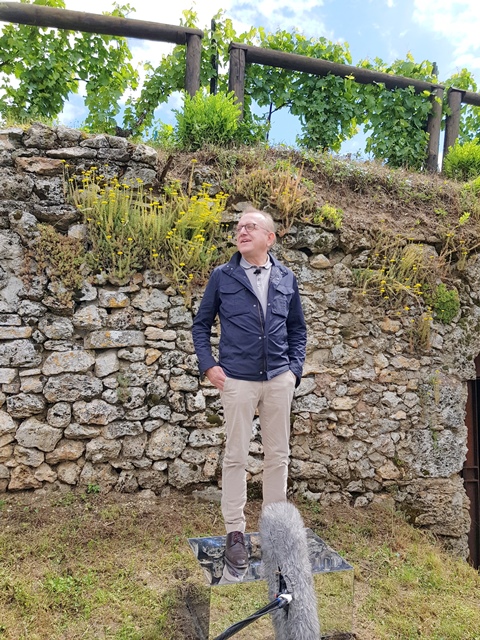
L'abbaye d'Hautvillers et, sans doute, Dom Pérignon le partage du pain sur le chemin des vignes la cave Thomas Richard Geoffroy nous accueille devant la cave Thomas avec de larges sourires On boit le 2008 dans les vignes. A noter que les noms du chef de cave partant et du nouveau sont sur les étiquettes, ce qui est un fait rare dégustation de 1990 P3, 1996 P2 et 2005 devant les trois maîtres de chais la foule devant les bâtiments de l'abbaye le soir au bar de l'hôtel Plaza; le Dom Pérignon 2008 est à l'honneur les vins du dîner quelques uns des plats dont le sorbet Ispahan Miss Gla'Gla dans sa boîte argentée

Champagne pour les habitants de Miami lundi, 11 juin 2018

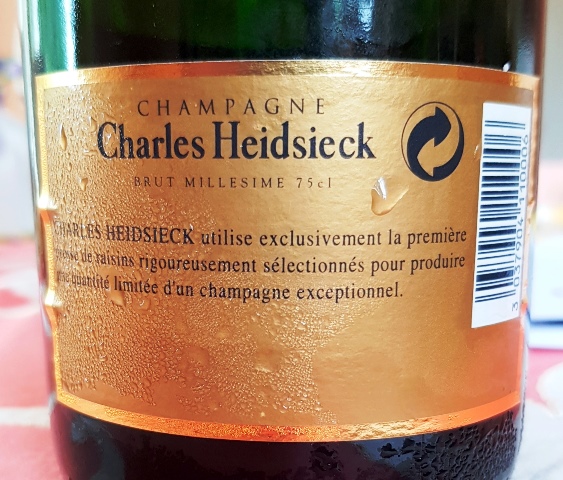
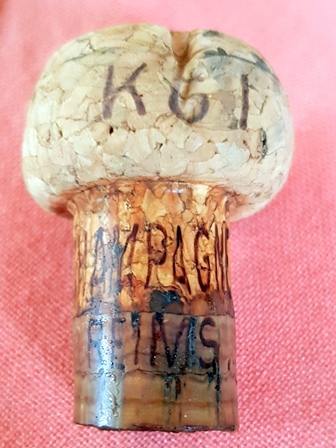
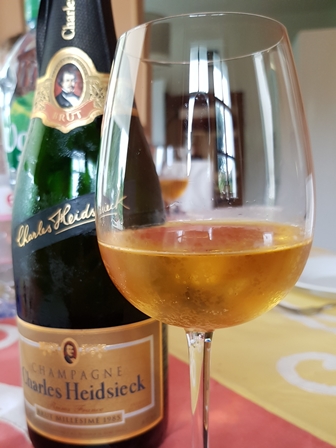
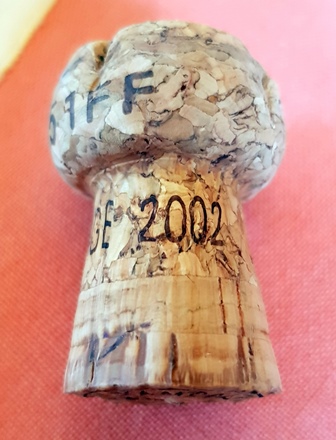
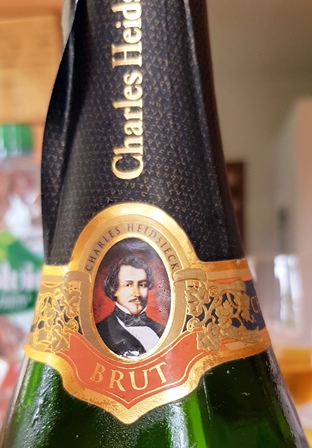
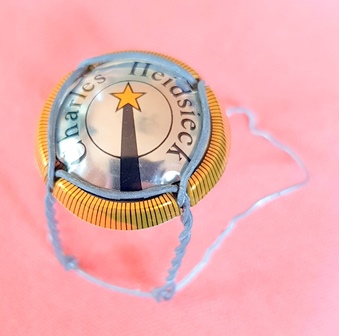
J'ouvre un Champagne Charles Heidsieck Brut 1985. Le bouchon est magnifique, le pschitt est marqué et la couleur du champagne est d'un jaune presque orange. Ce qui frappe immédiatement c'est la sérénité joyeuse de ce champagne. Il est grand et on est bien. Je ne l'imaginais pas aussi brillant. Alors que j'ai été ébloui par le Blanc des Millénaires de Charles Heidsieck 1985, j'aurais tendance à mettre ce champagne au-dessus de lui tant il est accompli et totalement équilibré. Fortement imprégnant il est quasiment parfait. La qualité que je retiens surtout c'est l'équilibre dans la majesté.

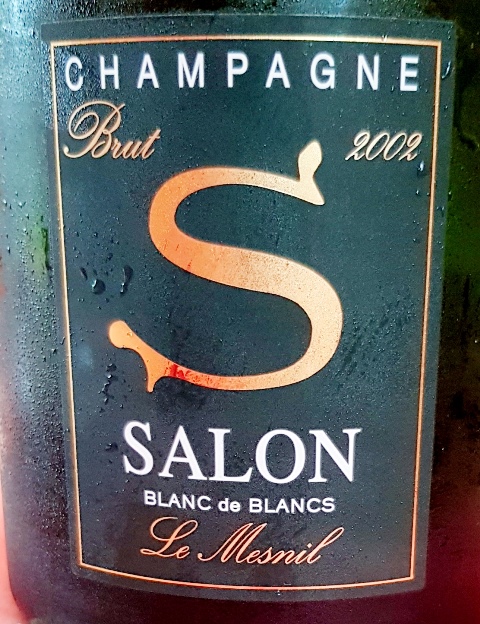
Félix va séjourner chez ses autres grands-parents et le soir pour mon fils, j'ouvre un Champagne Salon 2002. Le contraste est immense avec le champagne du déjeuner. Le Salon est cristallin, romantique, tout en fleurs blanches. Ce n'est pas un champagne puissant, du moins pour l'instant car il a des décennies devant lui. S'il est noble je suis quand même plus impressionné par le 1985 de Charles Heidsieck, immense surprise. Nous nous régalons bien sûr, avec des fromages dont un camembert qui convient au Salon. Il me semble que je devrai attendre quelques années pour profiter au mieux du Salon 2002.

Le lendemain, l’invraisemblable se produit. Le Salon 2002 dont il restait une demi-bouteille montre une énergie et une vivacité beaucoup plus conformes à ce que j’attendais hier. Je ne rêve pas puisque mon fils a strictement la même impression. Le champagne est transformé, grand comme un 2002 doit l’être. Faut-il en conclure qu’il faut ouvrir ce champagne très à l’avance ? Ce n’est pas la première fois que je constate que les jeunes Salon sont meilleurs le lendemain.

226th Wine-Dinners Dinner at the Exceptional Cellar of the Hotel de Crillon mercredi, 6 juin 2018

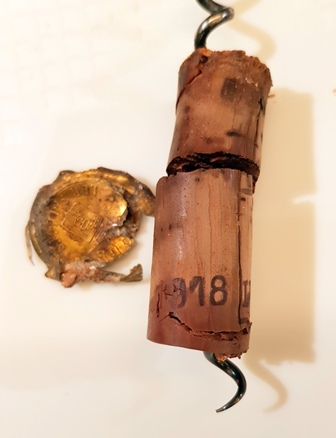
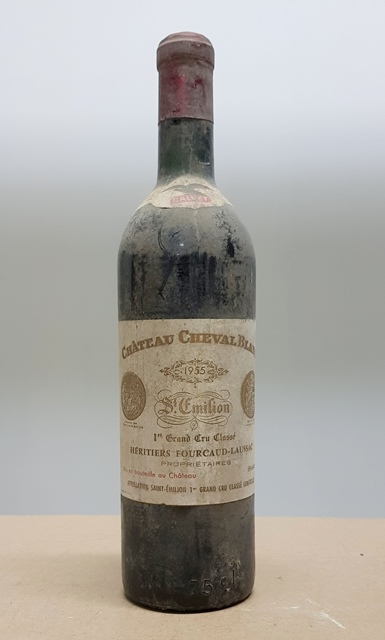
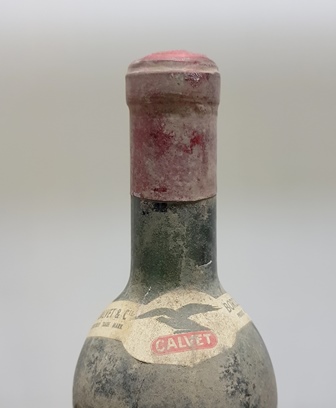
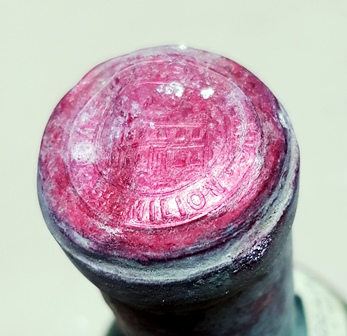
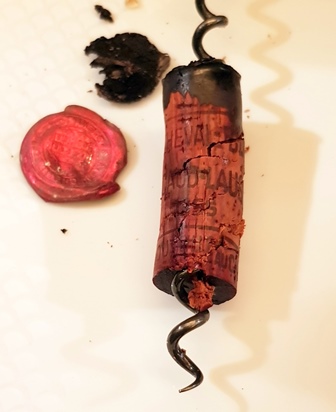
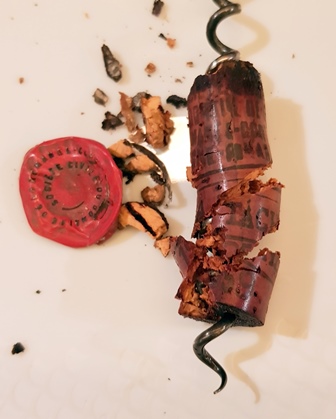
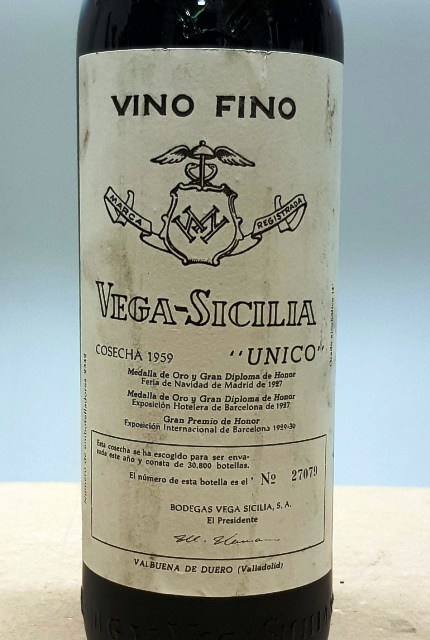
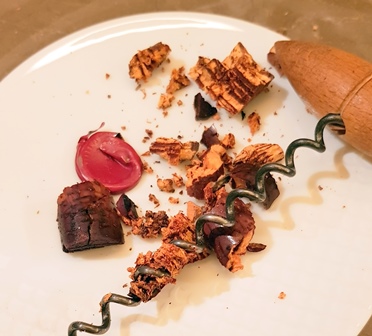
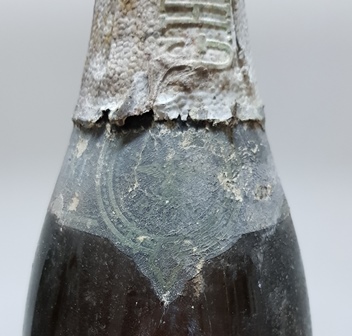
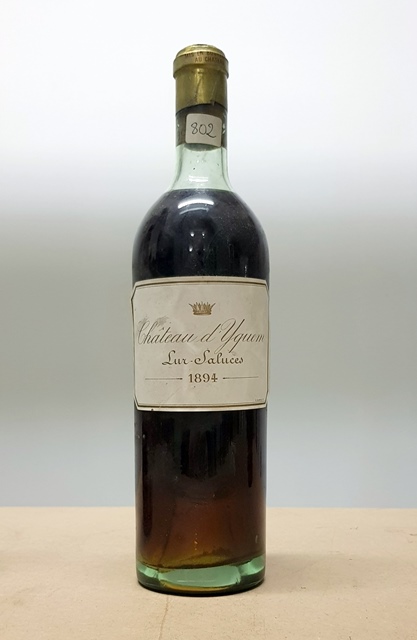
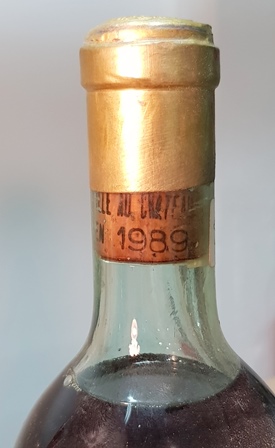
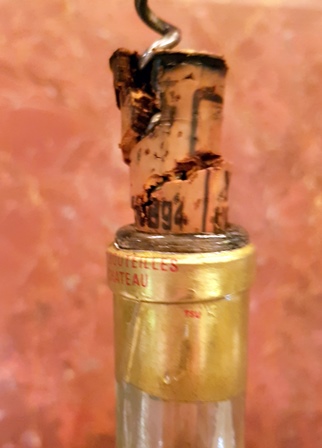
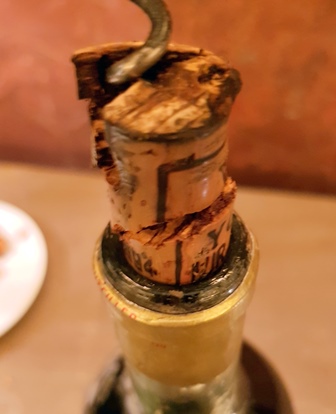
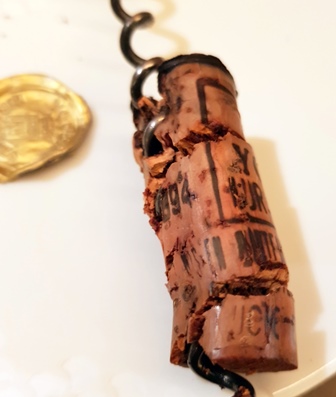
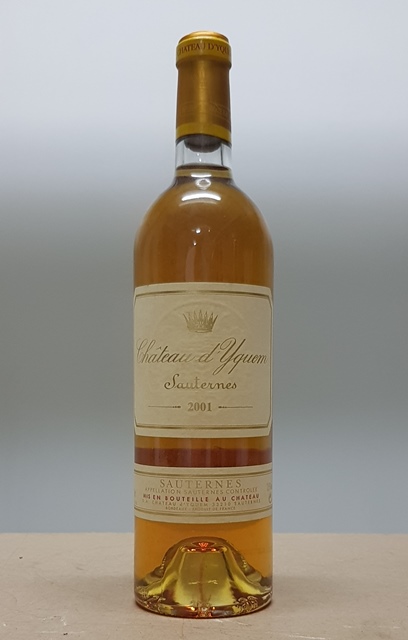
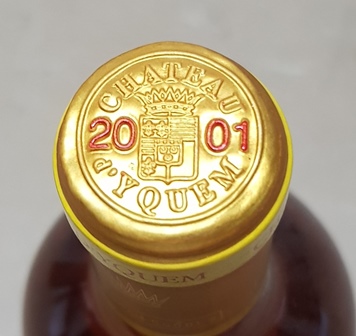
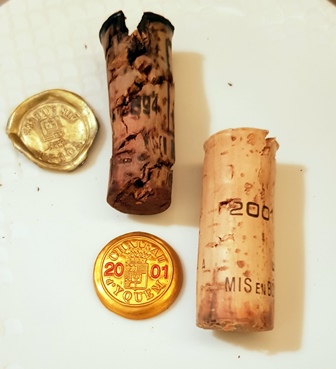
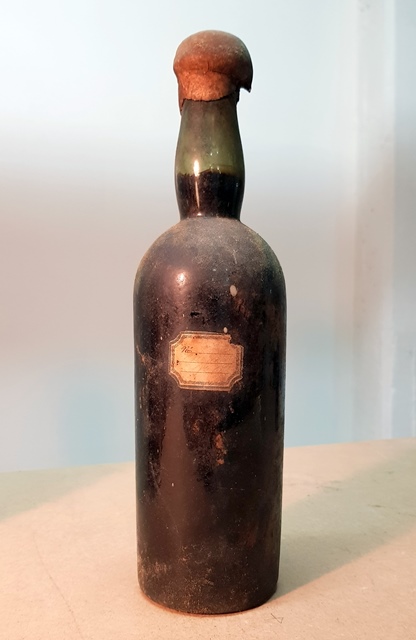
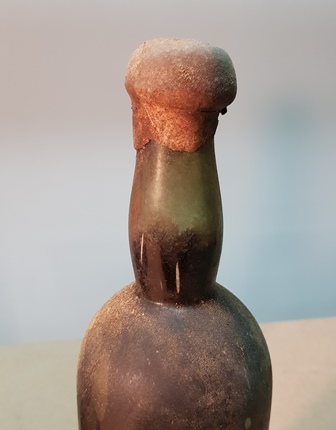
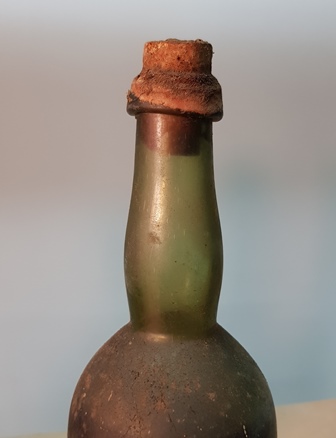
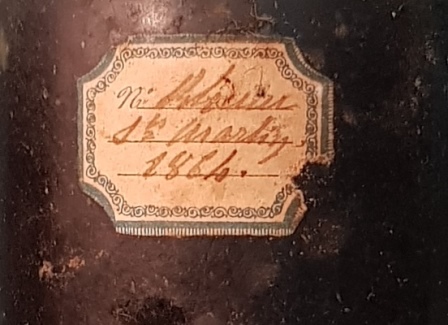
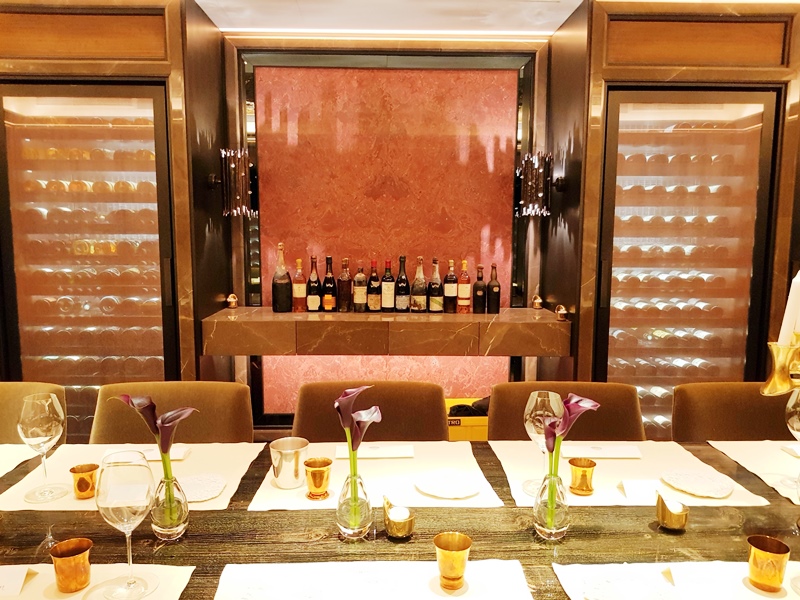
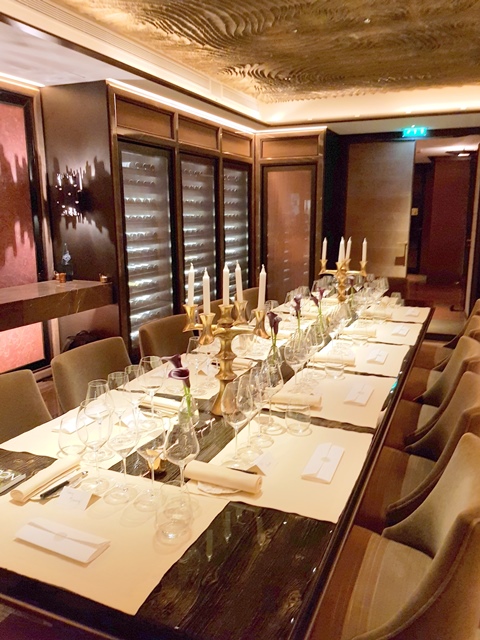
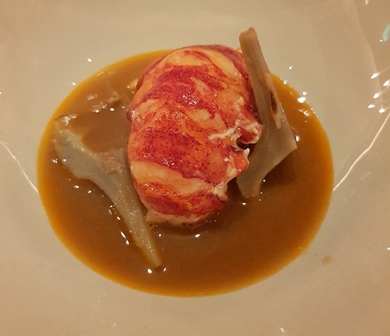
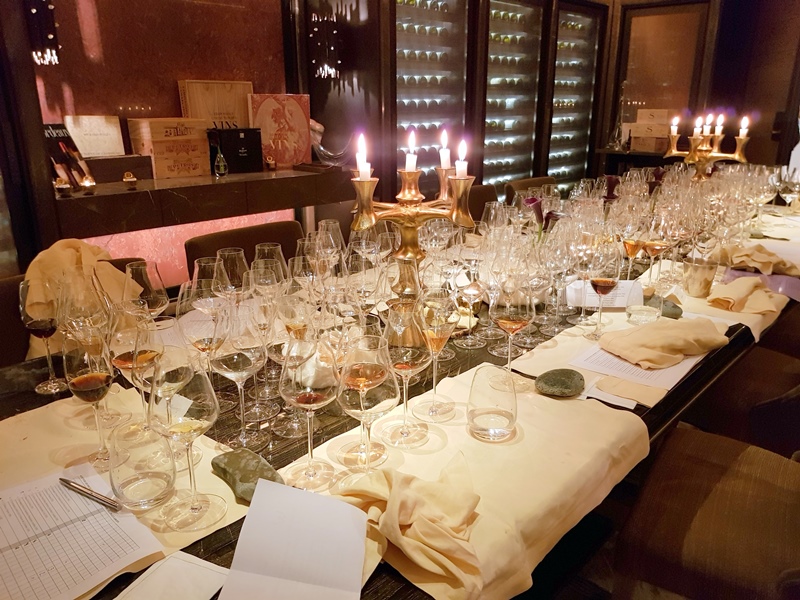
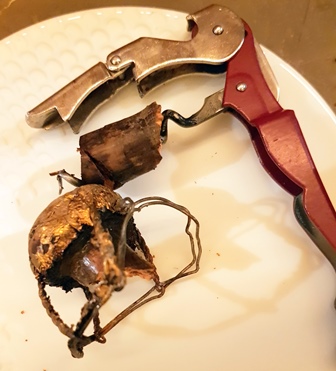
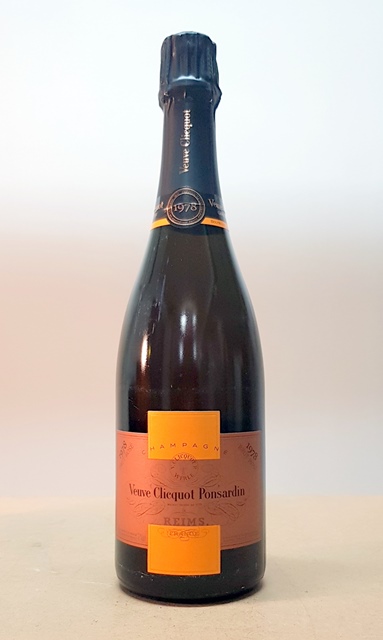
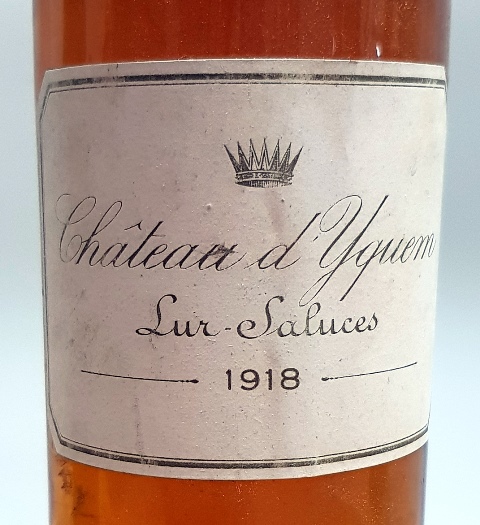
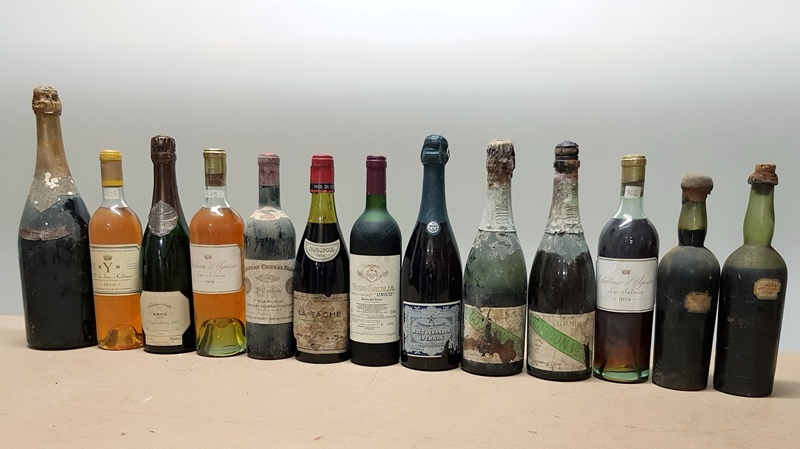
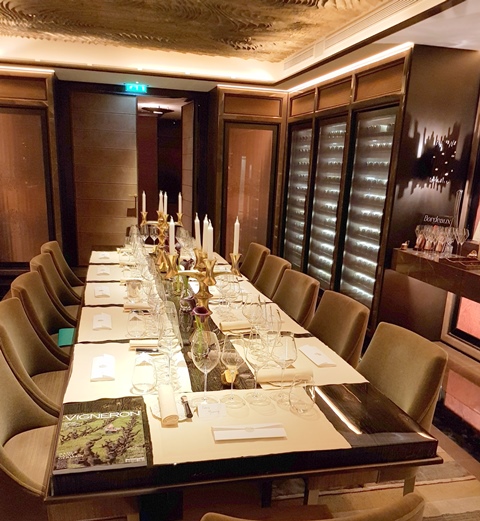
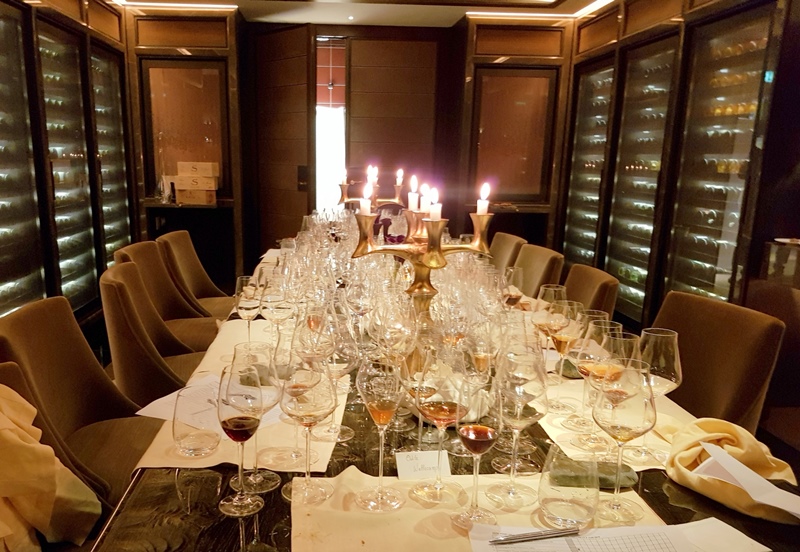
The 226th Wine-Dinners Dinner is held at the Exceptional Cellar of the Hotel de Crillon. It is a large room whose walls are windows where the greatest wines are exposed, with a brightness that does not harm their conservation. During the dinner at the Kaviari factory I had wanted to explore the marriage between old spirits and champagnes on caviar dishes. In this dinner, at two moments, we will explore the cohabitation of very old sauternes with rather sweet champagnes on dishes. It is with the chef Christopher Hache that I want to do it because I have the memory of nice dinners that we made before the renovation of the hotel de Crillon. During a lunch at the hotel's brasserie we had developed the menu with Christopher and his team including Pablo the pastry chef. All the logistical aspects were developed with the director of the restoration and I was able to measure to what extent all the teams of kitchen, table service and sommellerie are involved. It's nice to feel such a motivation. I had delivered my wines almost a week ago and they were set up the day before by Xavier, the excellent sommelier who will follow us all night with Elise, sommelier. Gautier, will manage the service and will be accompanied by Manon. And the chef will come several times to cover our plates with delicious sauces. At 16:30 I am hard at work to open the bottles. I had brought two bottles of Yquem 1918 to be able to choose at the last moment the one that would be suitable, the lower one having a more sympathetic color. I opened the lowest and the perfection of its rich and flawless perfume reassured me. The 1955 Cheval Blanc perfume is extremely pure and the cork is beautiful. Due to a tightening at the top of the neck, the cork of La Tâche 1959, very healthy, comes in several pieces. Its promising but still closed odor indicates that aeration will do him good. The cork of Vega Sicilia Unico 1959 comes in many crumbs because the top of the neck tightened and sharp, forbidden to go up the whole. The 1894 Yquem is the only bottle that does not have its original cap. It is marked on the new stopper that reconditioning dates from 1989 but I cannot believe, while it is written, that this cap is so young, because it is blackened in places and splits like old plugs. This is an enigma. The perfume of wine is magic of complexity. The Yquem 2001 opened just after, the darling of victory since he has won all the best ratings since birth, has a fragrance that seems discreet alongside the 1894 which is paradoxical. The wax of the 1869 Cyprus bottle is so thick that I would need a jackhammer to remove it. The scents at the opening are very smoked, even old cabinet. We feel that after aeration it will be big. The most beautiful smell, by far, is that of Rhum 1864, olfactory bomb combining power and incredible sweetness. While I open the bottles a dialogue is formed with the cooks who prepare the dishes. I will taste sauces, I suggest some attenuations and when we talk about the avocado that would accompany the poached foie gras, I would tend to want to forget it, but Christopher Hache who will join us later, will convince me to keep it. After the wines are opened and at 18:15, I open the first champagnes. The magnum of Krug Grande Cuvée has a blackened cap that breaks when I turn the top. I get the bottom with the tirebouchon. The perfume is promising and as the format is a magnum, I allow myself to taste this Krug which is divine. Xavier enjoys my glass. He is delighted. The 1962 Krug Collection will need air to flourish and the 1978 Veuve Clicquot Rosé is so powerful, with an explosive bubble that Xavier makes a suggestion that I immediately approve: instead of putting this rosé on the lobster, it would be worth better put it on the pigeon, because there will be no fight with la Tâche and the Spanish wine.

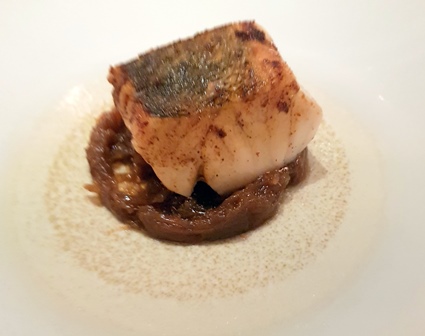
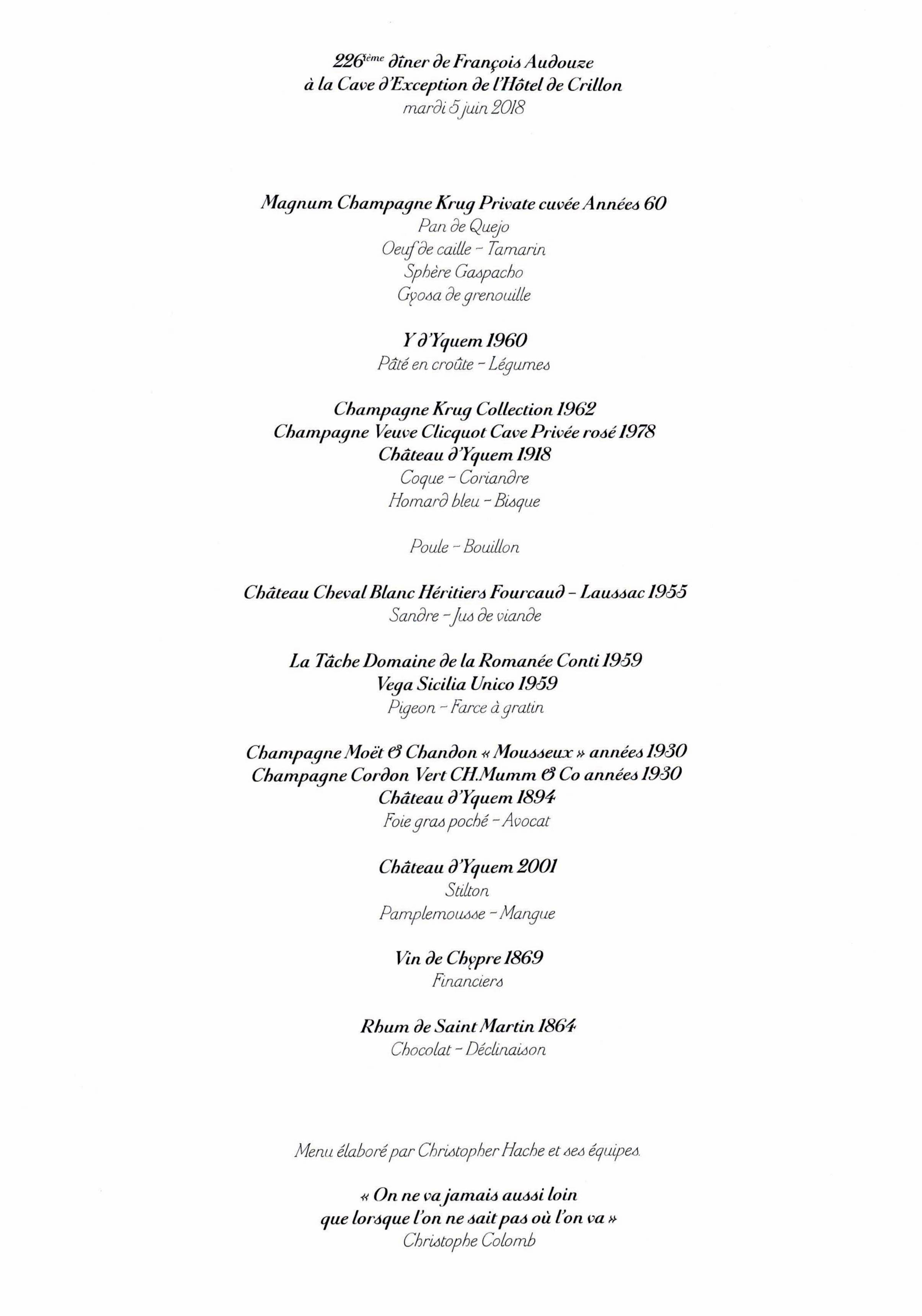
Everything seems on track, I will not need the two spare bottles that I brought. I can change and wait for the guests. We will be twelve, including a woman. The eleven guests all know each other professionally and nine of them have already participated in dinners, the tenth attended a session of the academy of old wines and the eleventh is the only "rookie". The aperitif is taken upright. Appetizers are: Quejo Pan & Quail Egg - Tamarind / Gaspacho Sphere / Frog Gyosa. The Magnum Champagne Krug Private Cuvée from the 60ies is rather from the 50ies when we take into consideration the cork and taste. The bottle is beautiful and of great rarity. The champagne is a little amber. In the mouth it plunges all of us into the world of ancient wines because there is no resemblance to current champagnes. It is powerful, sweet, round and offers both red fruits and salt. It has no bubble but a beautiful sparkling, it is very gastronomic and goes very well with the varied tastes of finger foods, the most beautiful agreement being with small tomatoes reconstituted that we bite at once. We sit down to table. The menu composed by Christopher Hache is: pie - vegetables / shell - coriander / blue lobster - bisque / chicken - broth / pikeperch - meat sauce / pigeon - stuffing au gratin / poached foie gras - avocado / stilton / grapefruit - mango / financial / chocolate - declination. The Yquem Y 1960 is a beautiful clear gold. The nose is very close to that of a Yquem and in the mouth, while it is a dry wine, this wine of Graves has a lot of kinship with Yquem. It looks more like a light Yquem than a dry wine. It is delicious, round and full but the agreement probably a little too conventional that I proposed with the pie will deprive it of votes at the end of the meal which is unfair because it is a wine of great pleasure. The soup of shells coriander is accompanied by the Château d'Yquem 1918 because I remembered a successful marriage with a shell soup and Yquem. I probably did not explain enough, I do not know, but even if the agreement was found, it should have avoided coriander and make a broth rather than a cream. We will have to redo the test. The Château d'Yquem 1918 will now coexist with the Champagne Krug Collection 1962 on the wonderful lobster. The very rare Champagne is completely different from the Krug Private Cuvée of the aperitif. The 1962 is sharp and of great depth. It is an intense and educated champagne. He inspires respect. The 1918 Yquem is of rare elegance. She is a very feminine Yquem who walks around twirling her crinolines and vertugadins. The demonstration is made that a great noble champagne can cohabit with an elegant Sauternes. What is impressive is that the trace of the Yquem in the mouth never ends and never goes out. And this is where the absolute weapon appears, advised by Alexandre de Lur Saluces, chicken broth, served in a cup, which recalibrates the palate and makes it ready to face the reds. It's really effective. We will all be touched by lightning, as the agreement that arrives is out of the ordinary. The Château Cheval Blanc Heirs Fourcaud-Laussac 1955 merges with the zander (pikeperch) in a symbiosis unheard. It is undoubtedly the incredible perfection of the agreement that will propel this wine in first place in the final ranking. The grain of the wine is heavy, truffled like the most beautiful bordeaux of the right bank. I would put this wine on top of the recent Cheval Blanc 1947 that I had the opportunity to drink. This wine is glorious, balanced, rich and full of serenity. On the pigeon, we will taste three wines because to the two red wines I added the champagne that should have been served on the lobster and that Xavier and I decided to move. La Tâche Domaine de la Romanée Conti 1959 had at the opening a fragrance that required aeration but promised. He is now subtly Burgundian. It has the beautiful bitterness of the wines of the Romanée Conti estate. He may be a little shy next to Spanish wine. The supreme pigeon showcase it.

Champagne Veuve Clicquot Cave Privée rosé 1978 is a bubble bomb after the previous champagnes that had almost no. It is adapted to the pigeon and finds its place without quarreling of borders with the two reds. It is large and long trace in the mouth, in pink tones that suggest the blood of the pigeon. It is very gastronomic.

The Vega Sicilia Unico 1959 is the quiet strength. His nose was strikingly balanced at the opening. He still is. It's a Frank Sinatra. Despite his ease he has a rare power that allows him to be most suited to pigeon paw and especially the succulent stuffing. It looks like this "farce" was designed for the Spanish wine.

We will now explore the second challenge of combining an old Yquem with sweet champagnes on the same dish. I put two bottles of Cordon Vert CH.Mumm & Co 1930, one almost full and the other half only. We start with the most evaporated which is an incredible surprise because the champagne is lively, precise, measured sugar, the sweet is elegant. And I'm going to suggest something that I never do, the fuller bottle will be served in the same glass. It turns out that it works and this champagne delights me as it is precise and lively. We would not have given three cents to these tired, torn and stained bottles, but in the glass it's a marvel.

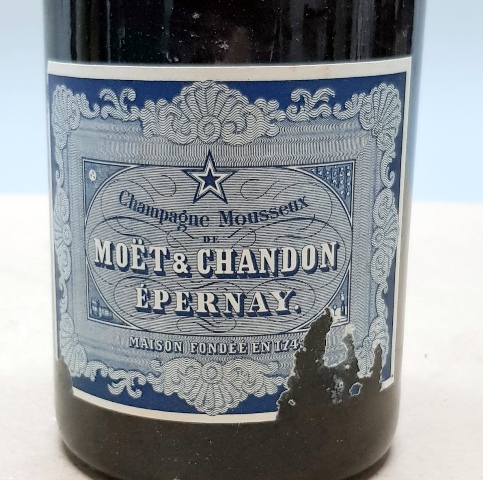
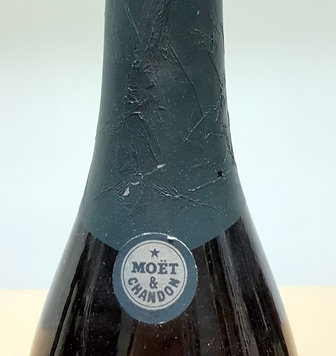
Beside, the Champagne Moët & Chandon "Mousseux" from the 1930ies that I would rather see from the 50ies is a little clumsy, heavy sugar. It is interesting but the Cordon Vert is much more lively. The Sparkling wine"Mousseux" is not lacking in interest because the sublime poached foie gras enhances it.

Christopher Hache was right to have me keep in the recipe the burnt avocado, sweet as a candy, because it marries wonderfully with the Château d'Yquem 1894 absolutely glorious. This wine has incredible power. While I'm not a foolish lover of reconditioned wines, this Yquem rebouched in 1989 is a perfection and an incredible richness and poached liver enhances it. Complexity, aromatic richness, length and power make it an immense wine that will be the first of my vote.

What is paradoxical is that the Château d'Yquem 2001, a magnificent expression of a Yquem young and one of the greatest in history is almost "pale" next to the former 107 years his eldest. The agreements with stilton then with grapefruit and mango work fully with the 2001.

The Cyprus Wine 1869 is strange because it has smoky accents, but under this envelope it reveals beautiful spices and a beautiful pepper. It is a confusing but charming wine, very interesting for its taste that has nothing comparable. The very successful financiers suit him exactly.

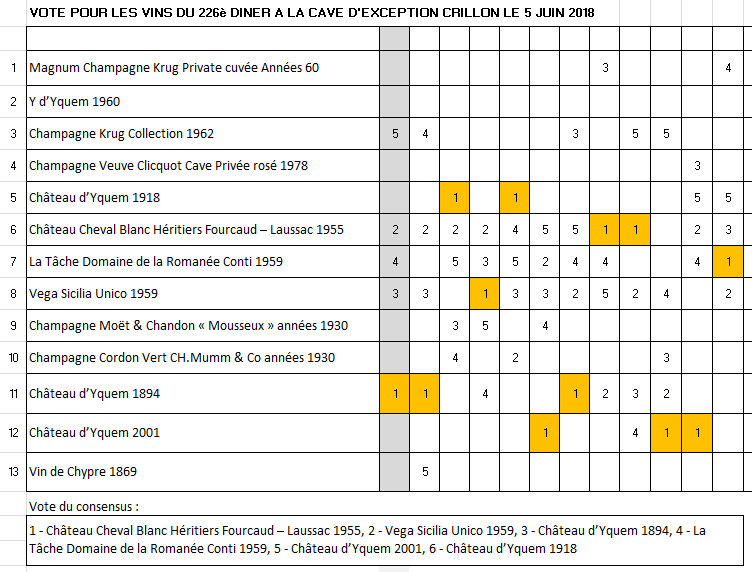
We are twelve to vote for the five favorite among 13 wines since Rhum is not part of the vote. 12 wines out of 13 had votes which makes me extremely happy. Six wines had the honor of being named first. The Yquem 1894 and the 2001 Yquem each had three first votes, L'Yquem 1918 and Cheval Blanc 1955 each had two first votes. La Tâche 1959 and Vega 1959 each had a first vote. The Cheval Blanc who has been on eleven voting sheets with two first and five second votes is the winner of this evening.

The vote of the consensus is: 1 - Château Cheval Blanc Fourcaud-Laussac Heirs 1955, 2 - Vega Sicilia Unico 1959, 3 - Yquem Castle 1894, 4 – La Tâche Domaine de la Romanée Conti 1959, 5 - Château d'Yquem 2001 , 6 - Yquem Castle 1918.

My vote is: 1 - Château d'Yquem 1894, 2 - Château Cheval Blanc Fourcaud-Laussac Heirs 1955, 3 - Vega Sicilia Unico 1959, 4 – La Tâche Domaine de la Romanée Conti 1959, 5 - Champagne Krug Collection 1962.

The most beautiful chords are pike-perch and Cheval Blanc then stuffing the pigeon "farce" with the Vega Sicilia Unico.

We take a seat in the courtyard of the hotel. I brought cigars over thirty years old, from the time I smoked. Xavier had put the cigars to hydrate in the cigar cellar of the hotel. For the first time in 27 years I smoked a Cohiba while drinking a Rhum of Saint Martin 1864 absolutely exceptional presence and sweetness, stubborn perfection.

In a friendly and cheerful atmosphere, with an attentive and motivated service, on a kitchen of a talented chef and also motivated, we lived a dinner of very great wines. I wanted to try old Yquem with champagnes on two courses. The experiment succeeded. Off to new adventures.

(pictures are in the article in French. See below)

226ème dîner de wine-dinners à la Cave d’Exception de l’Hôtel de Crillon lundi, 4 juin 2018

Le 226ème dîner de wine-dinners se tient à la Cave d’Exception de l’Hôtel de Crillon. Il s’agit d’une grande salle dont les murs sont des vitrines où les plus grands crus sont exposés, avec une luminosité qui ne nuit pas à leur conservation. Lors du dîner à la manufacture Kaviari j’avais voulu explorer le mariage entre de vieux alcools et des champagnes sur des plats au caviar. Dans ce dîner, à deux moments, nous allons explorer la cohabitation de très vieux sauternes avec des champagnes plutôt doux sur des plats. C’est avec le chef Christopher Hache que j’ai envie de le faire car j’ai le souvenir de beaux dîners que nous avons faits avant la rénovation de l’hôtel de Crillon.

Lors d’un déjeuner à la Brasserie de l’hôtel nous avions mis au point le menu avec Christopher et des personnes de son équipe dont Pablo le pâtissier. Tous les aspects logistiques ont été mis au point avec la directrice de la restauration et j’ai pu mesurer à quel point toutes les équipes de cuisine, de salle et de sommellerie sont impliquées. Ça fait plaisir de sentir une telle motivation.

J’avais livré mes vins il y a près d’une semaine et ils ont été mis à la verticale la veille par Xavier, l’excellent sommelier qui va nous suivre toute la soirée avec Elise, sommelière. Gautier, prenant en charge le service de salle sera accompagné de Manon. Et le chef plusieurs fois viendra napper lui-même nos assiettes.

A 16h30 je suis à pied d’œuvre pour ouvrir les bouteilles. J’avais apporté deux bouteilles d’Yquem 1918 pour pouvoir choisir au dernier moment celle qui conviendrait, la plus basse ayant une couleur plus sympathique. J’ai ouvert la plus basse et la perfection de son parfum riche et sans défaut m’a rassuré. Le parfum du Cheval Blanc 1955 est d’une pureté extrême et le bouchon est beau.

Du fait d’un resserrement en haut du goulot, le bouchon de La Tâche 1959, très sain, vient en plusieurs morceaux. Son odeur prometteuse mais encore fermée indique que l’aération lui fera du bien. Le bouchon du Vega Sicilia Unico 1959 vient en miettes nombreuses car le haut du col resserré et tranchant, interdit de le remonter entier. L’Yquem 1894 est la seule bouteille qui n’a pas son bouchon d’origine. Il est marqué sur le nouveau bouchon que le reconditionnement date de 1989 mais je n’arrive pas à croire, alors que c’est écrit, que ce bouchon soit aussi jeune, car il est noirci par endroits et se fend comme de vieux bouchons. Voilà une énigme. Le parfum du vin est magique de complexité. L’Yquem 2001 ouvert juste après, l’enfant chéri de la victoire puisqu’il a raflé toutes les meilleures notes depuis sa naissance, a un parfum qui paraît discret à côté du 1894 ce qui est paradoxal. La cire de la bouteille de Chypre 1869 est tellement épaisse qu’il me faudrait un marteau-piqueur pour l’enlever. Les senteurs à l’ouverture sont très fumées, voire de vieille armoire. On ressent qu’après aération il sera grand. La plus belle odeur, et de loin, est celle du Rhum de 1864, bombe olfactive combinant puissance et une douceur incroyable.

Pendant que j’ouvre les bouteilles un dialogue se noue avec les cuisiniers qui préparent les plats. On me fait goûter les sauces, je suggère des atténuations et lorsque nous parlons de l’avocat qui accompagnerait le foie gras poché, j’aurais tendance à vouloir l’oublier, mais Christopher Hache qui nous rejoindra plus tard, me convaincra de le garder.

Après les vins et dès 18h15, j’ouvre les premiers champagnes. Le magnum de Krug Grande Cuvée a un bouchon noirci qui se brise quand on tourne le haut. Je récupère le bas au tirebouchon. Le parfum est prometteur et comme le format est un magnum, je m’autorise à goûter ce Krug qui est divin. Xavier profite de mon verre. Il est enchanté. Le Krug Collection 1962 aura besoin d’air pour s’épanouir et le Veuve Clicquot rosé 1978 est si puissant, avec une bulle explosive que Xavier fait une suggestion que j’approuve immédiatement : au lieu de mettre ce rosé sur le homard, il vaudrait mieux le mettre sur le pigeon, car il n’y aura pas de lutte avec La Tâche et le vin espagnol.

Tout me paraît sur de bons rails, je n’aurai pas besoin des deux bouteilles de réserve que j’ai apportées. Je peux me changer et attendre les convives. Nous serons douze dont une femme. Les onze convives se connaissent tous professionnellement et neuf d’entre eux ont déjà participé à des dîners, le dixième a assisté à une séance de l’académie des vins anciens et le onzième est le seul « rookie ».

L’apéritif est pris debout. Les amuse-bouches sont : Pan de Quejo & oeuf de caille – tamarin / sphère gaspacho / Gyosa de grenouille. Le Magnum Champagne Krug Private Cuvée années 60 est plutôt années 50 quand on prend en considération le bouchon et le goût. La bouteille est magnifique et d’une grande rareté. Le champagne est un peu ambré. En bouche il plonge chacun d’entre nous dans le monde des vins anciens car il n’y a aucune ressemblance avec des champagnes actuels. Il est puissant rond et offre tout à la fois des fruits rouges et du sel. Il n’a pas de bulle mais un beau pétillant, il est très gastronomique et se marie très bien avec les goûts variés des amuse-bouches, le plus bel accord étant avec des petites tomates reconstituées que l’on croque en une fois.

Nous passons à table. Le menu composé par Christopher Hache est : pâté en croûte – légumes / coque – coriandre / homard bleu – bisque / poule – bouillon / sandre - jus de viande / pigeon - farce à gratin / foie gras poché – avocat / stilton / pamplemousse – mangue / financiers / chocolat – déclinaison.

L’Y d’Yquem 1960 est d’un bel or clair. Le nez est très proche de celui d’un Yquem et en bouche, alors qu’il s’agit d’un vin sec, ce vin de Graves a beaucoup de parenté avec Yquem. On dirait plus un Yquem léger qu’un vin sec. Il est délicieux, rond et plein mais l’accord sans doute un peu trop conventionnel que j’avais proposé le privera de votes en fin de repas ce qui est injuste car c’est un vin de grand plaisir.

La soupe de coques à la coriandre est accompagnée par le Château d’Yquem 1918 car j’avais le souvenir d’un mariage réussi avec une soupe de coques et Yquem. Me suis-je mal exprimé, je ne sais pas mais même si l’accord s’est trouvé, il aurait fallu éviter la coriandre et faire un bouillon plutôt qu’une crème. Il faudra refaire l’essai.

Le Château d’Yquem 1918 va maintenant cohabiter avec le Champagne Krug Collection 1962 sur le merveilleux homard. Le Champagne très rare est complétement différent du Krug Private Cuvée de l’apéritif. Le 1962 est vif et d’une grande profondeur. C’est un champagne intense et docte. Il inspire le respect. L’Yquem 1918 est d’une rare élégance. C’est un Yquem très féminin qui se promène en faisant virevolter ses crinolines et ses vertugadins. La démonstration est faite qu’un grand champagne noble peut cohabiter avec un élégant sauternes. Ce qui est impressionnant c’est que la trace de l’Yquem en bouche ne s’éteint jamais.

Et c’est là qu’apparaît l’arme absolue, que m’avait conseillée Alexandre de Lur Saluces, le bouillon de poule, servi dans une tasse, qui recalibre le palais et le rend prêt à affronter les rouges. C’est vraiment efficace.

Nous allons tous être touchés comme par la foudre, tant l’accord qui arrive est hors du commun. Le Château Cheval Blanc Héritiers Fourcaud–Laussac 1955 se confond avec le sandre dans une symbiose inouïe. C’est sans doute l’invraisemblable perfection de l’accord qui propulsera ce vin en première place du classement final. Le grain du vin est lourd, truffé comme les plus beaux bordeaux de la rive droite. Je mettrais ce vin au-dessus des récents Cheval Blanc 1947 que j’ai eu l’occasion de boire. Ce vin est glorieux, équilibré, riche et de totale sérénité.

Sur le pigeon, nous allons goûter trois vins car aux deux vins rouges j’ai ajouté le champagne qui aurait dû être servi sur le homard et que Xavier et moi avons jugé opportun de déplacer. La Tâche Domaine de la Romanée Conti 1959 avait à l’ouverture un parfum qui demandait de l’aération mais promettait. Il est maintenant subtilement bourguignon. Il a les belles amertumes des vins du domaine de la Romanée Conti. Il est peut-être un peu timide à côté du vin espagnol. Les suprêmes de pigeon le mettent en valeur.

Le Champagne Veuve Clicquot Cave Privée rosé 1978 est une bombe de bulle après les champagnes précédents qui n’en avaient quasiment pas. Il est adapté au pigeon et trouve sa place sans querelle de frontières avec les deux rouges. Il est grand et de longue trace en bouche, dans des tons rosés qui suggèrent le sang du pigeon. Il est très gastronomique.

Le Vega Sicilia Unico 1959 c’est la force tranquille. Son nez était d’un équilibre saisissant à l’ouverture. Il l’est toujours. C’est un Frank Sinatra. Malgré son aisance il a une puissance rare qui lui permet d’être le plus adapté à la patte de pigeon et surtout à la succulente farce. On dirait que cette farce a été conçue pour l’espagnol.

Nous allons maintenant explorer le deuxième challenge qui est d’associer un vieil Yquem avec des champagnes doucereux sur un même plat. J’ai mis deux bouteilles de Champagne Cordon Vert CH.Mumm & Co années 1930, une quasiment pleine et l’autre à moitié seulement. Nous commençons par la plus évaporée qui est une incroyable surprise car le champagne est vif, précis, au sucre mesuré, le doucereux étant élégant. Et je vais suggérer une chose que je ne fais jamais, la bouteille plus pleine sera servie dans le même verre. Il se trouve que ça marche et ce champagne me ravit tant il est précis et vif. On n’aurait pas donné trois sous à ces bouteilles fatiguées, déchirées et tachées, mais dans le verre c’est une merveille.

A côté, le Champagne Moët & Chandon « Mousseux » années 1930 que je verrais plutôt des années 50 fait un peu pataud, au sucre lourd. Il est intéressant mais le Cordon vert est beaucoup plus vif. Le Mousseux ne manque pas d’intérêt car le sublime foie gras poché le met en valeur.

Christopher Hache a bien eu raison de me faire garder dans la recette l’avocat brûlé, doux comme un bonbon, car il se marie à merveille avec le Château d’Yquem 1894 absolument glorieux. Ce vin a une puissance incroyable. Alors que je ne suis pas un amoureux transi des vins reconditionnés, cet Yquem rebouché en 1989 est d’une perfection et d’une richesse incroyable et le foie poché le met en valeur. Complexité, richesse aromatique, longueur et puissance en font un vin immense qui sera premier de mon vote.

Ce qui est paradoxal c’est que le Château d’Yquem 2001, magnifique expression d’un Yquem jeune et l’un des plus grands de l’histoire fait presque « pâlot » à côté de l’ancien de 107 ans son aîné. Les accords avec le stilton puis avec pamplemousse et mangue fonctionnent pleinement avec le 2001.

Le Vin de Chypre 1869 est étrange car il a des accents fumés, mais sous cette enveloppe il révèle de belles épices et un beau poivre. C’est un vin déroutant mais charmeur, très intéressant par son goût qui n’a rien de comparable. Les financiers très réussis lui conviennent exactement.

Nous sommes douze à voter pour les cinq préférés des 13 vins puisque le rhum ne fait pas partie du vote. 12 vins sur 13 ont eu des votes ce qui me fait extrêmement plaisir. Six vins ont eu l’honneur d’être nommés premiers. L’Yquem 1894 et l’Yquem 2001 ont eu chacun trois votes de premier, L’Yquem 1918 et le Cheval Blanc 1955 ont eu chacun deux votes de premier. La Tâche 1959 et le Vega 1959 ont eu chacun un vote de premier. Le Cheval Blanc ayant figuré sur onze feuilles de vote avec deux votes de premier et cinq votes de second est le vainqueur de cette soirée.

Le vote du consensus est : 1 - Château Cheval Blanc Héritiers Fourcaud–Laussac 1955, 2 - Vega Sicilia Unico 1959, 3 - Château d’Yquem 1894, 4 - La Tâche Domaine de la Romanée Conti 1959, 5 - Château d’Yquem 2001, 6 - Château d’Yquem 1918

Mon vote est : 1 - Château d’Yquem 1894, 2 - Château Cheval Blanc Héritiers Fourcaud–Laussac 1955, 3 - Vega Sicilia Unico 1959, 4 - La Tâche Domaine de la Romanée Conti 1959, 5 - Champagne Krug Collection 1962.

Les plus beaux accords sont sandre et Cheval Blanc puis farce du pigeon avec le Vega Sicilia Unico.

Nous montons prendre place dans la cour intérieure de l’hôtel. J’ai apporté des cigares de plus de trente ans, de l’époque où je fumais. Xavier avait mis les cigares à hydrater dans la cave de cigares de l’hôtel. Pour la première fois depuis 27 ans j’ai fumé un Cohiba tout en buvant un Rhum de Saint Martin 1864 absolument exceptionnel de présence et de douceur, entêtant de perfection.

Dans une ambiance amicale et enjouée, avec un service attentif et motivé, sur une cuisine d’un chef talentueux et lui aussi motivé, nous avons vécu un dîner de très grands vins. Je voulais essayer de vieux Yquem avec des champagnes sur deux plats. L’expérience a réussi. En route pour de nouvelles aventures.

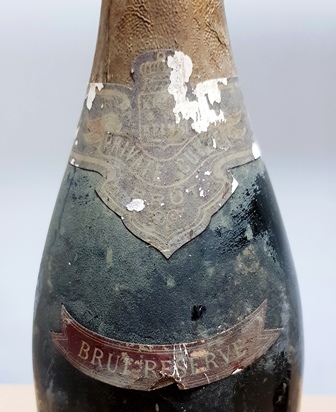
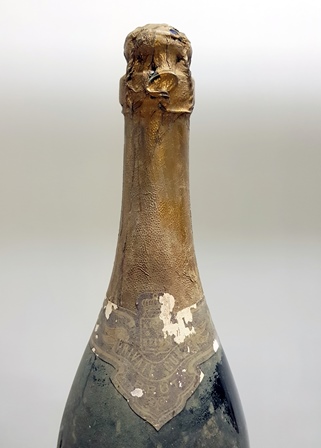
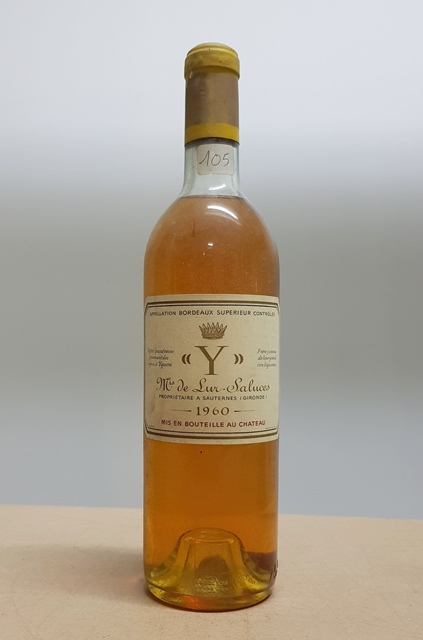
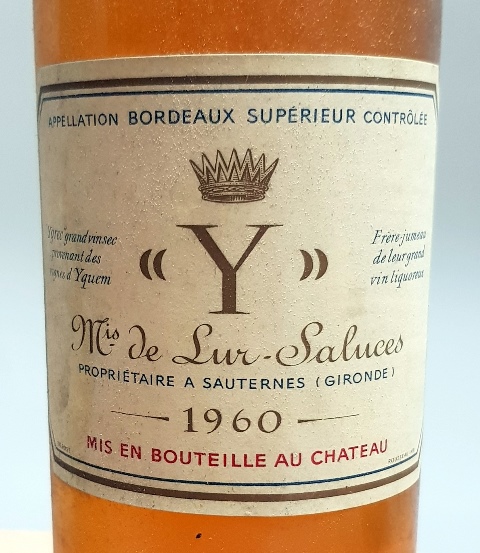
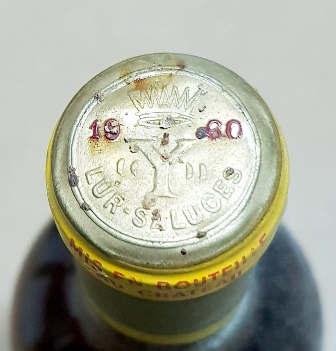
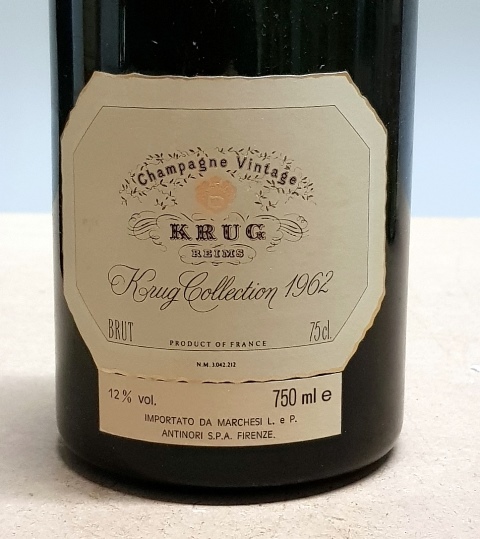
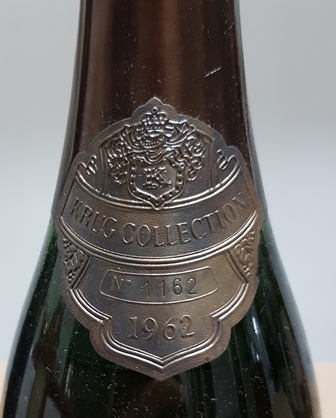
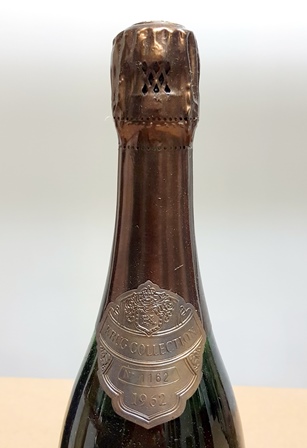
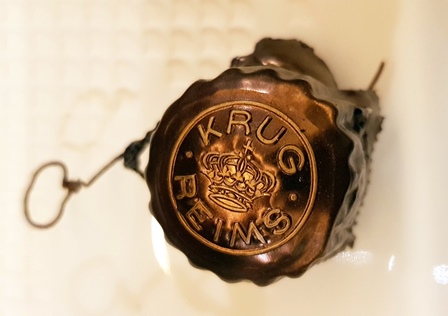
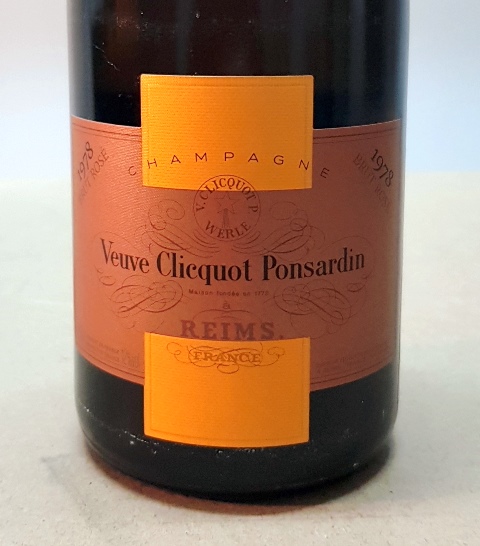
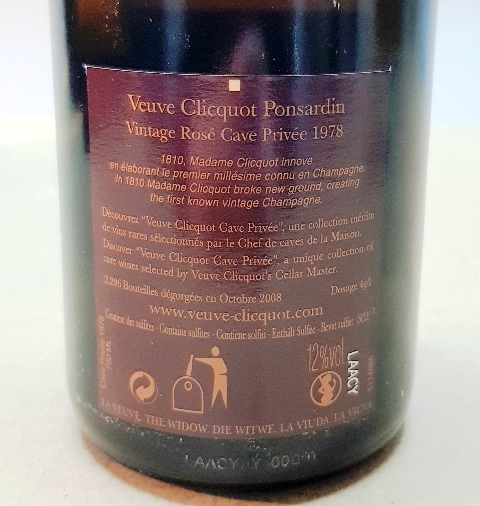
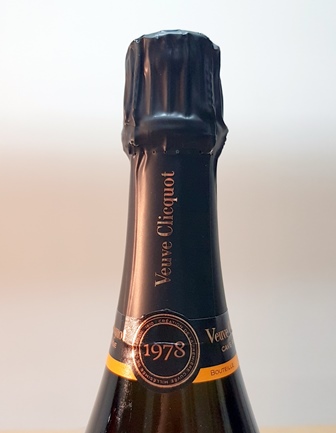
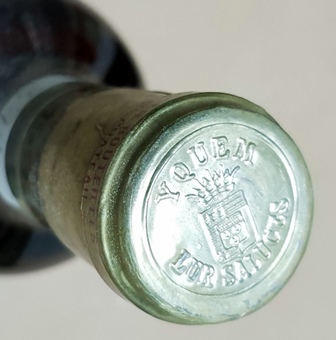
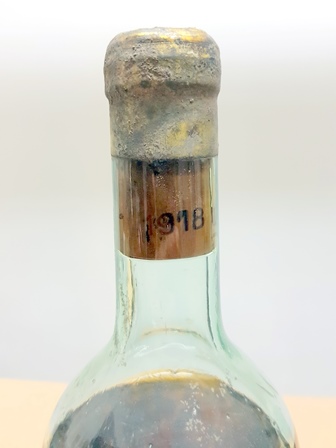
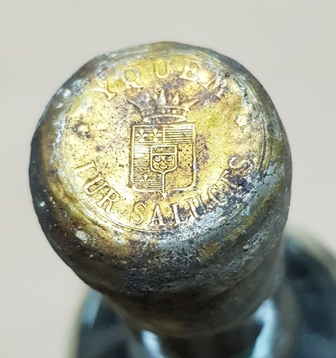
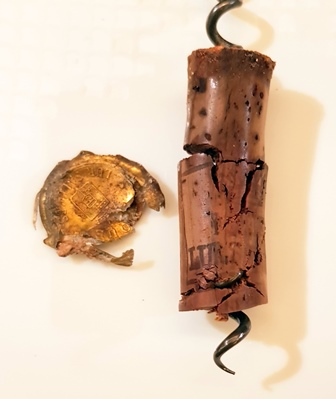
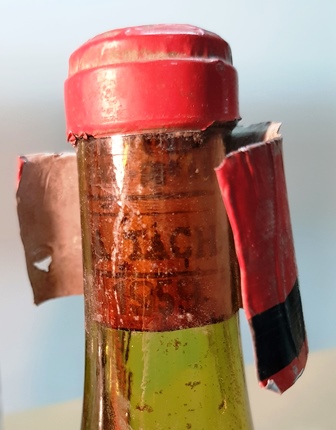
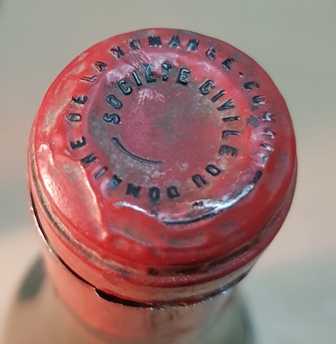
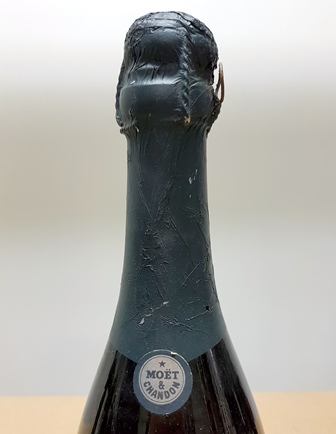
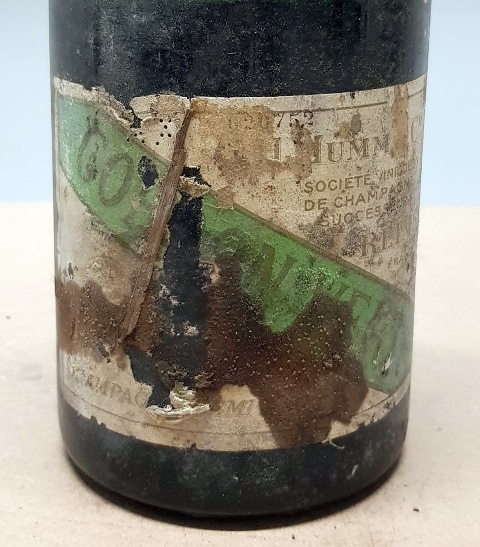
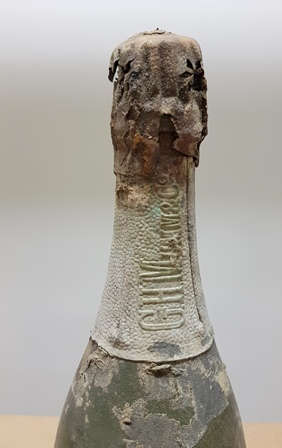
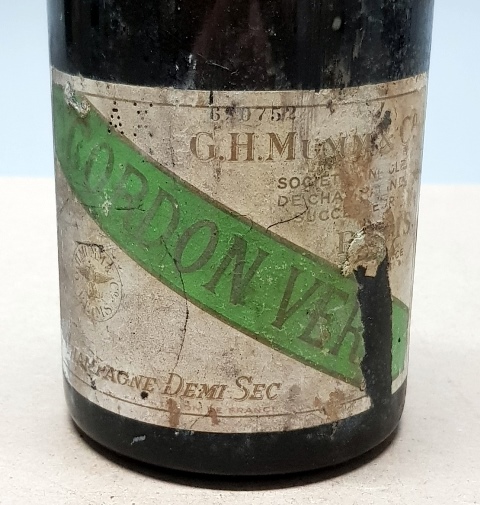
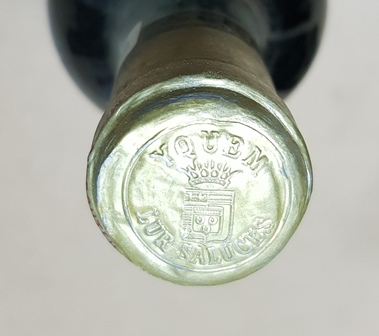
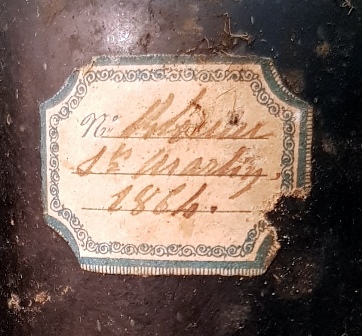
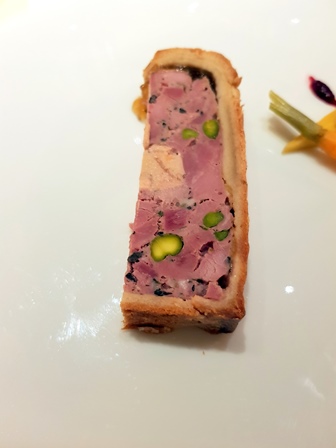
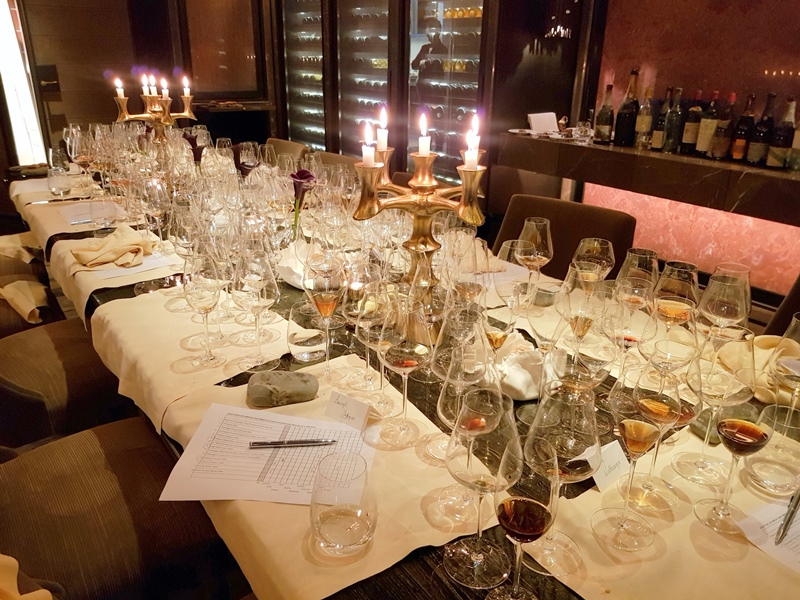
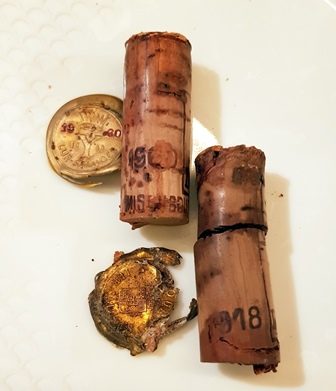
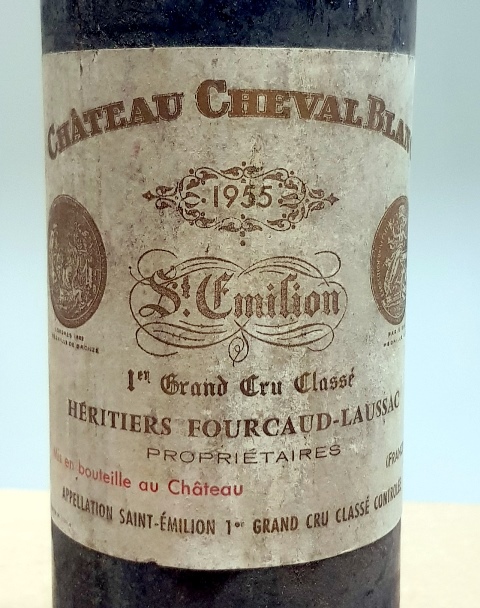
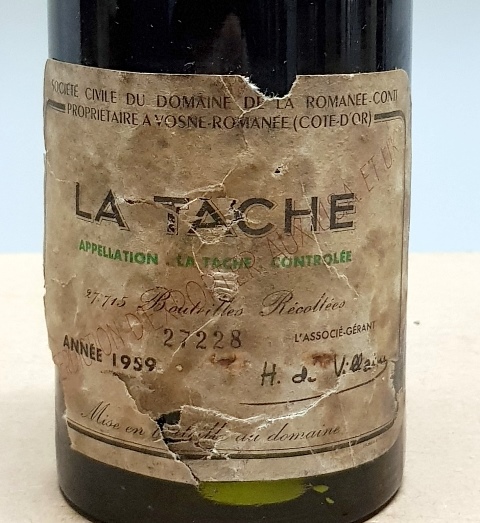
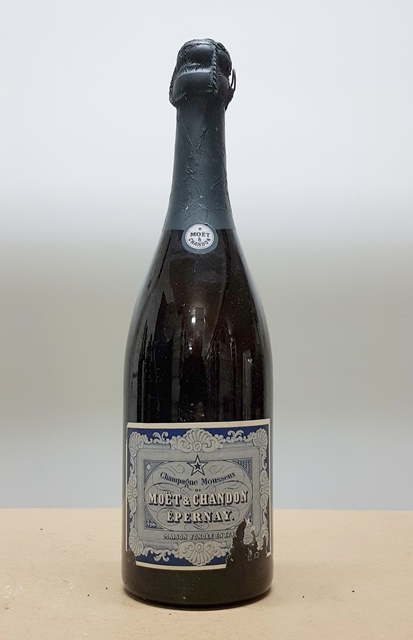
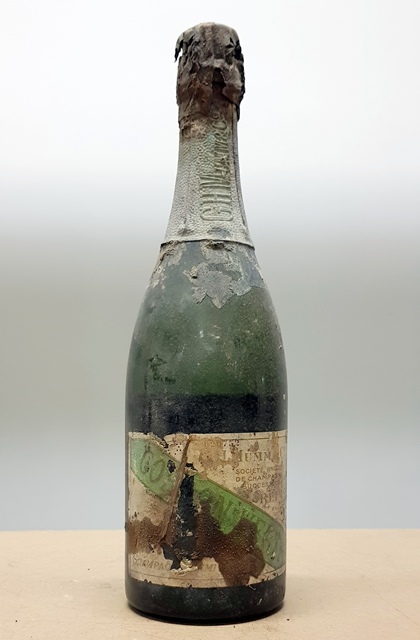
Magnum Champagne Krug Private Cuvée années 60 le bouchon s'est cassé, le bas extrait au tirebouchon 'Y' d'Yquem 1960 Champagne Krug Collection 1962 Champagne Veuve Clicquot Cave Privée rosé 1978 Château d'Yquem 1918 - j'ai prévu deux bouteilles pour le cas où il y aurait un problème rapprochement des bouchons de l'Y 1960 et de l'Yquem 1918 Château Cheval Blanc Héritiers Fourcaud -Laussac 1955 La Tâche Domaine de la Romanée Conti 1959 Vega Sicilia Unico 1959 Champagne Moët & Chandon "Mousseux" années 1930 Champagne Cordon Vert CH.Mumm & Co années 1930 (j'ai mis deux bouteilles) Château d'Yquem 1894 Château d'Yquem 2001 Vin de Chypre 1869 Rhum de Saint Martin 1864 les vins dans la cave, sans le Veuve Clicquot rosé les vins dans la cave d'exception les bouchons avec de gauche à droite et de haut en bas : Y 60, Yquem 18 / Cheval Blanc 55, La Tâche 59 / Vega 59 / Krug Private Cuvée // Rhum 1864 / Chypre 1869 / Yquem 1894, Yquem 01 / Veuve Clicquot 78 rosé / Krug Collection 1962 notre table les plats (j'ai oublié le pigeon et le foie gras poché) les verres en fin de repas les votes des 12 participants de ce dîner
Wonderful dinner in restaurant Taillevent samedi, 26 mai 2018

Tomo is the friend with whom I like to open rarities of my cellar, because he has the love for wine but also because his cellar contains, also, jewels, most often different from mine. We try to balance our contributions, the best we can.

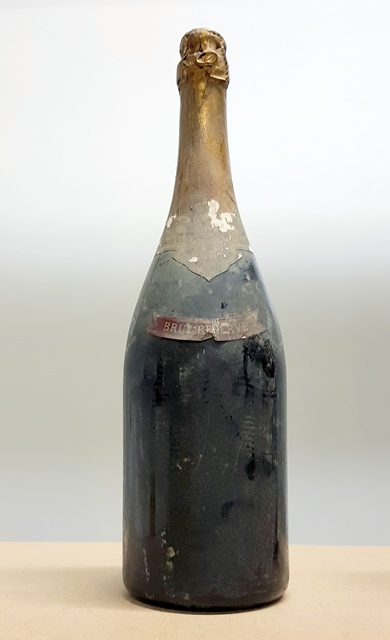
At 5:15 pm I arrive at Taillevent restaurant to open my wines. The bottle of Richebourg Domaine de la Romanée Conti 1942 has a beautiful level which is relatively rare for the estate's vintage wines, which have an unfortunate tendency to evaporate quickly. The glass of the bottle is blue as it was the case for the bottles of the war. When I remove the capsule, the top of the cork is black and I feel the earth, as often. The cork comes full which required a lot of work. It is black and almost burned on the top while the bottom of the cork is very healthy. The scent of wine surprises me because it exhales a deep red fruit like those I had felt with very old Clos de Tart in the cellars of this Domaine. The nose is delicate, subtle and promising.
In my cellar, the second bottle made me an eye and I had trusted him despite a level between low and mid-shoulder. In the dark restaurant decor because the lights are not all lit, the bottle smiles less. I uncapped La Fleur-Pétrus Pomerol 1945 and I see that the cork is slightly down in the neck, 6 millimeters perhaps. If I want to prick the corkscrew, I think that the cork will slide down, because the top of the cork is as vitrified which makes the pointing of the wick extremely difficult. Then begins a delicate surgery because I can hardly remove anything without tearing the cork into a thousand pieces. The reason is that the top of the neck is narrower than the neck. I crumble everything and I even have to go fishing for the few pieces that have fallen into the liquid. I feel the wine is pretty repulsive. There is a pretty acid scent and mop that would put off more than one. Being used to these smells, I hope that everything will be fine. My only fear is that the taste could be a little roasted because other bad smells are likely to disappear. I brought with me a Burgundy relief wine from a yea that Tomo loves, plus a half-bottle of a young Yquem and finally a surprise I want to make to Tomo.

I do not open anymore and I leave the other three wines in place because I have a scheduled meeting with Chef Teshi of the restaurant Pages for a dinner that I will do with him next week. Tomo had told me that he would meet me at the restaurant Pages and I'm surprised because he is already there, and more exactly at the brewery next to the restaurant Pages. He informs me that he has brought something to drink. It is a Champagne Dom Pérignon Reserve Abbey Vintage 1993. Apparently this wine is reserved for the Japanese market. I had never heard of it. In the brewery 116 Pages a table is formed with Teshi the chef, his wife, his assistant in the kitchen, Tomo and me and we build the menu of the future dinner while clinking on the champagne brought by Tomo.

What strikes me is that this champagne is not assembled. It lacks consistency. He has milky aspects. It does not lack mystery, it is drinkable and one can imagine that in about fifteen years it will be assembled. But for now, that's not it. The bottle still dries up in joy and the beans Edamame call a Japanese beer ideally made for beans. We greet everyone and walk back to the Taillevent restaurant.

Champagne Krug Cuvée Ambonnay Blanc de Noirs 1998 is the contribution of Tomo. This is a very pleasant surprise because this champagne, which is now 20 years old, enjoys a good maturity. Coherent, noble, he will accompany some dishes with happiness. I like it so much that so far I have never been more excited about this more expensive champagne than other more complex Krug vintages.

On the first dish called Carabineros, which evokes both carabiniers and the Caribbean, Tomo has a desire for white wine. He asks the wine list and he will offer us a mythical wine, a Corton-Charlemagne Jean Francois Coche-Dury 2002. While we discussed to balance our contributions here Tomo makes a princely gift. What a proof of friendship!

Thibaut, the sommelier who accompanies us opens the wine, makes a face and makes us feel the cork that smells strongly cork. He plans to change bottles. I suggest we test another year of this wine but Tomo orders the same year and especially since it is the last bottle of this vintage in the restaurant. We taste the wine spread. The cork is not so sensitive in the mouth and it is especially the flatness of the wine which appears and its absence of length.

The second bottle is much better, the wine is pure and crystalline, but one is still far from what must be a Corton-Charlemagne of Coche-Dury, an olfactory and aromatic bomb. The shrimp dish with green vegetables is absolutely delicious and we are doing with Tomo the remark that it is unthinkable that the Taillevent does not have three stars.

The next dish is a cold lobster with a heavy cold bisque served in a cup. The small tomatoes that accompany the lobster are enemies of the wine and the dish is less built than the previous dish. White wine goes well with lobster meat, but bisque calls bordeaux.

The 1945 Pomerol La Fleur-Pétrus bottled by T. de Vial & Fils is served now. The nose is not totally precise but it is rich and glorious. The mouth is sublime, without the slightest defect. The slow oxygenation that acted for more than four hours worked miracles. With bisque the agreement is sublime and it is still very paradoxical that this wine of 1945 is more powerful and more invasive than a Corton-Charlemagne of Coche-Dury. It delights me and I push a sigh of satisfaction because the intuition that I had for this wine proved to be justified.

I pour a glass of Bordeaux to Thibaut who will be drunk also by Anastasia, sommelier in chief. Both will be captivated by the youth of this wine which is a pomerol in the soul with its heavy truffle and charcoal imprint.

On the 'épeautre' which is an emblematic dish of Alain Solivérès, the white wine and the bordeaux adapt perfectly and it is thus that one can measure to what extent the velvety red wine is rich and complex and conquering.

The veal that had been suggested by the butler and Anastasia allows the Richebourg Domaine de la Romanée Conti 1942 to enter the scene. The nose is so fruity that I am a little lost, while Tomo says to me: "it's really Romanée Conti". Having drunk this wine already three times there is no reason that I have the slightest doubt, but such a fruit is a bit anachronistic. Does Tomo feel my reserve, I do not know, but he shows me the cork that clearly indicates the vintage, and given its condition it is unthinkable that there was a refilling. In fact, it is by tasting the delicious artichokes candied that I felt the appearance of salt which is an essential marker of the wines of the Domaine de la Romanée Conti. Everything came together and my joy became total. It is a brilliant wine and here too the two sommeliers to whom I gave a glass were astonished by the vivacity of this Burgundy.

At this point, I prefer Bordeaux to Burgundy, while Tomo prefers the opposite, but gradually my love for the Richebourg will only grow. There is so much wine that a cheese is needed and I'm happy with Saint-Nectaire who can mate with four wines, champagne, white and two reds. He is so welcoming and sweet. There is enough champagne for a dessert. Tomo had told me that he wanted to eat little and I see him order Suzette pancakes. He offers me to take two out of the four planned but I will stay firm on one. This crepe should belong to UNESCO World Heritage because it is perfect, everything is miraculously measured. It's time for me to bring my present for Tomo, because the trace of orange in the pancake sauce calls him. It is the bottom of the bottom of the bottle of Malaga 1872 that I made taste during several meals including that with the girls of the friend who had sold me these bottles. There is only dregs in thin plates but enough wine to penetrate the eternal beauty of this 146 year old wine. Tomo is thrilled because even if the dregs stick to our palate there is an incomparable aromatic richness. What to say about this meal? First of all Taillevent is a restaurant where the welcome and service are second to none. Then the traditional cuisine deserves three stars because it is solid and subtle. The choice of wines with risks on my side and the strengths of the choices of Tomo have structured a meal of very high level. And the generosity of Tomo who offered the Corton-Charlemagne touches me a lot. We only dream of one thing is to expand this circle of generosity to collectors who would not hesitate to open their wonders. There are so many bottles waiting for that.

(pictures are in the article in French)

Dîner merveilleux au restaurant Taillevent samedi, 26 mai 2018

Tomo est l'ami avec lequel j'aime ouvrir des raretés de ma cave, car il a l'amour du vin mais aussi parce que sa cave comporte, elle aussi, des joyaux, le plus souvent différents des miens. Lorsque le réalisateur du film « les quatre saisons à la Romanée Conti » m'a demandé de me filmer buvant une Romanée Conti, nous nous sommes retrouvés tous les deux Tomo et moi buvant une Romanée Conti 1986 et une Romanée Conti 1996, la 1996 apportée par Tomo et la 1986 apportée par moi. Le réalisateur souhaitait filmer un japonais en plus de moi – ça tombait bien – et nous avions en tête de finir les bouteilles filmées au restaurant Le Grand Véfour, ce que nous avons fait en restant déjeuner là où nous avons été filmés. Entre nous deux la notion de partage est forte, ce qui n'empêche pas que nous essayions le plus possible d'équilibrer nos apports pour qu'aucun de nous ne se sente ni redevable ni lésé, du moins sur le papier, puisqu'on ne sait jamais comment chaque vin se comportera. La solution la plus simple, trouvée par ailleurs, est d'acheter à deux une bouteille mythique. C'est ce que nous avons fait avec le vin légendaire Les Gaudichots Domaine de la Romanée Conti 1929 que nous avons partagé avec Aubert de Villaine, co-gérant de la Romanée Conti. Pour le dîner de ce soir, après avoir multiplié les propositions, nous avons trouvé un accord.

A 17h15 j'arrive au restaurant Taillevent pour ouvrir mes vins. La bouteille de Richebourg Domaine de la Romanée Conti 1942 a un beau niveau ce qui est relativement rare pour les vins anciens du domaine, qui ont une fâcheuse tendance à s'évaporer vite. Le verre de la bouteille est bleu comme ce fut le cas pour les bouteilles de la guerre. Lorsque j'enlève la capsule, le haut du bouchon est noir et je sens de la terre, comme souvent. Le bouchon vient entier ce qui m'a demandé beaucoup de travail. Il est noir et presque brûlé sur le haut alors que le bas du bouchon est très sain. Le parfum du vin m'étonne car il exhale un fruit rouge profond comme ceux que j'avais sentis avec de très vieux Clos de Tart dans les caves de ce domaine. Le nez est délicat, subtil et prometteur.

Dans ma cave, la seconde bouteille m'avait fait de l'œil et je lui avais fait confiance malgré un niveau entre basse et mi- épaule. Dans le décor du restaurant sombre car les lumières ne sont pas toutes allumées, la bouteille me sourit moins. Je décapsule La Fleur-Pétrus Pomerol 1945 et je vois que le bouchon est légèrement descendu dans le goulot, de 6 millimètres peut-être. Si je veux piquer le tirebouchon, je pense que le bouchon va glisser vers le bas, car le haut du bouchon est comme vitrifié ce qui rend le pointage de la mèche extrêmement difficile. Commence alors une chirurgie délicate car je ne peux quasiment rien retirer sans déchirer le bouchon en mille morceaux. La raison en est que le haut du goulot est plus étroit que le goulot. J'émiette tout et je suis même obligé d'aller à la pêche aux quelques morceaux qui sont tombés dans le liquide. Je sens le vin est c'est assez repoussant. Il y a une odeur assez acide et de serpillière qui en rebuterait plus d'un. Etant habitué à ces odeurs, j'espère que tout se passera bien. Ma seule crainte est que le goût ne soit un peu torréfié car les autres mauvaises odeurs ont toutes les chances de disparaître. J'ai apporté avec moi un vin de secours de Bourgogne d'une année qu'aime Tomo, plus une demi-bouteille d'un jeune Yquem et enfin une surprise que je veux faire à Tomo.

Je n'ouvre plus rien et je laisse les trois autres vins en place car j'ai une réunion de travail prévue avec le chef Teshi du restaurant Pages pour un dîner que je ferai avec lui la semaine prochaine. Tomo m'avait dit qu'il me retrouverait au restaurant Pages et je suis étonné car il est déjà là, et plus exactement à la brasserie qui jouxte le restaurant Pages. Il m'informe qu'il a apporté quelque chose à boire. C'est un Champagne Dom Pérignon Réserve de l'Abbaye Vintage 1993. Apparemment cette cuvée est réservée au marché japonais. Je n'en avais jamais entendu parler. Dans la brasserie le 116 Pages une table se forme avec Teshi le chef, son épouse, son adjoint en cuisine, Tomo et moi et nous bâtissons le menu du futur dîner tout en trinquant sur le champagne apporté par Tomo.

Ce qui me frappe, c'est que ce champagne ne fait pas assemblé. Il manque de cohérence. Il a des aspects lactés. Il ne manque pas de mystère, il est buvable et l'on peut imaginer que dans une quinzaine d'années il sera assemblé. Mais pour l'instant, ce n'est pas ça. La bouteille s'assèche quand même dans la joie et les fèves Edamamé appellent une bière japonaise idéalement faite pour les fèves. Nous saluons tout le monde et nous repartons à pied vers le restaurant Taillevent.

Le Champagne Krug Cuvée d'Ambonnay Blanc de Noirs 1998 est l'apport de Tomo. C'est une très agréable surprise car ce champagne qui a maintenant 20 ans jouit d'une belle maturité. Cohérent, noble, il va accompagner certains plats avec bonheur. Je l'aime beaucoup alors que jusqu'à présent je n'avais jamais été enthousiasmé par ce champagne plus cher que d'autres cuvées de Krug qui sont plus complexes.

Sur l'entrée appelée Carabineros, ce qui évoque aussi bien les carabiniers que les Caraïbes, Tomo a une envie de vin blanc. Il demande la carte des vins et il va nous offrir un vin mythique, un Corton-Charlemagne Jean François Coche-Dury 2002. Alors que nous avons discouru pour équilibrer nos apports voilà que Tomo fait un cadeau princier. Quelle preuve d'amitié !

Thibaut, le sommelier qui nous accompagne ouvre le vin, fait la grimace et nous fait sentir le bouchon qui sent fort le bouchon. Il envisage de changer de bouteille. Je suggère qu'on teste une autre année de ce vin mais Tomo commande la même année et ce d'autant plus que c'est la dernière bouteille de ce millésime. Nous goûtons le vin écarté. Le bouchon n'est pas tellement sensible en bouche et c'est surtout la platitude du vin qui apparaît et son absence de longueur.

La deuxième bouteille est nettement meilleure, le vin est pur et cristallin, mais on est quand même encore loin de ce que doit être un Corton-Charlemagne de Coche-Dury, une bombe olfactive et aromatique. Le plat de crevette avec des légumes verts est absolument délicieux et nous nous faisons avec Tomo la remarque qu'il est impensable que le Taillevent n'ait pas trois étoiles.

Le plat suivant est un homard froid avec une lourde bisque froide servie dans une tasse. Les petites tomates qui accompagnent le homard sont des ennemies du vin et le plat fait moins construit que le plat précédent. Le vin blanc accompagne fort bien la chair du homard mais la bisque appelle le bordeaux.

Le La Fleur-Pétrus Pomerol 1945 mis en bouteille par T. de Vial & Fils est servi maintenant. Le nez n'est pas totalement précis mais il est riche et glorieux. La bouche est sublime, sans le moindre défaut. L'oxygénation lente qui a agi pendant plus de quatre heures a fait des miracles. Avec la bisque l'accord est sublime et c'est quand même très paradoxal que ce vin de 1945 soit plus puissant et plus envahissant qu'un Corton-Charlemagne de Coche-Dury. Il me ravit et je pousse un ouf de satisfaction car l'intuition que j'ai eue pour ce vin s'est révélée justifiée.

Je verse un verre du bordeaux à Thibaut qui sera bu aussi par Anastasia, sommelier en chef. Les deux seront subjugués par la jeunesse de ce vin qui est un pomerol dans l'âme avec sa lourde empreinte de truffe et de charbon.

Sur l'épeautre qui est un plat emblématique d'Alain Solivérès, le vin blanc et le bordeaux s'adaptent parfaitement et c'est ainsi que l'on peut mesurer à quel point le vin rouge velouté est riche et complexe et conquérant.

Le veau qui avait été suggéré par le maître d'hôtel et par Anastasia permet au Richebourg Domaine de la Romanée Conti 1942 d'entrer en scène. Le nez est tellement fruité que je suis un peu perdu, alors que Tomo me dit : « ça c'est vraiment Romanée Conti ». Ayant bu ce vin déjà trois fois il n'y a aucune raison que j'aie le moindre doute, mais un tel fruit fait un peu anachronique. Est-ce que Tomo sent ma réserve, je ne sais, mais il me montre le bouchon qui indique clairement le millésime, et vu son état il est impensable qu'il y ait eu un rebouchage. En fait, c'est en goûtant les délicieux artichauts confits que j'ai senti l'apparition du sel qui est un marqueur incontournable des vins du domaine de la Romanée Conti. Tout s'est assemblé et ma joie est devenue totale. C'est un vin brillant et là aussi les deux sommeliers à qui j'ai donné un verre ont été étonnés de la vivacité de ce bourgogne.

A ce stade, je préfère le bordeaux au bourgogne, alors que Tomo préfère l'inverse, mais progressivement mon amour pour le Richebourg ne va faire que croître.

Il reste tellement de vin qu'un fromage s'impose et je me contente de saint-nectaire qui peut s'accoupler aux quatre vins, le champagne, le blanc et les deux rouges. Il est tellement accueillant et doux.

Il reste du champagne pour un dessert. Tomo m'avait dit qu'il souhaitait manger peu et je le vois commander des crêpes Suzette. Il me propose d'en prendre deux sur les quatre prévues mais je resterai ferme sur une seule. Cette crêpe devrait être inscrite au patrimoine mondial de l'Unesco car elle est parfaite, tout étant dosé de façon miraculeuse. Il est temps que je sorte mon cadeau pour Tomo, car la trace d'orange dans la sauce de la crêpe l'appelle. C'est le fond du fond de la bouteille de Malaga 1872 que j'ai fait goûter lors de plusieurs repas dont celui avec les filles de l'ami qui m'avait vendu ces bouteilles. Il ne reste que de la lie en fines plaques mais suffisamment de vin pour qu'on se pénètre de la beauté éternelle de ce vin de 146 ans. Tomo est aux anges car même si la lie se colle à notre palais il y a une richesse aromatique inégalable.

Que dire de ce repas ? Tout d'abord le Taillevent est un restaurant où l'accueil et le service sont inégalables. Ensuite la cuisine traditionnelle mériterait trois étoiles car elle est solide et subtile. Le choix des vins avec des risques de mon côté et des solidités du côté des choix de Tomo ont permis de structurer un repas de très haut niveau. Et la générosité de Tomo qui a offert le Corton-Charlemagne me touche beaucoup.

Nous ne rêvons que d'une chose, c'est d'élargir ce cercle de générosité à des collectionneurs qui n'hésiteraient pas à ouvrir leurs merveilles. Il y a tant de bouteilles qui n'attendent que cela.

30th session of the Academy for Ancient Wines at the Macéo restaurant samedi, 19 mai 2018

The 30th session of the Academy for Ancient Wines is held as usual at the Macéo restaurant. We are 41 members divided into four tables and the wines, officially announced for 63 will be in fact around 70 because of last minute generosity. Needless to say, we will not miss anything to drink.

I arrive before 4 pm at the restaurant with Béatrice who will help me throughout the evening. I am going to open the bottles and gradually I am joined by four friends who come to both help me but also support the morale of the opener (and theirs) with some wines not in the program. Thus, the first-comer opens a magnum of Krug Grande Cuvée with a cream label which indicates that it is over thirty years old. He brought this magnum low but we know that it does not hinder its quality, which is the case. If we start drinking at 4 pm, how will we be at the end of the evening? The Krug is so good, with a patina of old champagne particularly greedy! During this time I open the wines, helped by my friends that I help as soon as appears a situation that seems inextricable. A friend opens for the openers a Burgundy Aligote 1957 excellent freshness and energy, which we find so good that we will add it to the program of group 1 to which we are three out of four attached. Another contribution is a Sparkling Seyssel of Ain, nice sparkling very pleasant because unpretentious. But we work anyway! It so happens that I had distributed to the enrolled at the academy the list of vintages that would be present at the 30th session. The oldest is 1929 and one of the friends present who brought one of the two 1929s had asked me in the form of challenge: will you bring older? As if to titillate me a little more, he brought for the opening session a bottle without a label, without a capsule, with a cap that goes beyond and which is tied with a very fine string that would never have been suitable for a champagne . Through the glass we see a dark beige liquid cloudy. The friend does not know what it is and thinks of a wine of the beginning of the 20th century, without being able to guess its color. I open the bottle, I feel and I cry, "but it's a cider." The fragrance is unequivocal. We drink this Cider around 1910 which has a well controlled acidity, a nice taste of crushed apple and drinks well. What a nice surprise ! My friend challenges me with a wine older than 1929. He did not know that I had brought for the openers the secret weapon, which I decided to serve only when all the other wines were open: the rest of the bottle of Malaga 1872 opened two days ago. We are very concentrated and respectful because this rich wine is of a divine essence. Coffee, spices, tobacco, chocolate, are exhibited with infinite length.

At the opening, many wines have shown the same behavior of the cork: when we decapsule, the cork drops into the neck and back up above him, in the vacuum created, a little wine. As in other opening sessions, we can think that weather conditions have an influence on the behavior of the corks. Twice, something that almost never happens, Beatrice had to pour the wine out of two bottles whose cork fell into the wine, risking polluting it.

Overall, opened wines show very few faults, with just one burgundy and one Algerian wine appearing corked.

The contributions are very much in line with the philosophy of the academy and I was able to congratulate the members on the quality of the contributions. It is not the same for logistics contributing to the establishment of the event, the number of incidents of all kinds multiplying to infinity. So I announced that the rules will harden for the next session.

The champagnes of the aperitif are all from my cellar and I wanted to play on diversity: Champagne Collery Herbillon brut - Champagne Hediard Brut Rosé - Champagne David-Barnier - Champagne Laurent-Perrier Extra Brut - Champagne François Giraud Brut - Champagne Mailly -Champagne Cuvée Des Echansons 100% Grand Cru - Champagne Grande Cascade Rosé - Champagne Pierre Gerbais brut. All these non-vintage champagnes of various qualities were appreciated by the participants. One of the members added two magnums of Champagne Legras and Haas, of a beautiful vivacity and a perfume of a crazy youth. I liked the Hediard rosé, made by P. & C. Heidsieck, sharper than the Colley Herbillon but a winemaker present told me he preferred the Colley Herbillon, deeper. Some friends were able to taste the centennial cider.

We sit down to the table and here are the wines assigned to each group.

Table 1 : Champagne Dom Pérignon P2 2000 - Bourgogne Aligoté 1957 - Clairette Les Coteaux du Languedoc sec Emile Rouaud 1929 - Château Roumieu Bordeaux Supérieur blanc sec 1957 - Château La Cabanne Pomerol 1961 - Château Mouton-Rothschild 1952 - Château Reignac 1949 - Château Cheval Blanc magnum 1955 - Fleurie Girodit-Henry 1943 - Vosne-Romanée Bouchard Père & Fils 1971 - Vosne Romanée Colomb-Maréchal 1929 - Vin d'Algérie rouge d'Oran domaine Sénéclauze 1955 - Domaine de Castel-Fos Bordeaux Supérieur liquoreux #1960 - Tokaji Eszencia Aszu 1988.

Table 2 - Champagne Veuve Clicquot Ponsardin 1989 - Chablis 1er Cru Côte de la Fourchaume Domaine Philippon 1969 - Meursault Caves Nicolas 1961 - Château Terrey Gros Cailloux Saint-Julien 1969 - Château Fourcas Dupré Listrac Magnum 1970 (2 tables) - Château Lynch Bages 1975 - Château Jura-Plaisance Montagne Saint-Emilion 1952 - Château Nénin 1949 - Chambolle Musigny Piat & Cie années 60 - Vin d'Algérie rouge d'Oran domaine Sénéclauze 1959 - Monbazillac Louis Monbouché 1933 - Château d'Yquem 1996 - Tokaji Eszencia Aszu 1988.

Table 3 : Champagne Veuve Clicquot Ponsardin 1989 - Meursault Genevrières Louis Latour 1969 - Vin de l'Etoile Réserve du Prince Maurice Bouvret 1953 - Château Bouscaut Graves rouge 1981 - Château Bouscaut Graves rouge 1964 - Château Pavie Valette 1976 - Château Talbot 1966 - Château Latour 1950 - Châteauneuf-du-Pape Lagoste & Cie 1967 - Bertani Amarone della Valpolicella DOC Reccioto Secco 1959 - Barolo Alfredo Prunitto Alba 1967 - Château Clos Haut Peyraguey 1er Grand Cru Classé 1959 - Vénérable Pedro Ximenez Pedro Domecq Jerez 1959 - Tokaji Eszencia Aszu 1988.

Table 4 : Champagne Pierre Gerbais brut - Champagne Jean de Reyt à Chaigny les Roses 1979 - Pinot Gris J. Salzmann Tokay d'Alsace 1959 - Château Pichon Longueville Comtesse de Lalande 1986 - Château Fourcas Dupré Listrac Magnum 1970 (2 tables, 2 et 4) - Château les Ormes de Pez 1961 - Château Lynch Bages 1958 - Aloxe-Corton Louis Latour 1955 - Nuits Saint Georges les Boudots Lionel J. Bruck 1969 - Vosne-Romanée Léon Grivelet-Cusset 1955 - Vosne-Romanée Jessiaume Père & Fils 1959 - Cornas Auguste Clape 1982 - Château Rayne Vigneau 1989 - Tokaji Eszencia Aszu 1988.

Being in group 1 I drank the wines of this group, but generous academicians also made me taste wines from their table. The menu provided by the restaurant is: grilled mackerel, scallions and shallots confit with olive oil / minestrone of black eyed peas and spring vegetables / rack of Auvergne lamb with spices, strong juice and vegetable tart / cheese some offered by academicians / roasted fresh mango, lime meringue and candied rhubarb.

The Champagne Dom Pérignon P2 2000 is of a rare power. He is wildly young and conquering. He will have to quiet down to enjoy his class. He blossomed while warming himself.

The Bourgogne Aligoté 1957, which had been opened for openers, is frank and very friendly. This Monthélie wine is very pleasant, unpretentious.

The Clairette Les Coteaux du Languedoc dry Emile Rouaud 1929 had troubled me at the opening because his nose was that of a sweet wine very caramelized. In fact in the mouth it is dry as indicated by the label. It is more a wine of curiosity than of structure but which does not lack charm.

Château Roumieu Bordeaux Supérieur dry white 1957 has a glorious fragrance and impressive presence on the palate. It is the white Bordeaux in all its nobility with in addition to sugary suggestions as it often happens for the dry wines of the Sauternes houses.

The winemaker who brought the Château La Cabanne Pomerol 1961 which is not his domain is criticizing it while at our table we like his delicate velvet. I kindly point out that it is because it is his contribution that he criticizes it. Because wine without being transcendent is frankly good.

The Château Mouton-Rothschild 1952 is a real big Mouton. Its grain, its mache, are of a nobility of very great wine. It has no defect, it is noble and perfect and would compare readily to the great vintages of Mouton as 1955 or 1959.

The Chateau Reignac 1949 is a beautiful curiosity but I cannot let myself be seduced. It is a beautiful year and a beautiful construction, but it lacks the emotion. It was one of the two wines slightly corked for our group.

I added this morning Château Cheval Blanc magnum 1955 so that one of the wines of our group can be assigned to the group of the one who brought it. I took this low level magnum and I must say it is a marvel. It has the power and the grain of a very noble wine but it adds a charm superior to that offered by the Mouton. And its length is extreme. I naturally tend to like the wines that I bring, but here I am happy with the delivery of this great wine.

The Fleurie Girodit-Henry 1943 has everything for him. He could return the favor to many great Burgundy and it is a rare readability that adds to his pleasure. It is a wine of pleasure.

The 1971 Vosne-Romanée Bouchard Père & Fils, which I also added at the last moment, also has a low level, but we do not feel any defect. It is the beautiful fresh burgundy in full possession of its seductive assets. I love this Burgundy of suggestion.

The Vosne Romanée Colomb-Maréchal 1929 is an exceptional year. It is felt in the width of the structure of this wine. But I preferred the message of 1971 and several other Vosne-Romanée other tables, because we had a nice provision of this appellation. Vosne-Romanée Léon Grivelet-Cusset 1955 and Vosne-Romanée Jessiaume Father & Son 1959 are more romantic than the 1929.

I have the eyes of Chimène for the wines of Algeria and therefore in principle for the Algerian red wine of Oran Sénéclauze domain 1955. Objectively it is simpler than the wines of Frédéric Lung, but it has a natural charm with coffee suggestions that I love.

The Domaine de Castel-Fos Bordeaux Sweet Superior # 1960 is nicely sweet but simple. I like these infantrymen. Of course, next to great sweet wines, he cannot support the comparison. But it's nice to drink.

I added to each of the four tables a Tokaji Eszencia Aszu Disnoko 1988. This sweet wine is a fragrance. He is rich and so captivating in his performance of seduction and with his taste of dried grapes that we would drink until the end of the night. I preferred it to the Venerable Pedro Ximenez Pedro Domecq Jerez 1959 who is much stronger and leaden, almost stunning with its caramelized and roasted strength.

Along the way I was brought wines from other tables. The Château Fourcas Dupré Listrac Magnum 1970 assigned to tables 2 and 4 is produced by the winemaker of our table. Alas the bottle has a little taste of cork. It happens.

The very nicely structured Château Pichon Longueville Comtesse de Lalande 1986 impressed me less than other guests. I have the palate more sensitive to older wines.

The Château Bouscaut Graves red 1964 is quite nice but I did not pay him the necessary attention.

The friend who brought Château Talbot 1966 is proud and he is right because it is a solid Talbot of a beautiful year.

The Château Latour 1950 is a big Latour but maybe not the biggest of the huge burgundy 1950s that I bus as Haut-Brion is mostly Pétrus.

The Chambolle Musigny Piat & Cie 60s that we could not expect much is a very nice and pretty burgundy.

The Monbazillac Louis Monbouché 1933 is indeed shading the Domaine de Castel-Fos Bordeaux Liquoreux Superior # 1960 from our table. It is a little roasted.

The Aloxe-Corton Louis Latour 1955 with a beautiful level that I added this morning is part of the authentic Burgundy I love. It must be said that 1955 is a blessed year in Burgundy.

Overall, the quality of the contributions of this edition of the academy is very beautiful. If I had to classify the wines that moved me the most: 1 - Château Cheval Blanc magnum 1955, 2 - Château Mouton-Rothschild 1952, 3 - Magnum Krug Grande Cuvée cream label, 4 - Château Roumieu Bordeaux Superior dry white 1957 , 5 - Fleurie Girodit-Henry 1943, 6 - Tokaji Eszencia Aszu Disnoko 1988.

I have kept in this ranking only wines from my table, because for others, even big, the fact that I get a drink quickly then another does not allow me to make a real judgment. There are other wines in the other tables like the Latour 1950 or the Vosne-Romanée wines that deserve a classification, but let us stay within the scope of my table for a ranking.

The menu was very good. Only the minestrone is not the friend of the wines. The service was excellent and Gwen did a service of the wines of very high level. There were some 50% regulars and 50% new ones among tonight's members. We had three English speakers from three different backgrounds, one Chinese, one German, two Belgian and one American. Beautiful cosmopolitanism. The male population was largely in the majority. It must quickly correct that. To make me forgive this injustice I offered the only woman at my table, on the sly, the last glass of Malaga 1872. It will not be enough to make me pardon this sprain to parity.

All turn signals of this thirtieth session are green. It was a very nice session of the Academy of ancient wines, with beautiful wines, drunk in one of the most pleasant atmosphere we have known.

(all the pictures are on the articles below : 6 articles)