



Sarah is American. She is today the most assiduous of my dinners, whatever the level. And what fascinates me is that she comes from the United States for my dinners without programming anything else in France. She came to the Hotel du Marc of Veuve Clicquot, the Hotel Les Crayères in Reims, but also Mougins Paloma restaurant, and the castle of Yquem, arriving the day before and leaving the next day.
Such a passion fascinates me and she has become a friend of my wife and me. We had already invited her to visit us in our southern home two years ago. We renewed our invitation and as for dinners, she only comes to France to see us.
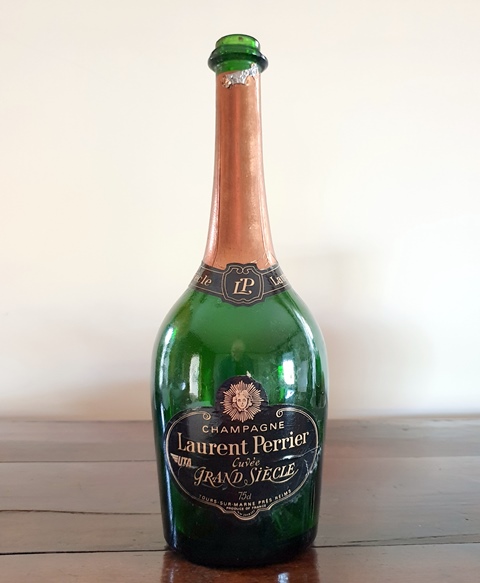
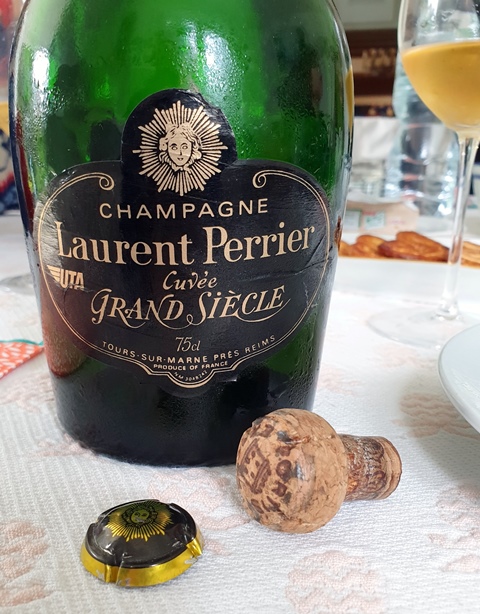
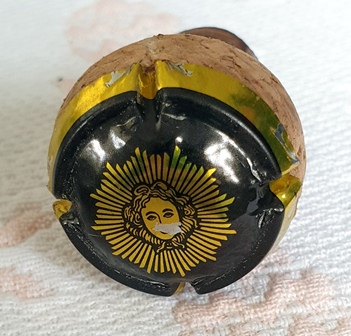
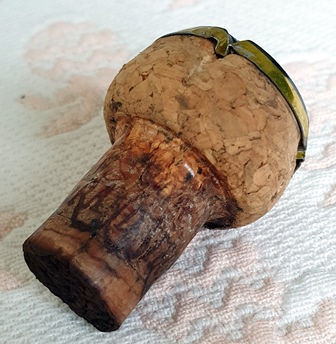
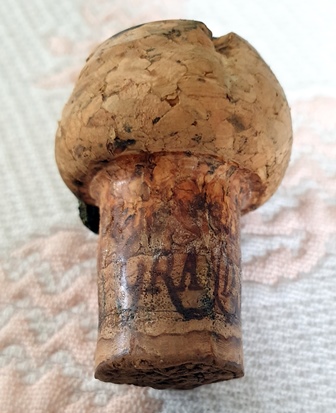
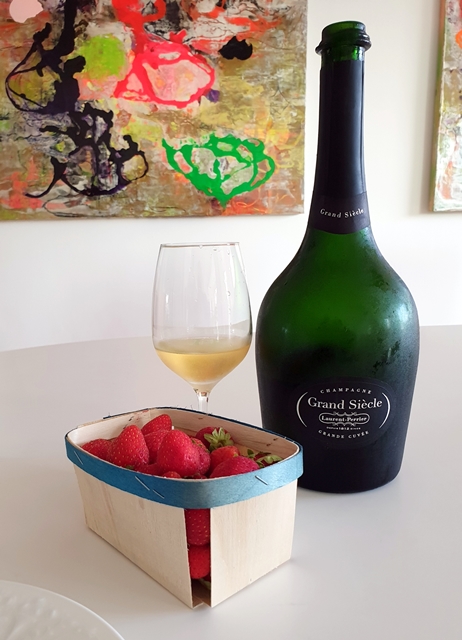
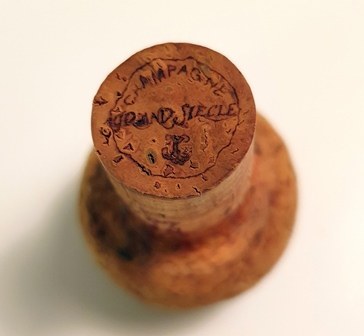
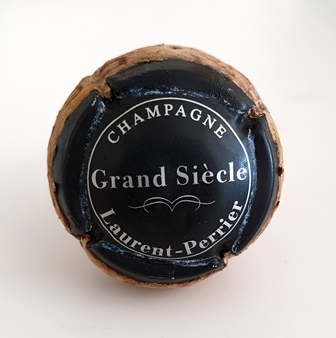
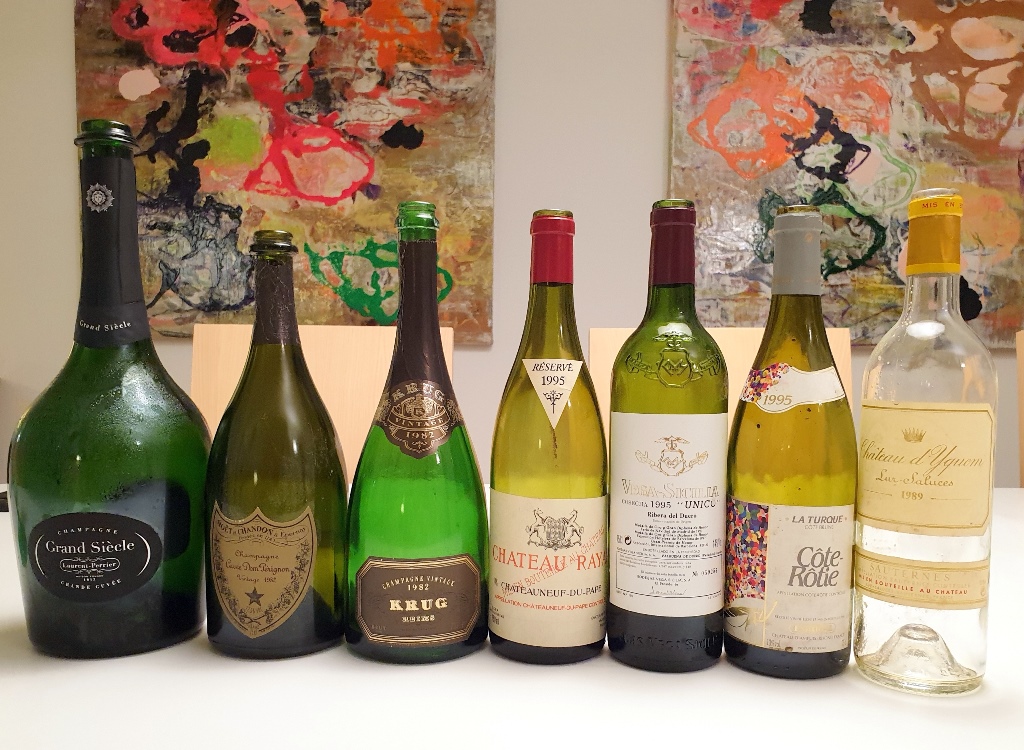
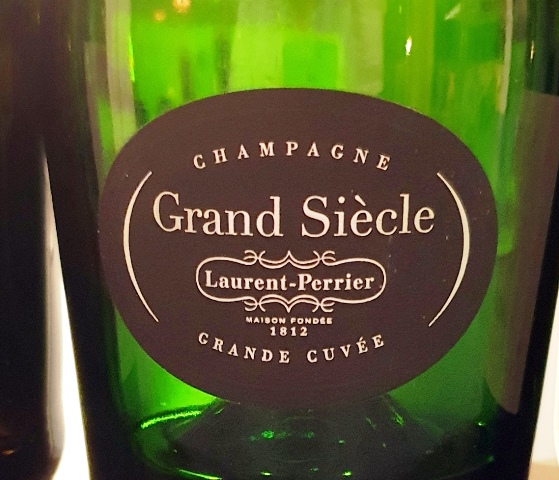
I pick her up at the airport and according to tradition I open the welcome champagne. It is a Champagne Laurent-Perrier Cuvée Grand Siècle Magnum without year, that I received in my cellar of the south in 2009. It thus matured ten years in cellar after the ripening envisaged by this house of champagne. The pschitt is strong, the color is that of a very young champagne, but the cork which became cylindrical shows that the champagne is old.
This champagne is noble, with pretty yellow fruits, and an infinite delicacy. I often call this champagne a romantic and it really is, with a beautiful fluidity, a minerality and an acidity dosed elegantly, and an impressive length in the mouth.
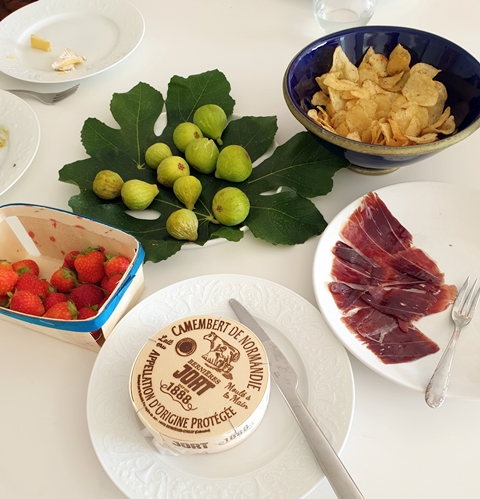
Our friend has traveled all night, we have lunch as a brunch, with an anchoïade, ham Pata Negra, truffle crisps, a Jort camembert a little advanced, strawberries and figs.
It's frugal, because we're going to celebrate tonight. By far the most striking combination that extends the length of champagne is pure and simple strawberries. It's strikingly fresh. Then come the anchoïade very sweet even if it is typified, and the Jort, then the chips.
Pata Negra and figs are too marked for this beautiful champagne.
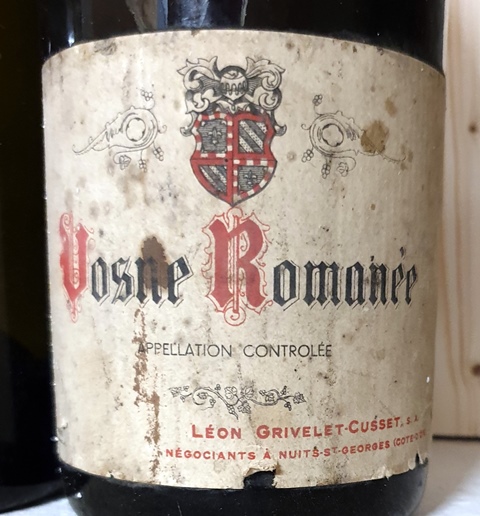
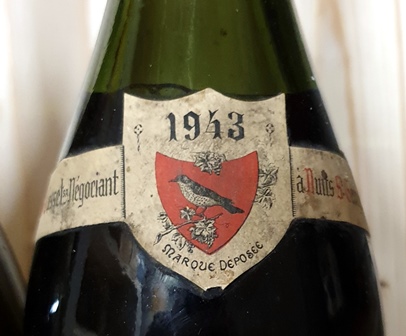
At 17:00, I open the red wine for dinner, a Vosne Romanée Léon Grivelet-Cusset Merchant 1943 at low level. The top of the capsule is very difficult to remove and the metal center of the top remains stuck on the top of the cap. It happens quite often that bottles which have lost part of their volume show a top of almost hermetic cap. This is one of the mysteries of wine conservation.
The cap is black and the lower part breaks, and I can lift them because it sticks to the glass, and I smell the wine. This is a happy surprise because the scent is engaging and sweet. This is good news.
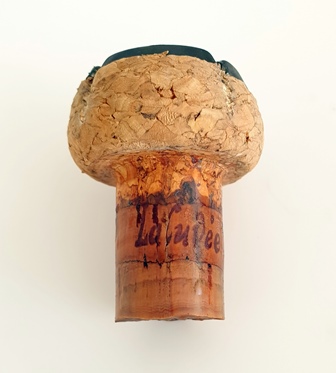
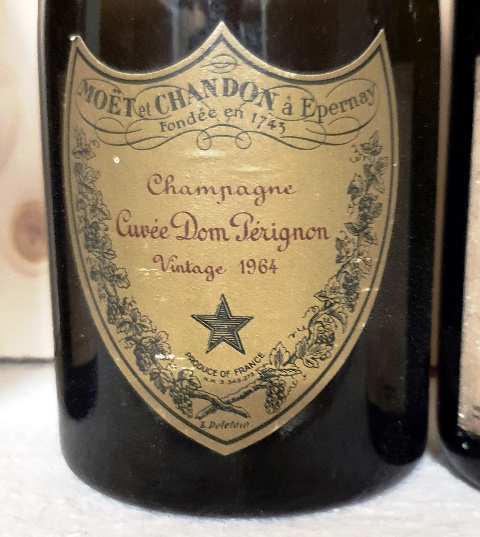
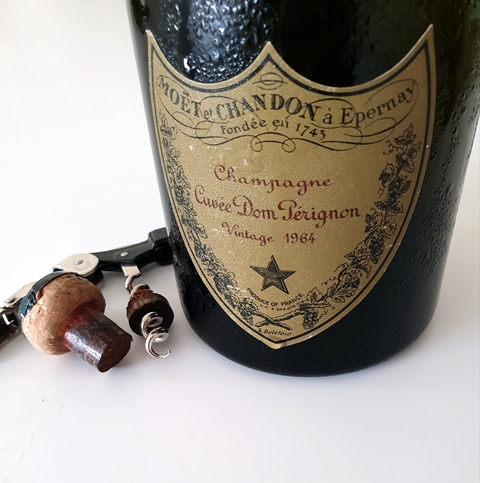
At 19 :00 I open the Champagne Dom Pérignon 1964 level to one centimeter under the cap, which is good. At the twist, the top of the cap comes alone. It leaves in place the last thickness of cork, which I remove with the corkscrew. The pschitt is non-existent and the nose is discreet.
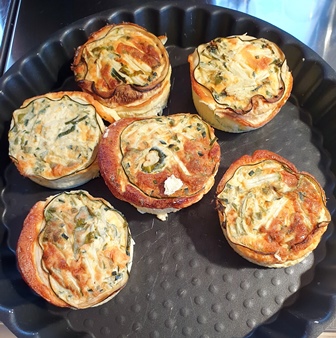
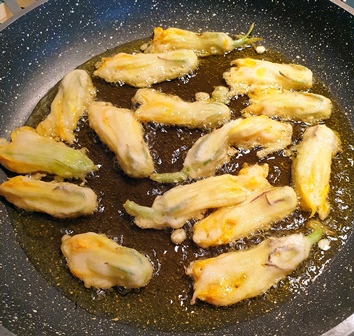
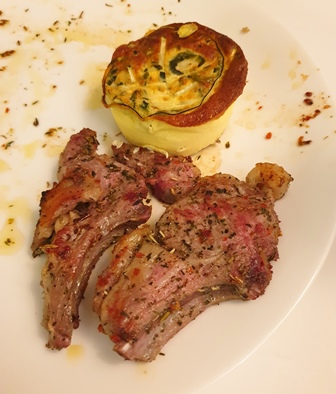
There will be no aperitif and the menu will be: terrine of duck foie gras, zucchini flowers, lamb chops with spices of Provence, zucchini cakes, pear sorbet, caramel cream with salted butter and speculos grains.
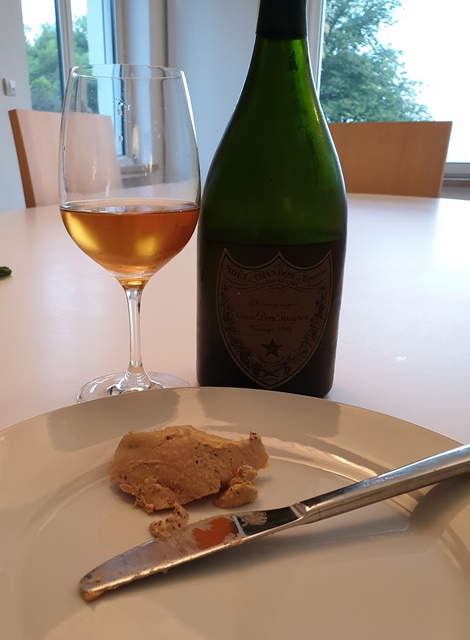
On foie gras, Champagne Dom Pérignon 1964 is a miraculous apparition. It has a lot of fruit, ranging from plum to kumquat as citrus fruits coexist with late summer fruits, and what is striking is the abundance of its complexities. While the Grand Siècle is brilliant, the age gives champagne of 55 years a complexity without equal. He is tall, long, magnificent, powerful. The foie gras enhances it.
For zucchini flowers, I think it's the most suitable red wine. The Vosne Romanée Léon Grivelet-Cusset Merchant 1943 has a slightly tiled color. The nose is charming but does not mask some acidity and in the mouth, it's 'Jekyll and Hyde'. The attack is superb, nicely fruity, cheerful, and the finish is stuck, short, showing acidity and bitterness. It's fun because it all starts with a smile and ends with a question. The lamb chop is so good and tasty that it provides support and reinforcement to the wine, to the point that we do not feel the need to open another bottle. The dish is eaten with greed, without weariness for the wine.
For dessert we take the Champagne Laurent-Perrier Cuvée Grand Siècle Magnum that shows a liveliness even more sensitive than at noon.
On the terrace overlooking the sea which rocks us with its rippling, we finish our glasses of champagne, happy with this simple but tasty meal of friendship.
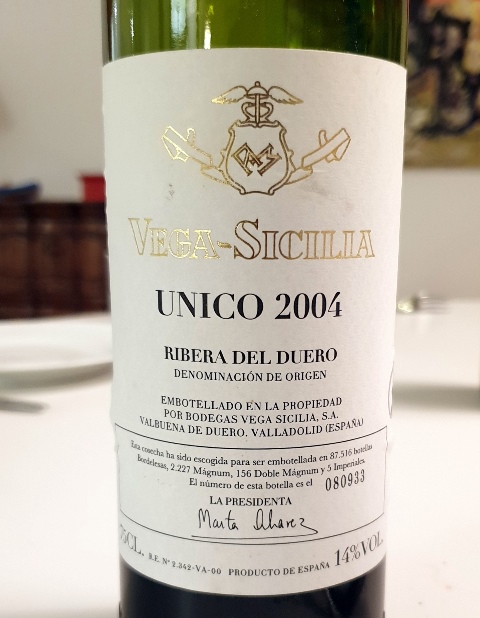
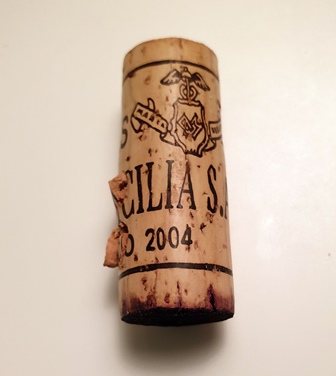
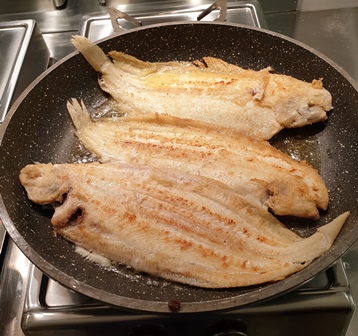
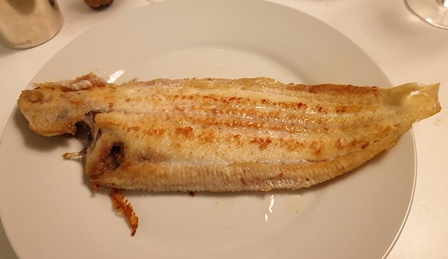
The next day at lunch, there are spicy sausages (andouillettes). It does not seem appropriate to drink the rest of 1943. It needs a wine that supports the shock. I open a Vega Sicilia Unico 2004. The color is almost black. What is fascinating about this wine is that it has a black fruit attack, a full-bodied mid-palate, and a fresh finish that slaps like a whiplash. I am in love with this Spanish wine, even when very young. After the quiet of the afternoon we prepare the evening meal with Sarah, our American friend. There will be small langoustines just fried for a few seconds and sole. We will see for what will follow. I have shelled all the langoustines and I understand better why I do not feel able to cook: it takes a patience that I would have difficulty to acquire. But the langoustines are ready.
It seems to me that it's the Vosne Romanée Léon Grivelet-Cusset Négociant 1943 opened yesterday that will best suit langoustines. And the surprise is important because the finale of the wine, which bothered me yesterday, has softened and became consistent. The wine is pleasant and its grain has enough power to accompany the subtle langoustines in perfect harmony. What a nice surprise !
The Burgundy also accompanies soles, but the harmony is less harmonious.
Vega Sicilia Unico 2004 is associated with Camembert Jort and bitterness is combined wildly.
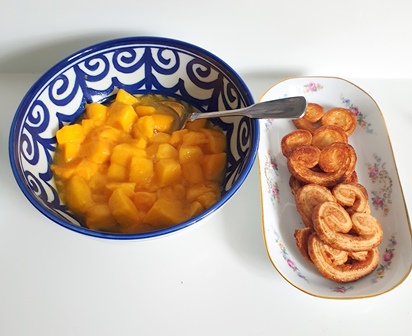
Passion fruit sherbet is served with sweet heart-shaped pancakes and the Champagne Laurent-Perrier Cuvée Grand Siècle Magnum without year, opened a day and a half ago, is even more glorious on the galettes, the sorbet not to be confronted.
The next day, the third day of Sarah's stay in our southern home, it's a big dinner coming up.
Red wine will be one of the wines that I cherish particularly. When I communicated through the press, it often happened that I was asked what wine I would take with me if I lived on a desert island. And I always answered the Côte Rôtie La Mouline Guigal 1990 because this wine gives me the image of the perfect solid and indestructible wine, absolute condition for a wine to be preserved on a desert island.
I open the bottle around 4 pm and the bottle seized in the cellar had a dusty exterior smell, which I still feel when the cork is removed. I am not able to say if this external smell has spilled over the content. There are enough 'Plans B' in the cellar so I do not get alarmed.
At 18:30 it is thirsty, so with Sarah we finish the magnum of Laurent-Perrier Cuvée Grand Siècle nibbling a pesto gouda that goes well with champagne, combining spices and sweets. The two-day champagne is always so dapper, and it's the magnum effect.
At 7 pm I open a champagne whose year is sensitive to Sarah, a Champagne Dom Ruinart 1973. The bottle is of rare beauty. The colored capsule is also very beautiful and the cork is healthy. The pschitt is very weak but the bubble is active. Discreet but active. The color is amber, lighter than that of Dom Perignon 1964. In the mouth, this champagne is an extreme refinement, elegant and complex. While I am an unconditional worshiper of Dom Perignon 1964, I am obliged to say that this Dom Ruinart 1973 is more precise, finer than the 1964.
I inadvertently opened a can of anchovies, which should not be associated with Ruinart. Small sardines appear and accompany the champagne well. But the natural harmony is with the terrine of duck foie gras.
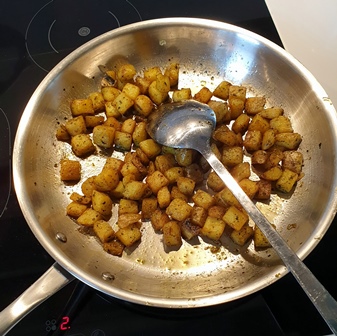
The chicken from our friend butcher is incredibly tender and the potatoes cooked in oil and impregnated in the oven by cooking the chicken that roasted just above are diabolically greedy. As soon as I feel the Côte Rôtie La Mouline Guigal 1990 I am fully reassured, there is no shadow of a dust in the assertive nose of this wine. In the mouth, thousands of small lamps light up in my brain, reminding me of the moments when I tasted this wine that I love, the archetype of the simple and perfect wine, complex while being legible, greedy and joyful. There are accents of garrigue in the rasp of this wine.
Everything in him is full, reassuring, carrying pure pleasure. And the association chicken, potato and this Côte Rôtie should be classified as a UNESCO World Heritage Site. For me, everything is happiness.
Also the meal could stop there. No need to reopen the Vega Sicilia 2004 which remains a little, no need for Jort, because we have tasted the summit of gastronomy of simplicity. A passion fruit sherbet and a glass of water made us return to earth.
I love the three stars, but from time to time, such immersion in pure and accessible pleasure by its purity is a necessity. The 1990 Mouline is an important point of passage in the quest for the Grail.
(see the pictures in the three following articles)Roman; font-size: 12pt;">

Sarah est américaine. Elle est aujourd'hui la plus assidue de mes dîners, quel qu'en soit le niveau. Et ce qui me fascine c'est qu'elle vient des Etats-Unis pour mes dîners sans programmer quoi que ce soit d'autre en France. Elle est venue à l'Hôtel du Marc de Veuve Clicquot, aux Crayères à Reims, mais aussi à Mougins au restaurant Paloma, et au château d'Yquem, arrivant la veille et repartant le lendemain. Une telle passion me fascine aussi est-elle devenue une amie de ma femme et moi. Nous l'avions déjà invitée à venir nous rendre visite dans notre maison du sud il y a deux ans. Nous avons renouvelé notre invitation et comme pour les dîners, elle ne vient en France que pour nous voir.
Je vais la chercher à l'aéroport et selon la tradition j'ouvre le champagne de bienvenue. C'est un Champagne Laurent-Perrier Cuvée Grand Siècle Magnum sans année, que j'ai reçu dans ma cave du sud en 2009. Il a donc mûri dix ans en cave après le mûrissement prévu par cette maison de champagne. Le pschitt est fort, la couleur est celle d'un très jeune champagne, mais le bouchon devenu cylindrique montre que le champagne est ancien. Ce champagne est noble, avec de jolis fruits jaunes, et une délicatesse infinie. Je qualifie souvent ce champagne de romantique et il l'est vraiment, avec une belle fluidité, une minéralité et une acidité dosée élégamment, et une longueur en bouche impressionnante.
Notre amie ayant voyagé toute la nuit, nous déjeunons comme en un brunch, avec une anchoïade, du jambon Pata Negra, des chips à la truffe, un camembert Jort un peu avancé, des fraises et des figues. C'est frugal, car on va se rattraper ce soir.
L'accord de loin le plus percutant, qui prolonge la longueur du champagne, c'est avec les fraises pures et simples. C'est saisissant de fraîcheur. Viennent ensuite l'anchoïade très douce même si elle est typée, et le Jort, puis les chips. Le Pata Negra et les figues sont trop marqués pour ce beau champagne.
A 17 heures, j'ouvre le vin rouge du dîner, un Vosne Romanée Léon Grivelet-Cusset Négociant 1943 au niveau assez bas. Le haut de la capsule est très difficile à détacher et le centre métallique du haut reste collé sur le haut du bouchon. Il arrive assez souvent que des bouteilles qui ont perdu une partie de leur volume montrent un haut de bouchon quasi hermétique. C'est un des mystères de la conservation du vin.
Le bouchon est noir et la partie basse se brise, récupérée car elle colle au verre, et je sens le vin. C'est une heureuse surprise car le parfum est engageant et doux. Voilà une bonne nouvelle.
A 19 heures j'ouvre le Champagne Dom Pérignon 1964 au niveau à un centimètre sous le bouchon, ce qui est bien. A la torsion, le haut du bouchon vient seul. Il laisse en place la dernière épaisseur de liège, que je retire au tirebouchon. Le pschitt est inexistant et le nez est discret.
Il n'y aura pas d'apéritif et le menu sera : terrine de foie gras de canard, fleurs de courgettes, côtelettes d'agneau aux épices de Provence, galettes de courgettes, sorbet poire, crème caramel au beurre salé et grains de spéculos.
Sur le foie gras, le Champagne Dom Pérignon 1964 est une apparition miraculeuse. Il a beaucoup de fruits, allant de la prune jusqu'au kumquat tant les agrumes cohabitent avec les fruits de fin d'été, et ce qui frappe, c'est l'abondance de ses complexités. Alors que le Grand Siècle est brillant, l'âge donne au champagne de 55 ans une complexité sans égale. Il est grand, long, magnifique, puissant. Le foie gras le met en valeur.
Pour les fleurs de courgettes, j'ai idée que c'est le vin rouge le plus adapté. Le Vosne Romanée Léon Grivelet-Cusset Négociant 1943 a une couleur un peu tuilée. Le nez est charmant mais ne masque pas une certaine acidité et en bouche, c'est 'Jekyll and Hyde'. L'attaque est superbe, joliment fruitée, joyeuse, et le finale est coincé, court, montrant acidité et amertume. C'est amusant, car tout commence par un sourire et finit sur une question. La côtelette d'agneau est tellement bonne et goûteuse qu'elle apporte soutien et renfort au vin, au point que l'on n'éprouve pas le besoin d'ouvrir une autre bouteille. Le plat se mange avec gourmandise, sans lassitude pour le vin.
Pour le dessert nous reprenons le Champagne Laurent-Perrier Cuvée Grand Siècle Magnum sans année qui montre une vivacité encore plus sensible qu'à midi. Sur la terrasse surplombant la mer qui nous berce de son clapotis, nous finissons nos verres de champagne, heureux de ce simple mais goûteux repas d'amitié.



 on cherche les verres du dîner
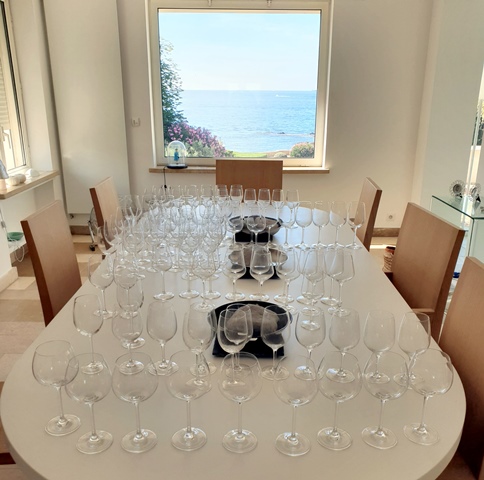
 les voici dans l'ordre de service des vins

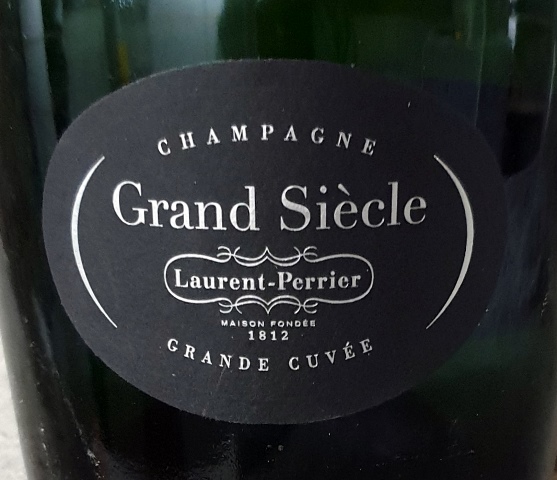
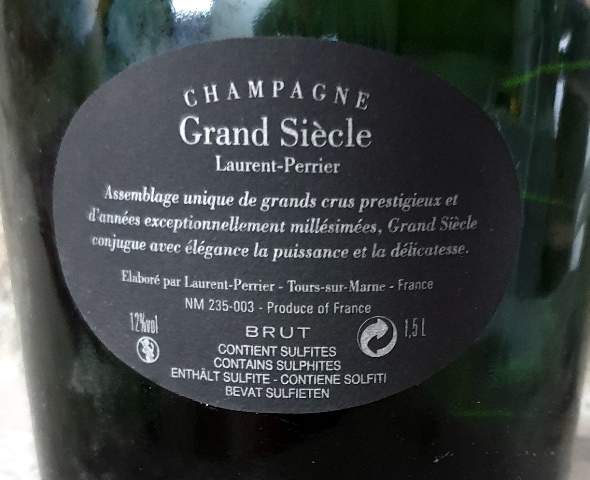
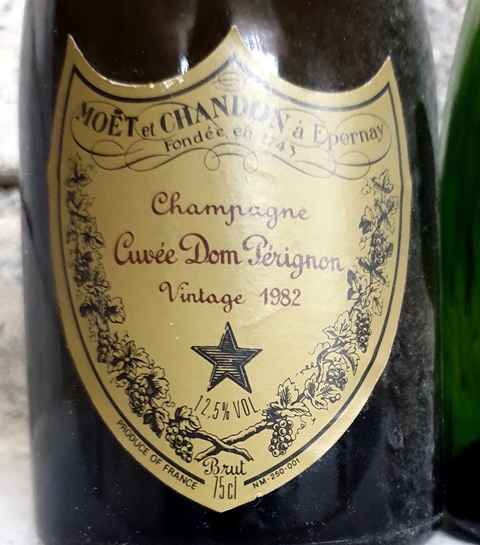







 la table est mise
 en cuisine

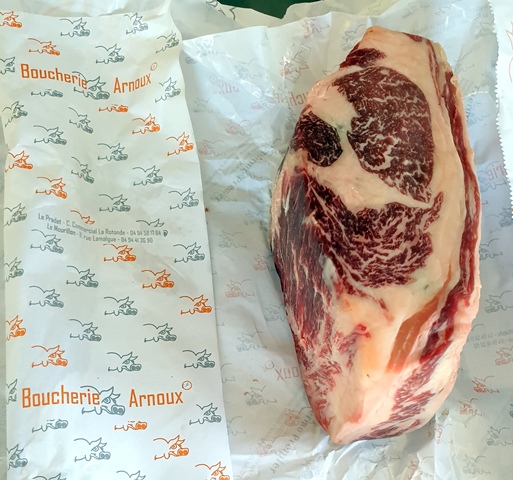

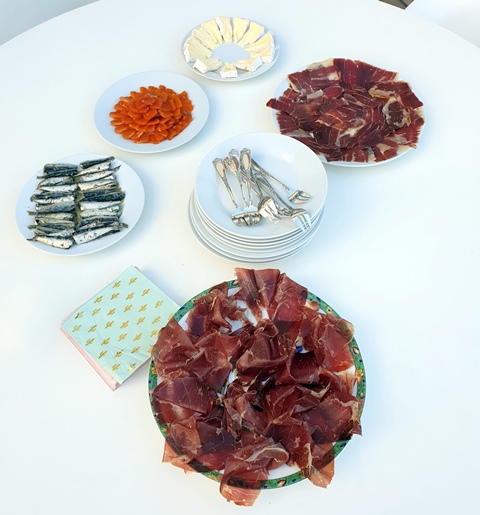
 l'apéritif
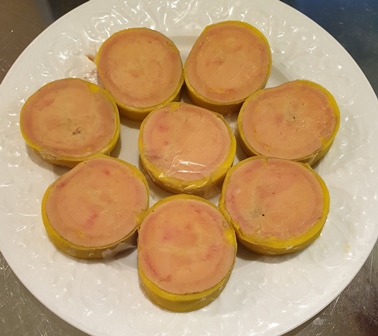
 le foie gras
 la table a maintenant les tranches de Wagyu et les pierres chaudes
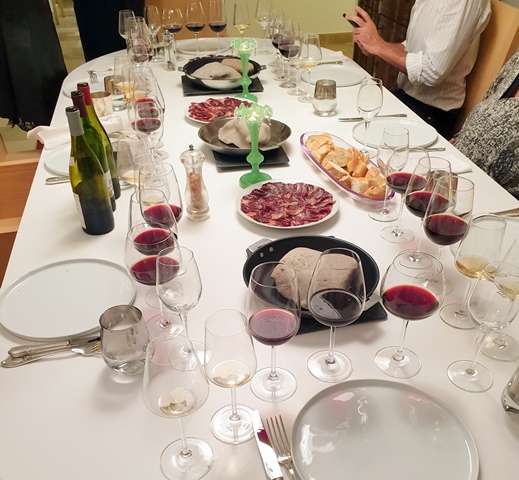



 mes verres

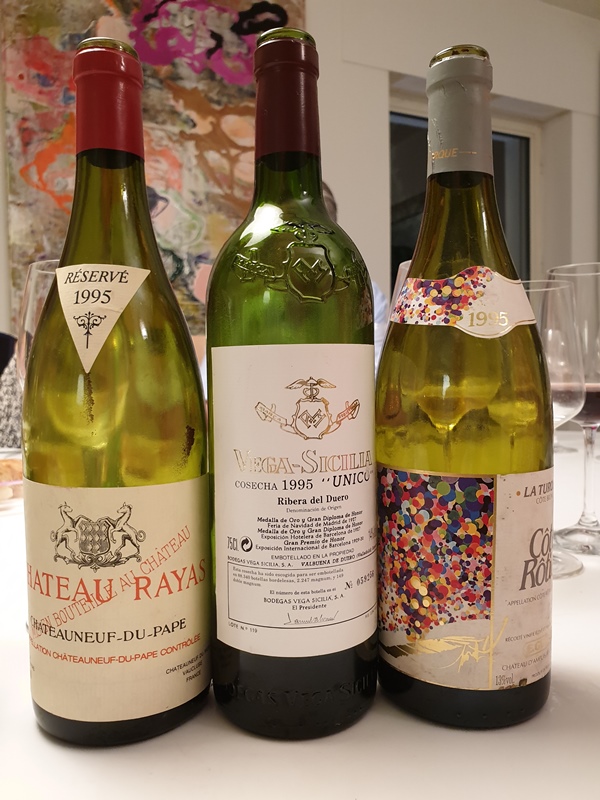
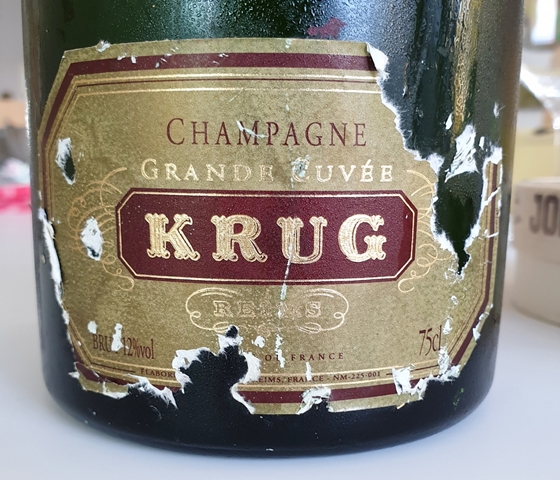

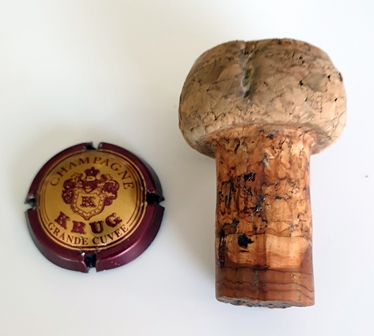
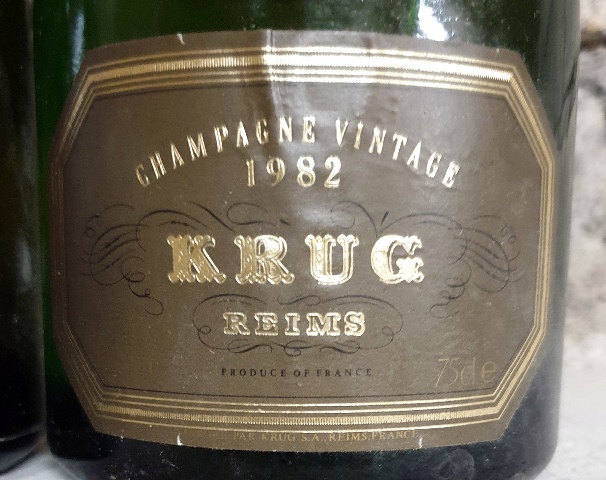
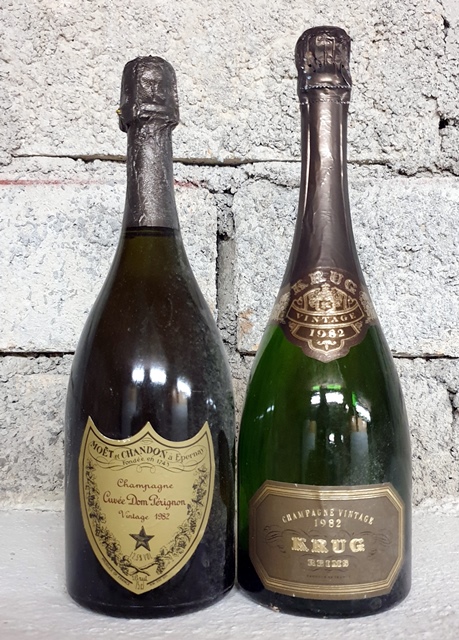
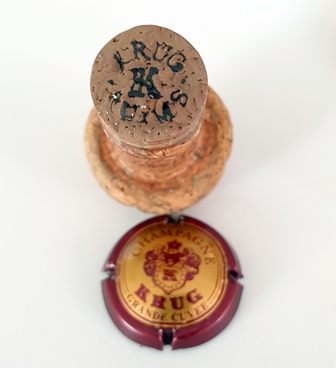 je soupçonne des rats d'avoir eu envie de goûter au Krug, en grignotant l'étiquette. Anchoïade et Jort sont des compagnons idéaux


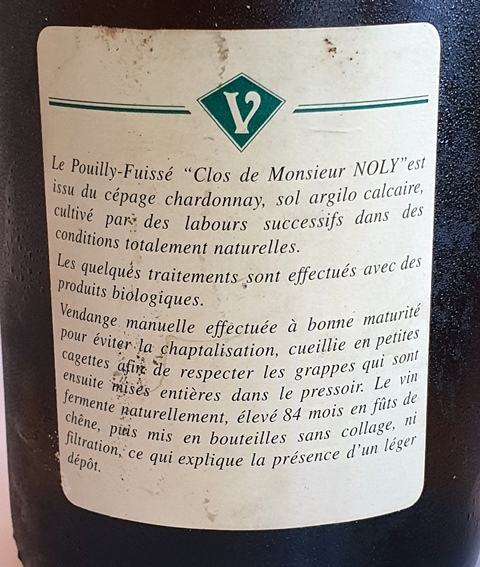

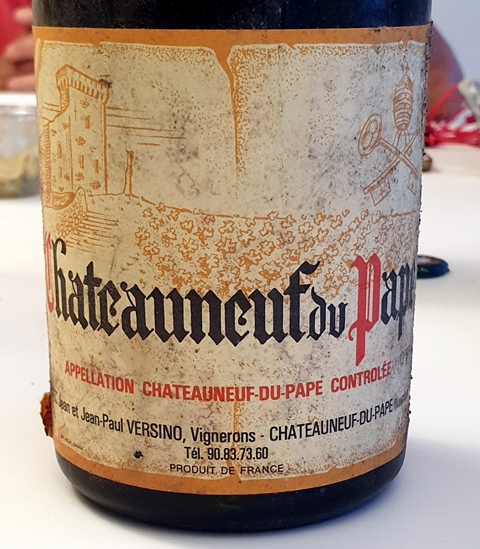
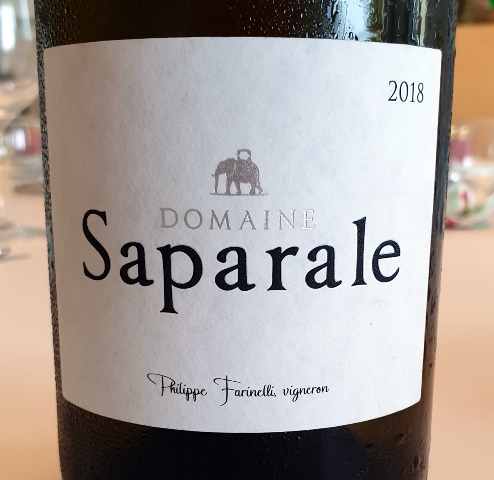
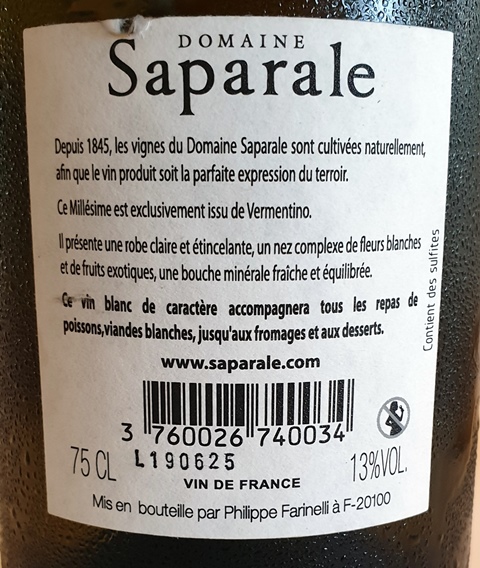
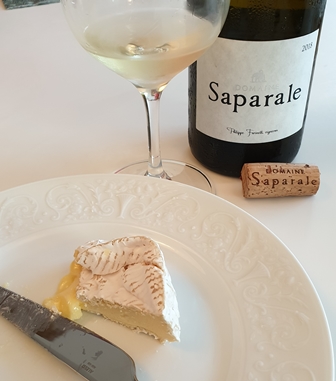 le vin corse se marie bien au camembert Jort, lui aussi !
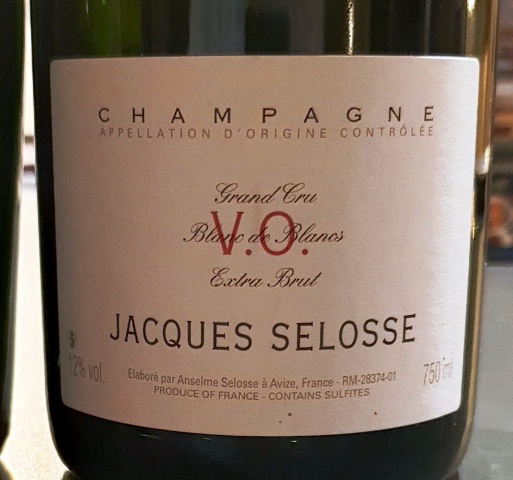
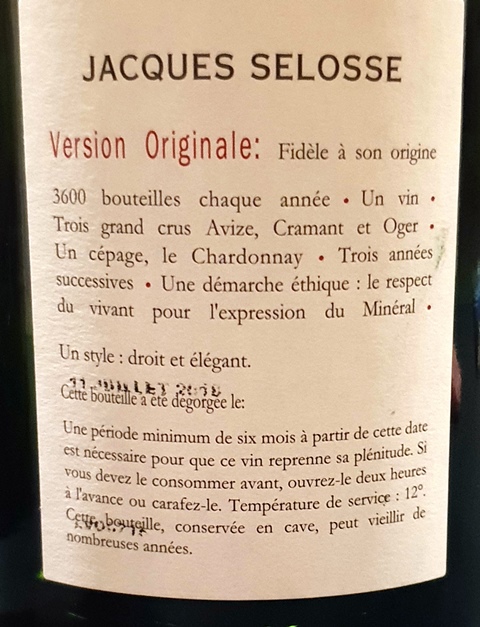

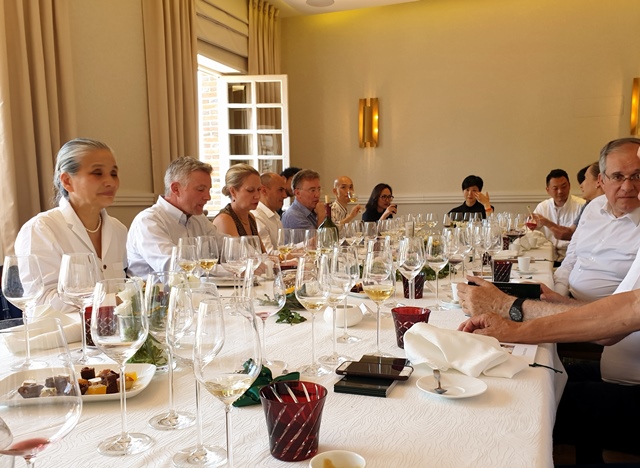
Didier Depond, président des champagnes Salon et Delamotte reçoit des amis au siège de la société à Mesnil-sur-Oger pour la présentation officielle du Champagne Salon 2008. Il avait invité la veille un groupe de japonais qui se sont trompés de jour et qui viendront grossir notre groupe qui deviendra à majorité asiatique, de Chine, du Japon et de Corée du Sud. Dans le groupe prévu il y a des ambassadeurs, des académiciens, des restaurateurs étoilés et de simples amis comme Tomo, comme Teshi le talentueux chef du restaurant Pages dont je suis familier, et moi.
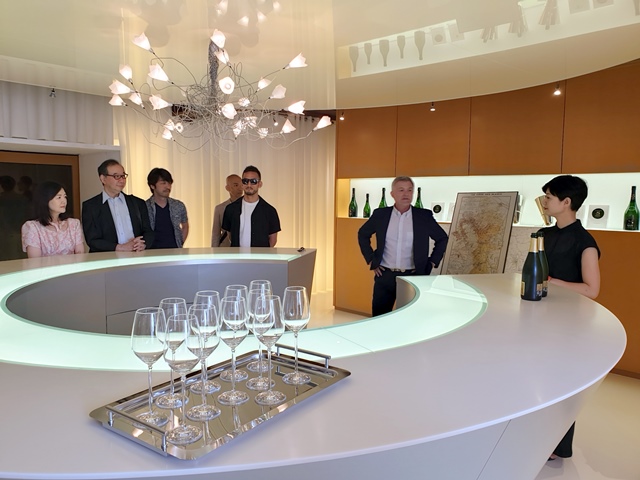
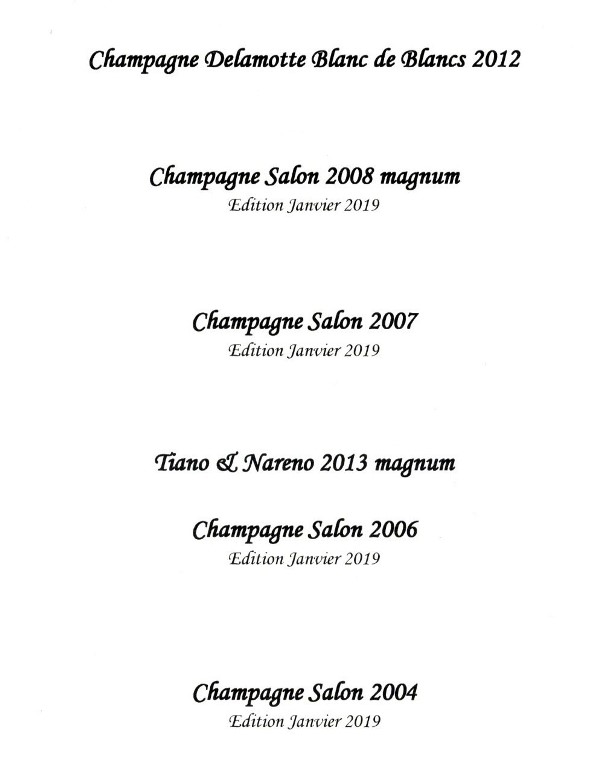
Nous nous regroupons dans la salle de dégustation où l'on nous fait goûter le Champagne Delamotte Blanc de Blancs 2012 qui lui aussi est présenté pour la première fois aujourd'hui. Sa bulle est forte et il y a une légère acidité liée à la jeunesse mais l'on sent que ce champagne, après quelques mois ou années en cave sera de très haut niveau. Comme nous sommes en canicule, les verres se réchauffent vite et le champagne un peu plus chaud est beaucoup plus charmant, joliment mis en valeur par de délicieuses gougères.
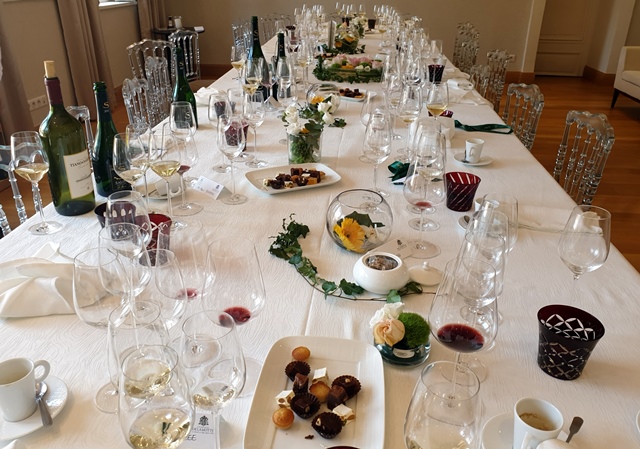
Nous passons à table dans la salle à manger et nous sommes vingt-deux. Je suis assis entre une très jolie coréenne qui travaille pour le champagne Salon depuis deux mois et à côté d'un jeune chinois de Pékin mais qui va souvent à Hong-Kong où avec ses amis, ils dégustent des vins de la plus haute hiérarchie des qualités et des prix. Il est assez probable que nous allons nous revoir.
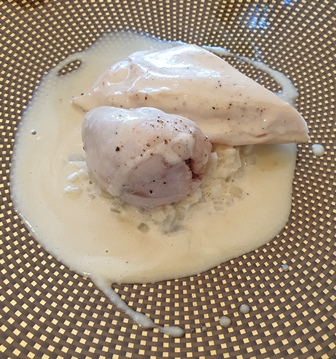
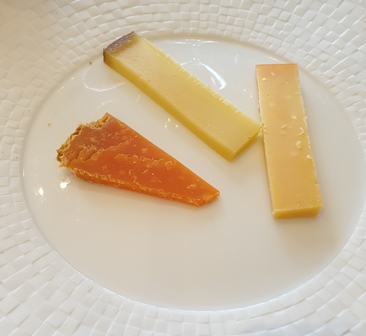
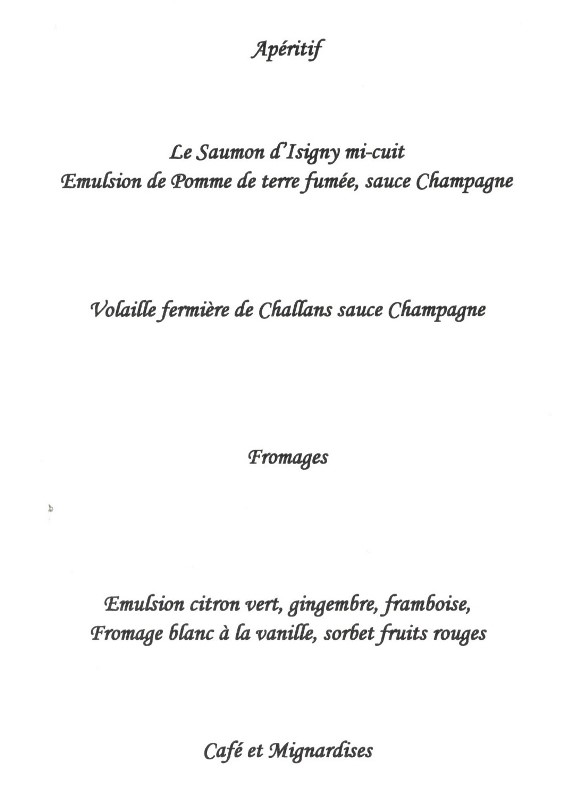
Pour une fois, il n'y aura aucune énigme, les vins sont désignés en clair. Le menu prévu est : le saumon d'Isigny mi- cuit, émulsion de pomme de terre fumée, sauce champagne / volaille fermière de Challans sauce champagne / fromages / émulsion citron vert, gingembre, framboise, fromage blanc à la vanille, sorbet fruits rouges.
Tous les champagnes ont été dégorgés en janvier 2019. Le Champagne Salon magnum 2008 est impressionnant. J'ai eu la chance, grâce à l'amitié de Didier Depond, de découvrir les nouveaux millésimes au moment de leur apparition publique ; je peux donc comparer. Il y a une sérénité et un accomplissement dans ce champagne qui mérite le respect. Il y a des notes de noisettes et de brioche, mais ce n'est pas cela qui compte. C'est la largeur de la palette aromatique, la vivacité que l'on remarque. Et alors qu'il faut souvent attendre quelque temps avant de boire les champagnes récents, celui-ci est déjà de belle maturité. C'est un peu comme le Dom Pérignon 2008 qui est lui aussi prêt à faire sa vie sans attendre. Je suis très impressionné par ce magnifique champagne. Didier Depond et moi sommes d'accord pour signaler la similitude de ce 2008 avec le 1966. Nous différons ensuite car Didier voit des analogies avec 1982, alors que j'en vois avec 1988. Il faudra vite vérifier.
Le plat de saumon est magnifiquement réalisé, de très haute qualité et gourmand, et l'accord avec le 2008 est superbe.
Le Champagne Salon 2007 met en valeur le 2008. Car ce champagne aura besoin de beaucoup d'années pour révéler ses qualités. Ce 2007 est un Salon à maturation lente. Il a de belles qualités mais il est encore un peu coincé.
Le Champagne Salon 2006 est une petite merveille de délicatesse et de subtilité. Il est parfaitement prêt à boire, léger, charmeur, romantique. C'est celui-ci que je compare au 1982 dont j'aime le romantisme. Il se boit magnifiquement avec les fromages.
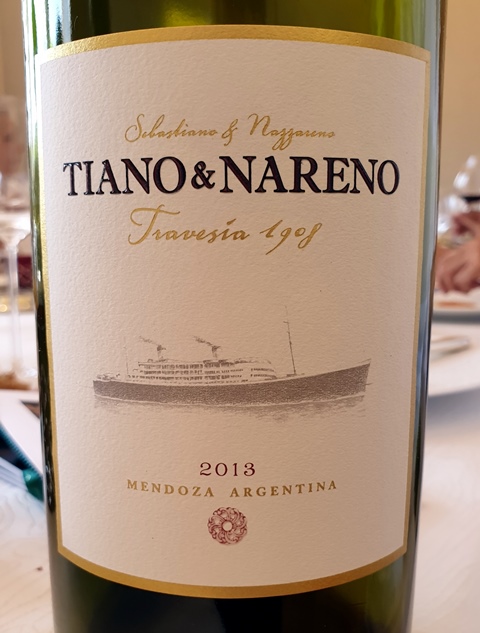
Nous avons aussi sur les fromages un Tiano & Nareno Vin d'Argentine de Mendoza magnum 2013. Ce vin est fait par Ariel Savina un ami argentin de Didier dont les grands parents italiens ont émigré en Argentine pour faire ce vin. Il y a donc une belle histoire et le vin à majorité de Malbec associé à du cabernet franc, qui titre 14,5° mais donne l'impression d'en avoir un peu plus, est une bombe de fruits noirs qui fort heureusement a un finale léger et mentholé. On ne peut pas s'empêcher de penser à Vega Sicilia Unico. Ce vin riche a beaucoup de présence mais à mon goût il n'a pas la complexité de Vega Sicilia Unico. Il a certainement un grand avenir.
Le dessert aux couleurs blanches et rouges est accompagné par le Champagne Salon 2004. La première bouteille qui m'est servie manque de précision, comme si le vin n'était pas assemblé. Je le juge alors de façon critique. Heureusement une deuxième bouteille vient changer ma première impression et je le trouve plus cohérent, mais demandant encore beaucoup de temps pour qu'il atteigne ce qu'il promet. Il me semble que le dessert aurait eu un accord plus pertinent avec la Cuvée Alexandra rosée de Laurent-Perrier.
On peut dire que cette présentation du 2008 est absolument réussie. Ce champagne promet d'être dans le peloton de tête des plus grands Salon. Mon classement serait : 2008 pour la largeur de sa palette, le 2006 pour son romantisme émouvant, le 2004 car il est une belle promesse, et le 2007 qui devra attendre pour jouer dans la cour des grands.
Le climat créé par Didier Depond est très amical. Les discussions ont été passionnantes. Voilà qui enfonce encore le clou - s'il en était besoin - de mon amour pour Salon.
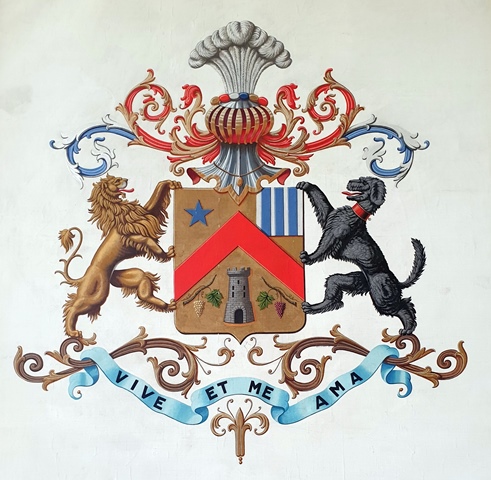
armoiries dans le bureau de Salon Delamotte
la salle de dégustation
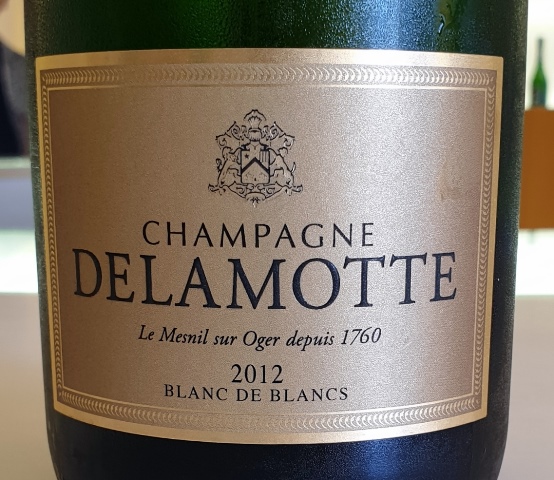
présentation à déjeuner

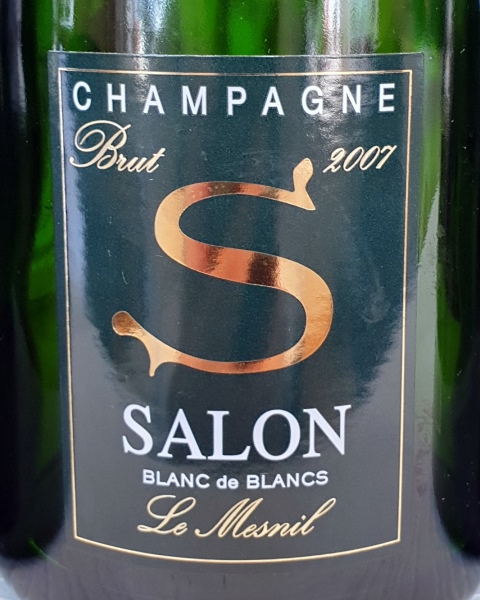

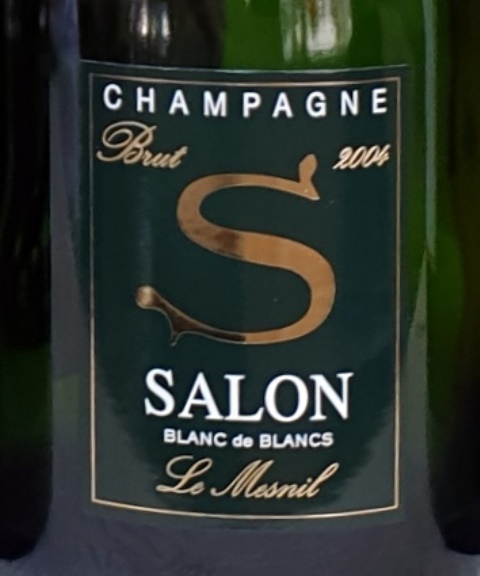


la table avant / après


(bulletin WD N° 836 190625) Le bulletin n° 836 raconte : 237ème dîner de wine-dinners à l’hôtel Les Crayères à Reims, rencontre d’amis fous de champagnes et déjeuner dominical en famille.
(bulletin WD N° 835 190618) Le bulletin n° 835 raconte : 236ème dîner de wine-dinners à la Maison Belle Epoque de Perrier Jouët, déjeuner à l’hôtel Royal Champagne, dîner au même endroit et déjeuner à l’hôtel Les Crayères de préparation du 237ème dîner.
(bulletin WD N° 834 190611) Le bulletin n° 834 raconte : après l’ouverture des vins, déroulement de la 32ème séance de l’Académie des Vins Anciens, déjeuner à la Maison Belle Epoque de Perrier-Jouët pour vérifier les recettes des plats prévus pour le 236ème dîner de wine-dinners à Epernay.
(bulletin WD N° 833 190604) Le bulletin n° 833 raconte : déjeuner au restaurant Mirazur à Menton, déjeuner de conscrits au Yacht Club de France et ouverture des vins de la 32ème séance de l’Académie des Vins Anciens au restaurant Macéo.
(bulletin WD N° 832 190528) Le bulletin n° 832 raconte : visite de ma cave et déjeuner piquenique avec une Master of Wine, dîner pour l’anniversaire de mon fils avec des vins inhabituels, dîner avec un vin de 1919, dîner au restaurant Pages.
(bulletin WD N° 831 190521) Le bulletin n° 831 raconte : déjeuner de famille au couscous, avec des vins algériens, dîner au restaurant Neige d’Eté, déjeuner de famille avec de beaux vins des années 90, déjeuner au restaurant Garance.
(bulletin WD N° 830 190514) Le bulletin n° 830 raconte : dîner au restaurant Pages avec le gagnant d’une énigme posée sur Instagram, déjeuner d’anniversaire au restaurant Yannick Alléno au Pavillon Ledoyen.
(bulletin WD N° 829 190507) Le bulletin n° 829 raconte : Une ‘paulée’ de vins anciens à l’Automobile Club de France et déjeuner au restaurant l’Ecu de France.
(bulletin WD N° 828 190430) Le bulletin n° 828 raconte : déjeuner au restaurant « le Café de l’Homme », déjeuner de conscrits au Yacht Club de France, conférence dégustation pour les élèves de la célèbre école Cordon Bleu, déjeuner à la Brasserie Bofinger, Notre-Dame, dîner à la Manufacture Kaviari sur un menu créé par le chef Hideki Nishi du restaurant Neige d’Eté.
(bulletin WD N° 827 190423) Le bulletin n° 827 raconte : dans le sud, dîner avec des amis puis déjeuner chez eux, dîner de mémoire avec une amie et 235ème dîner au restaurant Taillevent, avec une Romanée Conti 1937 et d’autres vins éblouissants.
(bulletin WD N° 826 190416) Le bulletin n° 826 raconte : présentation des 2016 des domaines familiaux de Bourgogne, déjeuner au restaurant l’Absinthe et 234ème dîner de wine-dinners au restaurant Pages avec un vin acheté en commun avec des participants du 232ème dîner et un thème : les 5 blancs de Curnonsky.
(bulletin WD N° 825 190409) Le bulletin n° 825 raconte : Déjeuner au restaurant Le Petit Sommelier, déjeuner au restaurant « le Maroc », dîner de bouteilles à risque avec mon fils, dîner avec des champagnes.
(bulletin WD N° 824 190402) Le bulletin n° 824 raconte : déjeuner en famille, un champagne pour me consoler, dîner au restaurant L’Ecu de France, déjeuner de conscrits au Yacht Club de France, dîner dans le sud chez des amis et déjeuner au restaurant Pages.
(bulletin WD N° 823 190326) Le bulletin n° 823 raconte : dîner autour d’une Romanée Conti 1991 avec mon ami Tomo, dîner et déjeuner avec mes filles avec des vins inhabituels, dîner au restaurant Pages à l’invitation de Tomo.
(bulletin WD N° 822 190319) Le bulletin n° 822 raconte : préparation du 233ème dîner de wine-dinners au restaurant Le Beaulieu lors d’un déjeuner et deux jours plus tard, 233ème dîner dans la ville du Mans au restaurant étoilé Le Beaulieu.
(bulletin WD N° 821 190312) Le bulletin n° 821 raconte : présentation par Gonzalo Ituriaga des vins du groupe Tempos Vega Sicilia à l’hôtel George V et 232ème dîner de wine-dinners à la Cave d’Exception de l’hôtel de Crillon.
(bulletin WD N° 820 190305) Le bulletin n° 820 raconte : week-end avec des vins centenaires lors d’un dîner chez moi et d’un déjeuner dans ma cave, avec un ami amateur de vins anciens.
(bulletin WD N° 819 190226) Le bulletin n° 819 raconte : visite à la maison de champagne Henriot, déjeuner au restaurant Le Millénaire à Reims, déjeuner à l’Ecrin de l’hôtel de Crillon pour préparer un futur dîner et dîner au restaurant Le Relais Louis XIII à Paris.
(bulletin WD N° 818 190219) Le bulletin n° 818 raconte : dîner de chef à la manufacture Kaviari avec Yannick Alléno aux fourneaux, déjeuner au restaurant Le Petit Sommelier, dîner de famille, déjeuner au restaurant l’Ecu de France, déjeuner dominical.
(bulletin WD N° 817 190212) Le bulletin n° 817 raconte : dîner de vins anciens de l’association Rhône Vignobles au restaurant Michel Chabran et dîner au restaurant Taillevent avec des personnalités du monde du vin.
(bulletin WD N° 816 190212) Le bulletin n° 816 raconte : ouverture des vins prévus pour l’atelier de dégustation de vins anciens de l’association Rhône Vignobles, pot-au-feu au domaine Combier et tenue de l’atelier.
(bulletin WD N° 815 190205) Le bulletin n° 815 raconte : à Miami, dîner au restaurant Zuma, déjeuner au restaurant Kiki on the River, dîner au restaurant italien Ironside Kitchen, dîner chez mon fils, brunch au champagne à l’hôtel Biltmore, déjeuner au restaurant espagnol Xixon et en France, dîner au restaurant Michel Chabran.
(bulletin WD N° 814 190129) Le bulletin n° 814 raconte : dîner du 24 décembre à la maison, déjeuner de Noël en famille, apéritif et repas chez mon fils à Miami, dîner chez mon fils avec deux amies américaines, les plus fidèles de mes dîners et suite le lendemain.
(bulletin WD N° 813 190129) Le bulletin n° 813 raconte : dîner au siège de Grains Nobles, dîner dans un salon du Pré Catelan, deux dîners avec mes enfants, déjeuner au restaurant Lasserre avec Alexandre de Lur Saluces et son fils, visite à la boutique « Divins » tenue par un ami.
(bulletin WD N° 812 190122) Le bulletin n° 812 raconte : les vins du déjeuner dans ma cave avec des cadres de Krug bus le lendemain avec mon fils, d’autres restes de vins bus à Yquem partagés avec mon fils, au siège de la société Grains Nobles, Aubert de Villaine présente les vins du domaine de la Romanée Conti de 2015.
(bulletin WD N° 811 190122) Le bulletin n° 811 raconte : déjeuner de famille, dîner à quatre mains à la Table de l’Espadon de l’hôtel Ritz avec aux fourneaux Nicolas Sale chef du lieu et Arnaud Lallement de l’Assiette Champenoise, déjeuner dans ma cave avec des cadres de la Maison Krug autour de vins atypiques.
(bulletin WD N° 810 190118) Le bulletin n° 810 raconte : 31ème séance de l’académie des vins anciens au restaurant Macéo.
(bulletin WD N° 809 190110) Le bulletin n° 809 raconte : Salon Vinapogée avec des stands où des vignerons présentent des vins anciens et un atelier que j’anime sur des vins anciens, déjeuner au restaurant Michel Rostang avec des vins inattendus.
The evolution of wine prices changes consumer habits. Some wines have become inaccessible. So when I get offers that I cannot handle alone, I call my friend Tomo, to see if he would accept a joint purchase.
This is the case of a Romanée Conti 1954 that tempts me enormously. We know that after the 1945 harvest, the vines of Romanée Conti, prephylloxeric, were about 200 years old. Exhausted, they had produced only the equivalent of 600 bottles, so they were torn off. There was no Romanée-Conti during the six years that followed, and the Romanée Conti 1954 is therefore made by young vines.
Aubert de Villaine had told me that he was surprised that the wines of the 50s, coming from young vines are as complex as wines from old vines and the only non-scientific explanation he gives is that during the uprooting, they left on the spot torn roots which had to form a kind of amalgam which enriched the young roots. Seeing an offer of a 1954 I could not miss the opportunity to verify. Tomo had the same desire. We bought it.
We discussed additional inputs and we quickly agreed. I brought the Romanée Conti and my contributions the day before dinner. Tomo joins me on dinner day at 5 pm at the restaurant Michel Rostang, for the opening of the wines. I had kept from the dinner of the day before a rest of Trottevieille 1943 that we will drink after the champagne. Tomo smells it and he is very happily surprised.
I open the Musigny Count Georges de Vogüé 1943 and the cork comes whole. Very oddly enough, it is inscribed on the cork "Vieilles Vignes" while this inscription does not appear on the label. Who's right, the cork or the label? A priori it is the label, but we do not know. We will see.
The bottle of the Romanée Conti 1954 shows a very nice color that had played a role in my desire to acquire this wine. The level is very acceptable, 5 or 6 centimeters from the cap. When I pull the cap, the upper half is dry and covered with pale green mold. It's not very engaging. The second half has no defect, but the bottom of the cap is narrowed, this half being more conical than cylindrical. Life is not simple. The scent of wine is still vague but everything suggests that time will do its work.
The Yquem 1954 has a very nice level and a beautiful dark mahogany color. The cap is broken in its lower part on the one hand because the plug is soaked, but mainly because the top of the neck is tightened and prevents the cap from going out.
Everything is over at 5:30 pm so we have at least two hours left, which allows us to chat. I would like to open the Ruinart 1949 in advance. Tomo is perplexed. It will be open less than an hour before we drink it. Opening it earlier would have been preferable. The cork broke to the twist and was pulled out with a corkscrew, without pschitt.
We build the menu with the kind advice of the butler and Baptiste, the friendly sommelier and we choose: frog legs parsley parsley roasted natural, watercress coulis / duck 'Miéral' blood, served bleeding in two courses, red wine sauce with blood and foie gras, consommé of duck / hot soufflé with fresh verbena, caramelized raspberries, raspberry verbena sorbet.
Champagne Ruinart Brut 1949 has a pretty golden color. The bubble is nonexistent but the sparkling in the mouth is well preserved. What is surprising at first contact is that champagne is extremely sweet. He is not a Brut. It is more dosed than a champagne "American taste". But this sweetness will quickly disappear when the champagne will be confronted with amuse-bouches and the entrance. It becomes lively and reminds me of the Dom Pérignon of the 40s, which have beautiful, caressing subtleties. This champagne becomes with time more and more pleasant and gastronomic.
Three small bites are served as an aperitif, simple and neutral tastes. It adds a nice preparation that gives the impression of eating a green soup while the preparation is solid. It's extremely elegant but the restaurant should know, when customers go to drink the wines we brought, that this soup will never be compatible with what we drink. This does not prevent this dish from being talented.
The frogs' legs are delicious, but the cromesquis croquettes have envelopes too thick, which weigh down the chewing of this dish. Château Trottevieille Saint-Emilion 1943 enjoyed a good day after being opened yesterday. It is dense, rich, truffled and very pleasant.
The Musigny Count Georges de Vogüé 1943 has a very beautiful color. His perfect nose is straight and strong, showing a rich burgundy's image. In the mouth what impresses me is the purity and precision of this wine. It is magnificent and its vigor is that of a wine of twenty years. We are happy. It is likely that it is 'Vieilles Vignes' because it is rich and brilliant.
We should have filmed Tomo and I when we took the first sip of the Romanée-Conti Domain of the Romanée-Conti 1954. It was a shock, an illumination and a big smile on our two faces meaning: "That there is, we have one, tonight we are going to have a huge Romanée-Conti ". Because she is wonderful. What happiness. We no longer hold up, we welcome, we are happy. The same morning, speaking with Aubert de Villaine, he told me that 1954 being a rather weak year, the estate had kept a lot of this year's Romanée Conti. And once, sharing a 1954 with Hubert de Montille, Hubert had kneeled, to signify that he drank a miraculous wine. Well, what Hubert de Montille felt, we feel it. What is fascinating is the salt, the marker so full of Romanée Conti that you cannot go wrong when you drink. This salt is elegant, strong, skeleton of taste. The faded rose, often associated with this wine is not present. Salt transports the wine and gives it complexity and length. I think this 1954 is one of the five biggest Romanée Conti I've had the chance to drink. And it is confirmed that this terroir is brilliant in the small years. We check what Aubert de Villaine had suggested to me, is that the complexity of this wine, the infinite range of flavors is not at all that of a wine of young vines.
And we measure the grandeur of Romanée Conti in juxtaposition with the Musigny. We can consider the Musigny as absolutely perfect, joyful rich and fruity, but Romanée Conti is stratospheric and takes us to infinite heights. The gap is breathtaking. We feast like crazy young people.
What is interesting is that it is the Musigny that is most suitable for duck blood. Romanée would have been more at ease on a pigeon or a poached foie gras.
We could ask ourselves the question of our enthusiasm: are we laudatory because it is Romanée-Conti and because we wanted it? The answer is of absolute certainty, given by the Musigny. This Musigny is immense, perfect in its definition, but the Romanée Conti transports us to a hundred cubits above. Doubt is not allowed.
The soufflé is delicious and goes well with the Château d'Yquem 1954. It was dark in the bottle and in the glass it is nicely gilded. He has all the class and the generous complexity of Yquem and is part of the Yquem who ate their sugar a little. I love it. We had so many wonders that we only have one glass of this delicious Sauternes. I will bring it home and Tomo will do the same for the Musigny of which remains a quarter.
Dinner at the restaurant Michel Rostang is a pleasure. Everyone is welcoming in this house that breathes the atmosphere of a family home. Baptiste is a very competent sommelier. The service is attentive and smiling. The chef was kind enough to present the accompaniments separately so that we could enjoy pure tastes. The blood duck is a divine dish based on ducks of unparalleled quality.
This dinner is for Tomo and I the crowning of our passion. We drank one of the most beautiful Romanée-Conti that it is possible to drink, totally typified, a wine that is unlike any other. For four hours we were on a small cloud, realizing a dream. This dinner was a miracle thanks to an anthology Romanée Conti.
(see pictures in the article in French) Addendum : message received from Aubert de Villaine when he read the bulletin #840 where this dinner is mentioned.