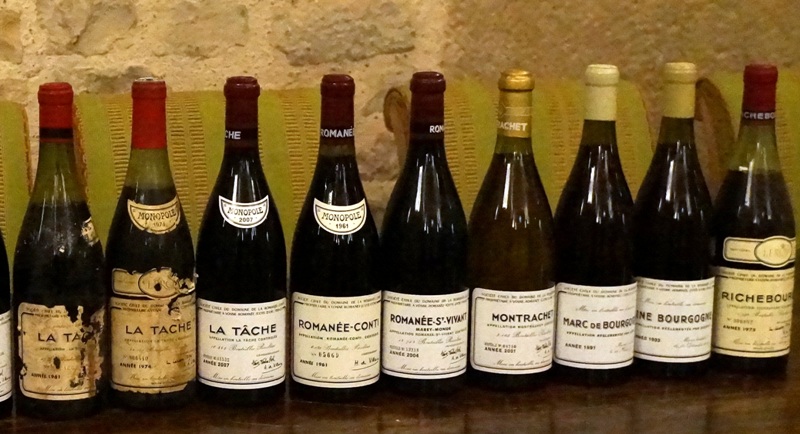
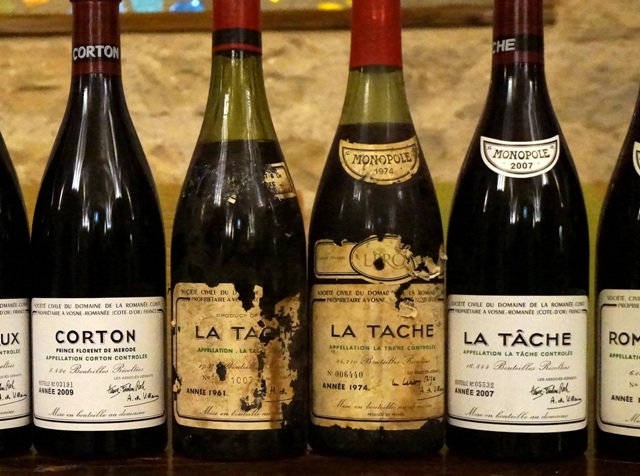
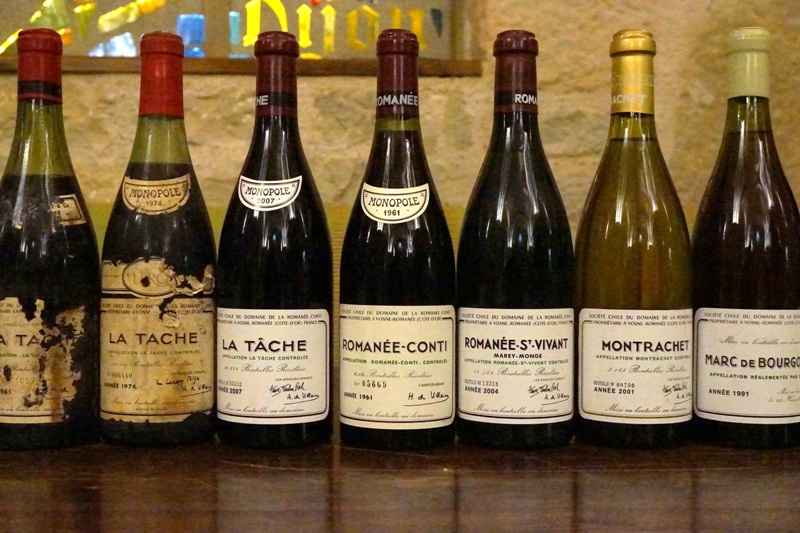
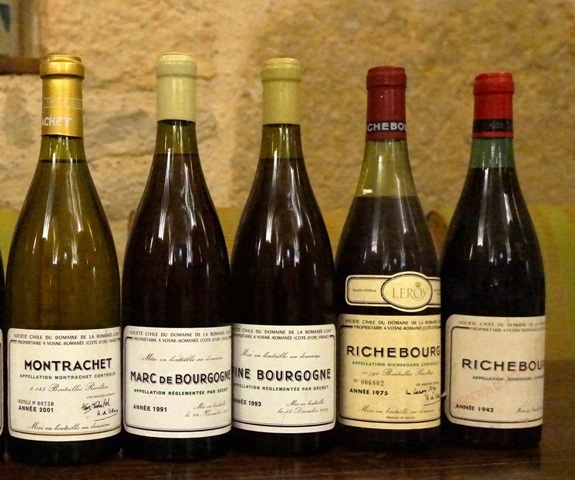
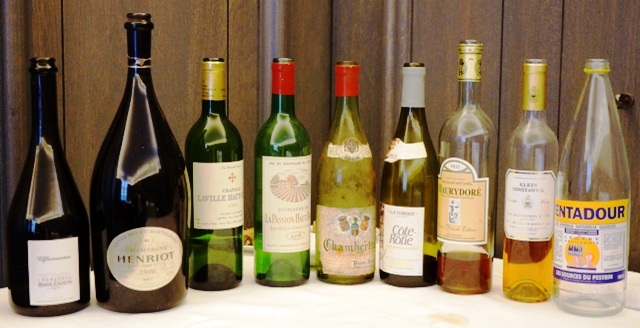
It really begins to look like I cannot escape the wines from the Romanée Conti. Sébastien, a wine enthusiast from Dijon, is inviting people for a lunch based on the theme of the Romanée Conti. He coordinates everyone’s contributions and generosity is the word of the day. Since the meal is to take place in Dijon, I delivered my two bottles two weeks ago to the Domaine de la Romanée Conti where Sebastien collected them.
The day before the event, Sébastien sends me an email in which he states that during the photo session of the bottles brought by the participants, he was able to observe that the 1942 Richebourg I provided was apparently a counterfeit bottle, according to him and a friend of his. I immediately send an answer by email with extracts from some of my reports (numbers 89 and 216) in which I narrated the adventures of the sister bottles of this one: one was exhausted, and the other beautiful, but neither gave me the slightest doubt about their authenticity. It is true that on the label there is no mention of the owners, which seems odd, but I will come back to this point after the tasting.
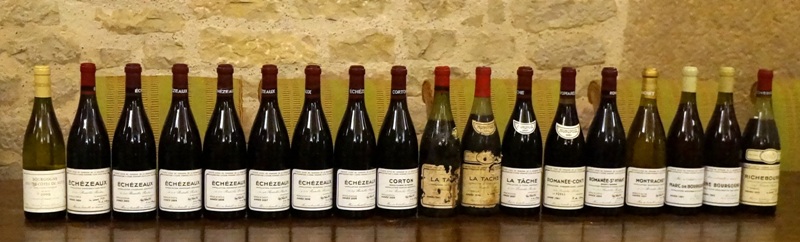
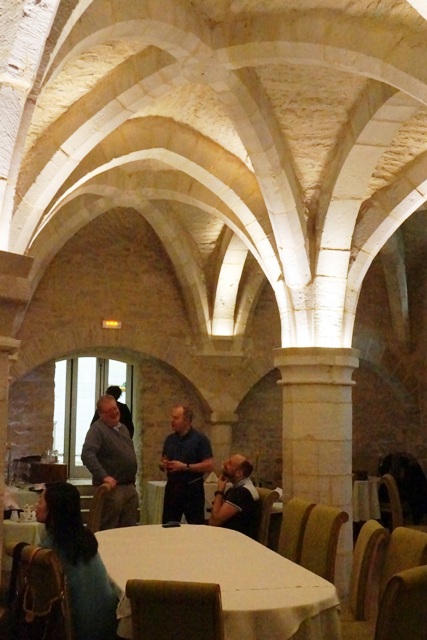
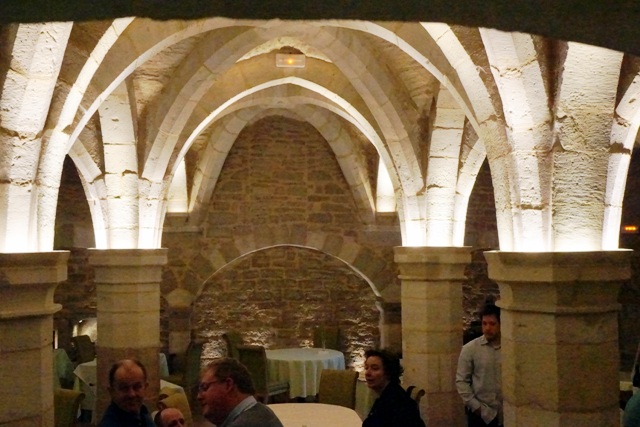
After this mail that offends me a bit, I choose an alternative bottle—just in case. The next morning, on the day of the tasting, I arrive at La Dame d’Aquitaine in Dijon, and walk down a flight of stairs to find myself in a magnificent room in the style of Gothic architecture, with many pillars that support elegant arches. The ceiling height is impressive and the atmosphere of the place is engaging. Sébastien is in the process of aligning the bottles to take photos. My bottle of 1974 La Tâche is aligned with the others, but the 1942 bottle is kept on the side in a plastic crate. I tell Sébastien that it seems appropriate to drink the 1942, if only from an educational point of view: if it is authentic, what should we make of it? And if it is counterfeit, what can we say about the wine? I sense that Sébastien is a bit reluctant and I reiterate my opinion on the other two bottles that I drank, all from the same lot that I probably bought some twenty years.
One of his friends arrives, who has apparently asked the domaine about the 1942 bottle. He says that in a tasting that aspires to be serious, it should not be served. I am a little upset by this reaction, and I decide to contribute another bottle to the tasting, a 1953 Richebourg with a beautiful level from a highly successful vintage. As a result, my contribution will be: 1974 La Tâche, 1953 Richebourg and 1942 Richebourg which I insist I want to taste along with the other wines.
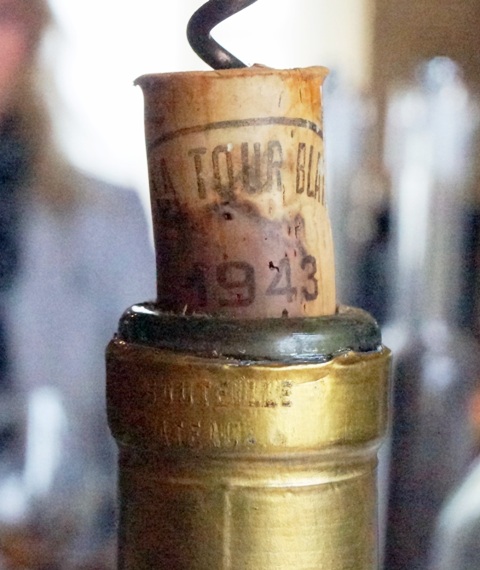
With Sébastien, I open the bottles and as I uncork the 1942 Richebourg, it appears that the cork is indeed from that time period, with « 1942″ and the word « Richebourg » clearly printed on it as is traditional at the domaine. This element seems to confirm the authenticity of my bottle, and Sébastien agrees.
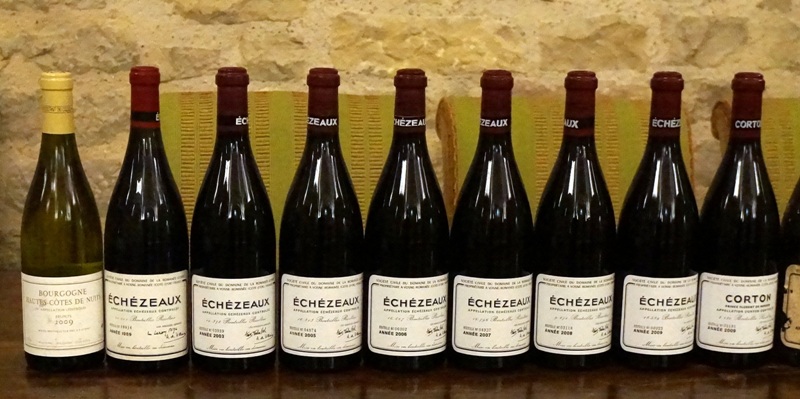
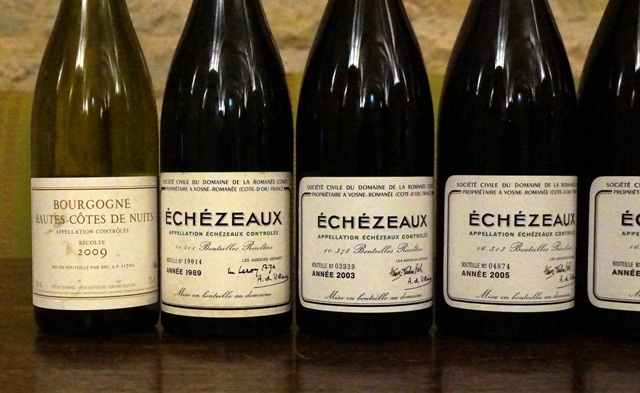
At eleven, in the beautiful vaulted room, we begin a vertical tasting of the Echézeaux of the domaine. A friend points out that if the tasting starts at eleven, it is because at that very moment, we enter a « flower day » in the biodynamic calendar. The coincidence makes us smile. Sabine, co-owner of the restaurant with her husband, proceeds to serve the wines, announcing each of them out loud. She will accompany our journey and our antics with very commendable good humor.
Christian, the friend who wanted to reject my 1942, hands everyone a document on which we need to give three grades to each wine: first the grade that we would give to the wine out of 20, without having tasted it, according to our expectations; the second grade is for the tasting of the wine properly speaking; and the third is the ranking of the wine among the bottles of the day. There are twelve participants, and 29 wines to drink. Will we have enough strength to give grades in the end? Time will tell, but the idea is interesting.
The 1989 Echézeaux Domaine de la Romanée Conti is of a hazy, relatively evolved colour. The aromas are deviated somewhat, with a certain bitterness. In the mouth, it is opulent. The wine is richer than I thought. It is much better than what the nose promises. It has nice acidity, but it begins to decline. There are also roasted aromas. It is much more evolved than it should be, and when we come back to it a bit later, the wine is indeed declining.
The 2003 Echézeaux Domaine de la Romanée Conti has a very fennelly, vegetal aroma. It is a young and tasty wine, generous and with a peppery finish. It delivers the final blow to the poor 1989 that is far too evolved. Throughout this tasting of Echézeaux, our friends will point out the gamey flavour of almost all of the wines. I do not share this point of view for the 2003 which I find more vegetal, with a blackcurrant finish.
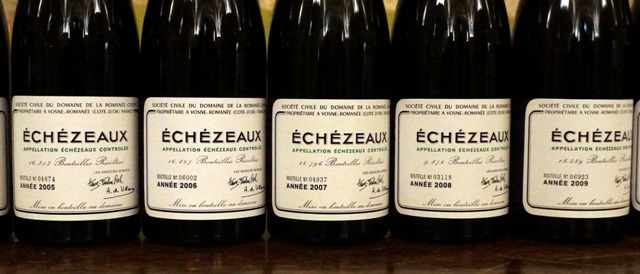
The 2005 Echézeaux Domaine de la Romanée Conti has a fairly light colour. The aromas evoke mint and aniseed. Here I can perceive the gamey flavour that our friends mentioned. The mouth is rather severe and has a certain dryness to it, but this wine has great potential. If it loses some of its roughness, it will become great.
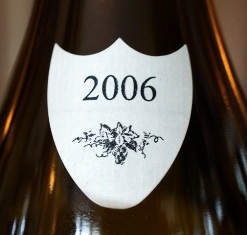
The 2006 Echézeaux Domaine de la Romanée Conti is of a garnet colour. The aromas of this wine are absolutely magical. It is elegant, velvety, intoxicating—a wonder of a scent. On the palate the wine is elegant with a slight lack of power. This is a pleasure wine and I love it. It is DRC for sure.
The 2007 Echézeaux Domaine de la Romanée Conti has a very light colour and the smell evokes game. In the mouth it is pleasant, somewhat unassuming. It clearly has limits. This wine does not speak to me and its gamey flavour hinders my tasting pleasure.
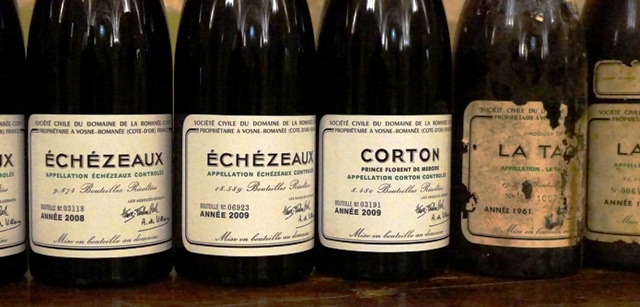
The 2008 Echézeaux Domaine de la Romanée Conti has a young, sulfurous smell. In the mouth it is tasty and flavourful. This is good. The wine is young and mineral, and has not settled yet, but it is a pleasure wine. It is pleasant to drink now and it is pretty hard to predict its future. It strikes me as a tasty and gourmet wine.
The 2009 Echézeaux Domaine de la Romanée Conti is of a darker colour. The wine is denser, and evokes blackcurrant and pepper. On the palate it is powerful and mouth-filling, and with a more discreet finish. It has the typical dryness of 2005 wines, but it is more stylish. It is beautiful but its finish is a bit short.
Rather than ranking these seven wines among the group of 29, I think it would be wiser to classify them separately, in order of preference: 2006, 2008, 2009, 2005, 2003, 2007, and 1989. I notice that my friends’ rankings differ from each other.
We pause while our table gets ready for lunch. My friend Florent has brought two champagnes and the Sauternes. He pours me the 1985 Champagne Dom Perignon Rosé and I instantly react—this wine smells like a Paris-Brest cake. And everyone agrees. It is amazing that this champagne can be so evocative of Paris-Brest. But it does too in the mouth, which is even more incredible. My brain becomes totally obsessed with this association. Later, I will find white truffle aromas in this champagne. Florent and I will not see eye to eye on this, because I believe this unusual flavour is a deviation from what this rosé should be. Florent does not agree. My friends appreciate this champagne more than I do. It pairs well with an appetizer based on sweetbreads.
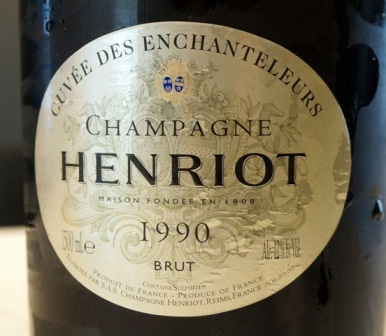
The 1989 Champagne Krug brought by Clément has much more power and accuracy. It is very pleasant, with a strong bubble. The 1949 Champagne Henriot Brut Souverain Magnum is absolutely delicious. It has the perfection of the 1949 vintage—one of the finest for Champagne—and it has the enticing charm of old champagnes. Its bubble is subdued but still present. It gets its strength from the magnum format. It is sweet and of rare elegance—a pure delight.
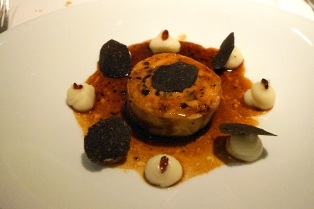
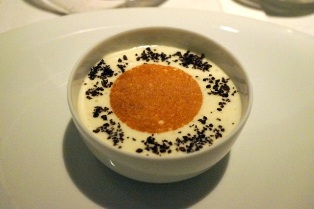
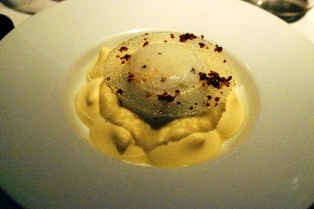
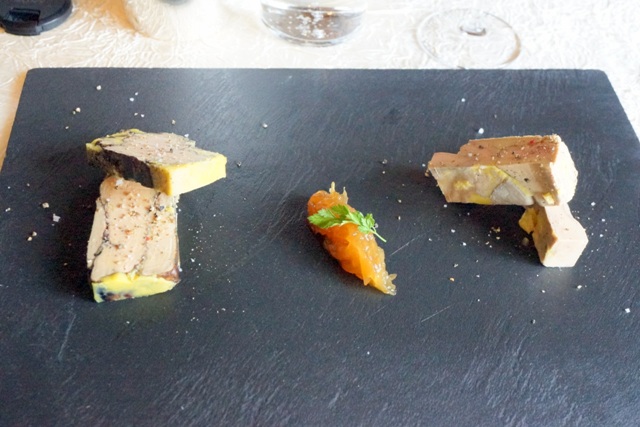
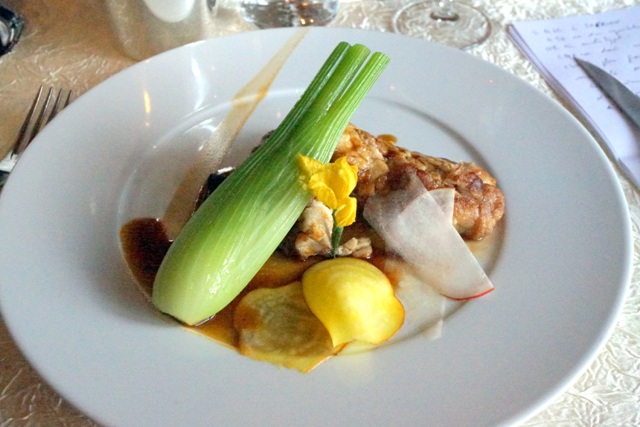
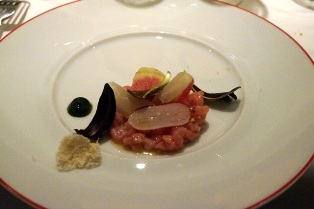
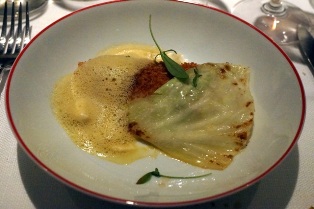
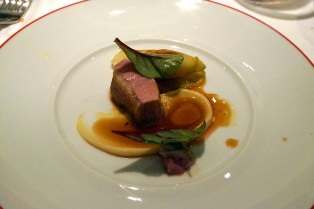
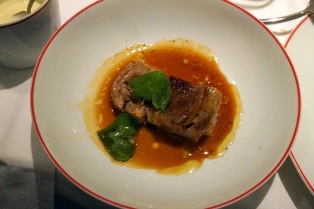
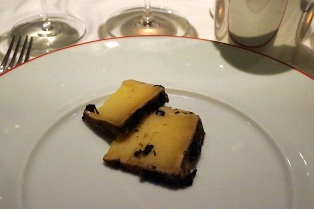
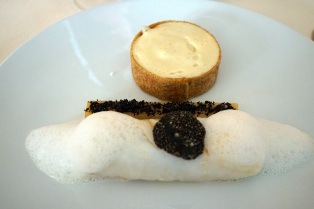
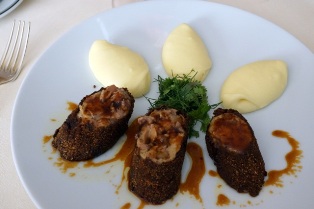
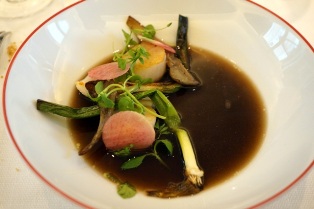
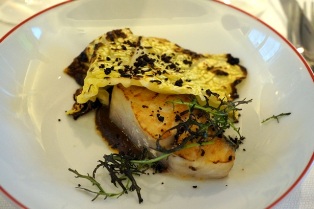
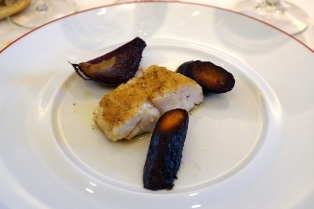
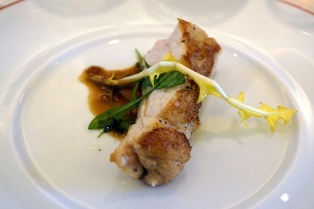
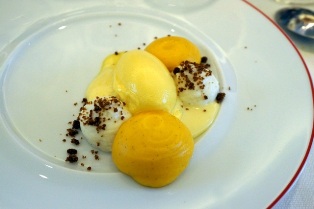
The menu designed by Laurent Perriguey includes: tartare of scallops in truffle oil, parmesan shavings and mixed salad / pan-fried medallion of duck foie gras with ancient root vegetables / strip of seared tuna, chorizo crumble and cocoa nibs / variations on the suckling pig: slow-cooked chop, confit rack, and trotter in a croquette / flat sausage of oxtail and beef cheek, mashed ratte potatoes / cheese platter / a selection of sorbets: Williams pear, wild peach, yuzu and plum.
The 2009 Bourgogne Hautes Côtes de Nuits Blanc, bottled by the DRC, has the aromas of a very young wine. It smells of butter and toast, and a little bit of hazelnut. This is a somewhat limited wine.
The 2001 Montrachet Domaine de la Romanée Conti has fiendishly rich and evocative aromas. It is to die for. This Montrachet is not very powerful compared to others from the domaine and that suits it quite well because it is all about elegance and discretion. Amidst the hubbub caused by our unruly and joyful team, I try to collect myself and appreciate a first-rate, almost insane pairing: the oil that comes with the scallops is flavoured with white truffle and finds an incredible echo in this splendid wine. It is a wonderful, absolutely sublime moment of the meal.
The 2009 Corton Prince Florent de Mérode Domaine de la Romanée Conti has the slightly imprecise smell of a young wine. But on the palate, it is a nice surprise, because it is much richer than could be expected. I have a good relationship with this wine. The 2002 Vosne-Romanée 1er Cru Cuvée Duvault Blochet Domaine de la Romanée Conti served alongside the Corton appears a much weaker wine. However, thanks to a little bit of haute cuisine magic, it develops a chemistry with the tasty foie gras and creates a fabulous pairing.
Sébastien, as a precautionary measure, now asks both 1961 to be served when we are still level-headed enough to appreciate them. Both wines are black and produce light roasted aromas. The 1961 La Tâche Domaine de la Romanée Conti is very much alive and the 1961 Romanée Conti Domaine de la Romanée Conti is of magical complexity. They share this roasted flavour. We have two great wines here, in all their complexities, but as I come back to them after the Richebourg flight, I notice in these wines a certain exhaustion that should not be there.
The 2004 Romanée Saint-Vivant Marey-Monge Domaine de la Romanée Conti is superb and very surprising after the two 1961 bottles, giving them the cold shoulder in all its youthful glory. I love its subtlety. The 1997 Grands Echézeaux Domaine de la Romanée Conti is much older than its vintage should produce. It is not very interesting.
It is then that we come face to face with the three Richebourgs, once of which Sébastien claims is counterfeit. That makes it even more delightfully surprising, for the 1942 Richebourg Domaine de la Romanée Conti has the aromas of a wine from the domaine and from this period. It is quite consistent with what you would expect from a DRC Richebourg. The 1953 Richebourg Domaine de la Romanée Conti is also very DRC, and I greatly enjoy it. I am happy to have added it to today’s list so that it could serve as a supporting witness to the 1942. And the 1975 Richebourg Domaine de la Romanée Conti that Sébastien also adds to the list is much better than you can imagine from this weak vintage. I love it. These three Richebourgs are great wines, typical of the DRC, and I would rank them as follows: 1942, 1953 and 1975.
The 1997 La Tâche Domaine de la Romanée Conti is a beautiful wine that I find a bit safe, especially after the very moving Richebourgs, which I believe outperformed both 1961 wines.
The 1974 La Tâche Domaine de la Romanée Conti is also a beautiful wine from the domaine, showing no sign of tiredness. It is however below the two Richebourgs that are also my contribution. The 2007 La Tâche Domaine de la Romanée Conti is a pleasant wine but it creates relatively little emotion after more canonical wines.
We drink a mystery wine that Sébastien serves us and I have to admit that the 2006 « Le Vin le Plus Simplement » Domaine Van Berg from Meursault barely leaves a trace in my memory as a myriad of shining wine stars dance inside my brain.
The 1930 or thereabout Champagne Heidsieck Monopole « Red Top » Goût Américain is superb and drier than what the « American taste » suggests. It is very beautiful but much less vibrant than the 1907 Heidsieck that was left dormant in the waters of the North Sea for a century. But this is a great wine.
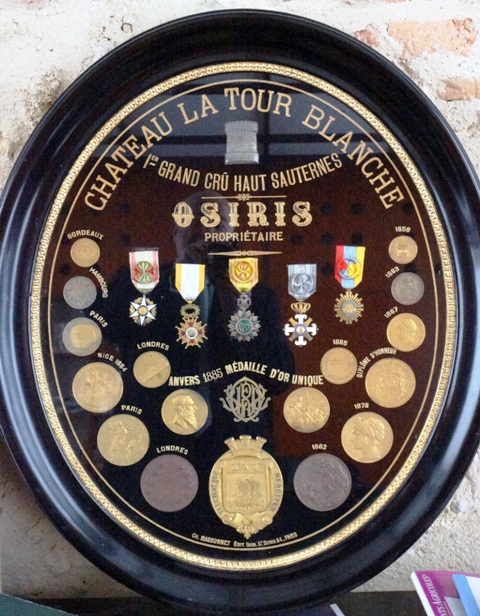
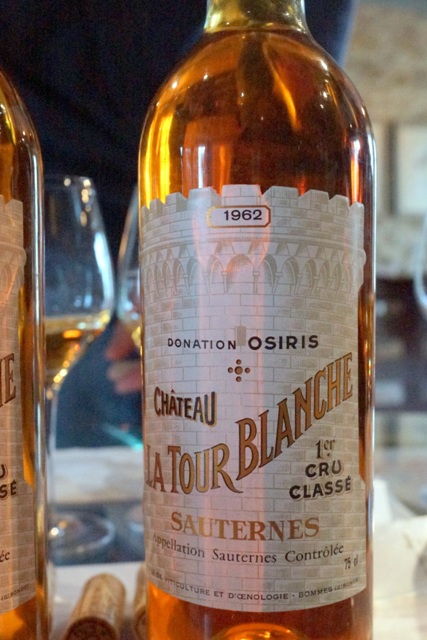
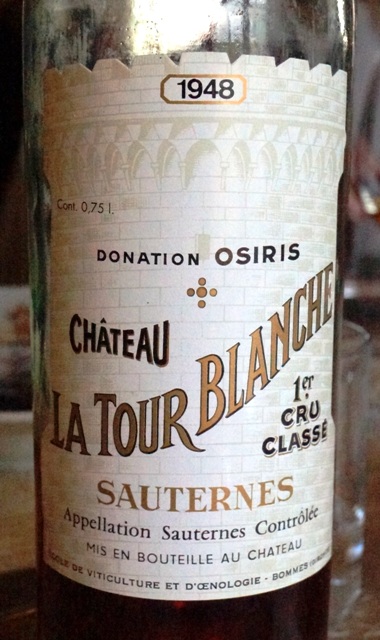
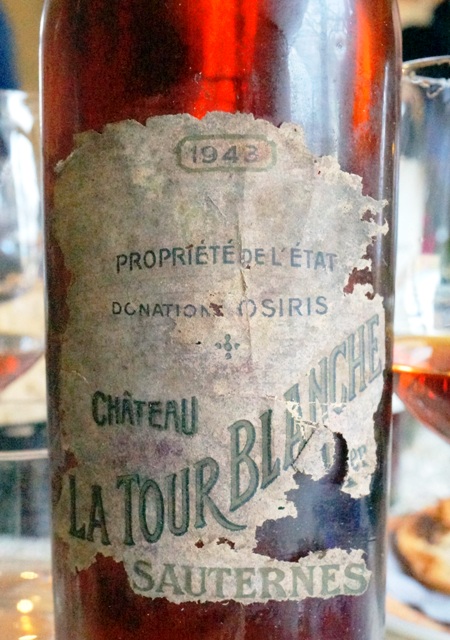
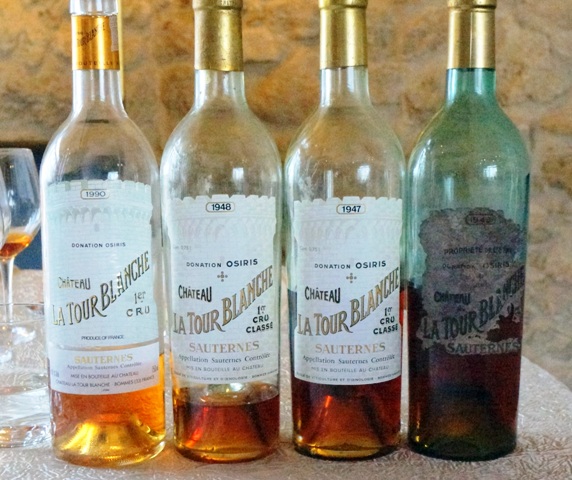
The 1928 Château Suduiraut Sauternes is a precision marvel, as always. This is one of my darlings from the Sauternes region and this is why Florent brought it today. It is of a mahogany colour and very fat—a wine of happiness.
The 1991 Marc de Bourgogne Domaine de la Romanée Conti is to the 1991 Fine de Bourgogne Domaine de la Romanée Conti what vins jaunes from the Jura are to white wines from Burgundy. The rakish, cloak-and-dagger side of the marc is a guilty pleasure, reaping whatever clear-sightedness we still have left.
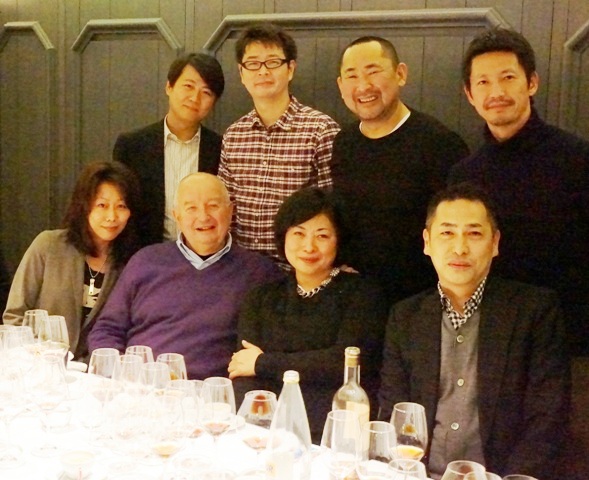
The atmosphere of the meal is joyful, sometimes reminiscent of a group of students. Sabine is a perfect hostess and her husband Laurent produces remarkable dishes. If I rank everything that is not red, it would be: 1 – 2001 Montrachet DRC; 2 – 1949 Champagne Henriot; 3 – 1928 Suduiraut; 4 – 1991 Marc.
If I rank the red wines, it would be: 1 – 1942 Richebourg; 2 – 1953 Richebourg; 3 – 1961 La Tâche; 4 – 1961 Romanée Conti. It could seem a bit childish or provocative to place two of my wines in the top two, for I frequently look upon my wines with great fondness. But undoubtedly I rank them as such based on the taste, and this gives us the opportunity to ponder on the problem of counterfeiting. If one is able to produce a counterfeit 1942 (but good gods, why this particular year?) with the exact typography of the domaine, why would one forget to indicate the names of the owners? Since the bottle has an original cork, and it tastes like a Richebourg from the domaine (there was no cries of outrage when tasting it and I had nothing but compliments about it), I will have a talk with the domaine about a hypothesis that I dare suggest: according to what I have read, it is in 1942 that Henri Leroy buys the Chambon shares in the Civil Society of the domaine. Someone from the domaine could have asked the printer to label some bottles without indicating the names of the owners, since they were changing. This may be a false assumption. But it has more substance to me than the possibility of a counterfeit that could compete on equal footing with two Richebourgs from the domaine and whose purpose seems quite a bit obscure.
Rather than considering a fake bottle whose logic does not seem obvious, I would rather believe in a spur-of-the-moment initiative which would not have been recorded since no records have been kept. This may be optimistic, but based on the results of the tasting.
That put aside, it was an extraordinary moment, thanks to Sébastien and everyone’s generosity. We drank great, moving wines, paired with precise cooking and in a prestigious location. There are now 350 wines on my DRCometer, drunk over the last 12 years, encompassing 74 vintages. Even if I cannot call myself an expert on the wines of the domaine, I now have at least a certain addiction to them.