The story of my little organization’s hundredth dinner starts two years ago, when I was invited by Moët & Chandon, along with some important people from the world of wine – including Enrico Bernardo, who had just been named World’s Best Sommelier – for a dream weekend at the Château de Saran, Moët & Chandon’s magnificent reception manor.
The magic of the place led me to suggest the idea of holding one of my dinners there, serving my wines and Moët’s champagnes in that idyllic place.
Jean Berchon, head of public relations, kept the project in mind, letting it develop and mature, until one day, he announced, “You can have the château whenever you want.” As I was soon to hold my 100th dinner, I leapt at the chance to honor his promise. We set a date. I called several of my most faithful attendees and the operation was launched.
As it was a place in which I had never held a dinner before, coordinating things with the chef was essential. So, with a strong sense of duty guiding me, I head to the Château de Saran a month before the dinner. I also use the occasion to bring the wines, so that they can remain there undisturbed.
I am welcomed into the Château de Saran by rays of sunlight, a rarity for the season, and by Hélène Feltin, the new mistress of the place. Jean Berchon joins us, and we head to the kitchen to greet Bernard Dance, the chef, who has composed a working menu so that I can comment on each dish as a function of the predicted characteristics of the wines.
Here is the very exhaustive menu we are served to comment on: Cream of sole / Fillet of sole with Aquitaine caviar and chervil / Lobster in vanilla sauce / Roast turbot with savory anchovy jus / Thai scampi / Lamb roast in a black truffle crust / Duck à l’orange / Seared foie gras with mild spices / Sweetbreads with fresh morels / Squab mole / Cheeses / White chocolate and lime délice / Sichuan peppercorn ice cream / Confit of pineapple with spices and coconut ice cream / Dark chocolate and brandied cherry whirlwind.
Jean announces the Moët & Chandon wines that will be added. He has promised me I will be happy with them. I am.
Bernard Dance, who trained in several three-star restaurants in France, is already an adept at food and wine parings, as Jean Berchon, Richard Geoffroy and Benoît Gouez always pinpoint the precise flavors that should accompany “house” champagnes. I discover minimalistic, limpid dishes, which makes the task of adjusting them to the wines that much easier. We change direction a hundred times, modifying sauces or the spirit of the dishes, removing some and adding others, until we hit upon a solution: we will mix the reassuring with the bold, the comfortable with confrontations. The combination seems coherent to me.
Throughout our lunch with Jean and Hélène, the excitement grows, because what we have slated before us is particularly motivating. Bernard Dance is happy to see our reactions to his intelligent, highly readable cooking. Our work affords me a moment of great pleasure by way of a 1999 Dom Pérignon Champagne, which gets better every time I taste it, with its warm hints of caramel cream with graceful floral notes. I know we are preparing a great dinner.
The day comes. I reach the Château de Saran, where a light lunch has been prepared for me, served on a table set out on the terrace in the sun, for this is the first day that really feels like spring, after the gloomy drizzle of the past two months. This simple lunch is accompanied by a 2000 Dom Pérignon Champagne, which I have never seen or tasted before, because it was released this month. The first impression is that it is light-bodied. But as I start to eat, I realize just how ideal a match this champagne is for gastronomic fare. May it have a long and fruitful life.
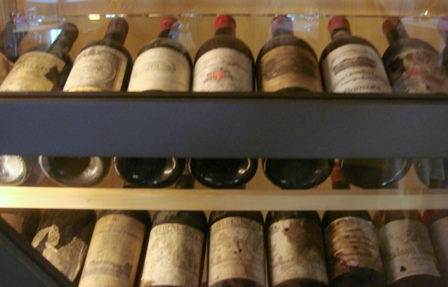
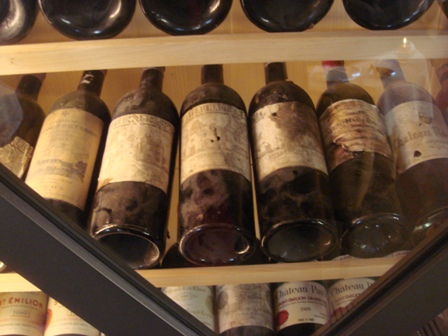
The atmosphere at the Château de Saran exudes a spirit of service. Jean Berchon joins me in the magnificent dining room to watch the all-important opening of the bottles. We start with a photo shoot of the impressive series of wines. The corks often break as they are being pulled, but I manage to let no crumb fall into the precious liquids. The most heady scents are, obviously, those of the 1845 Vin de Chypre and the 1904 Yquem, which are bewitching in their olfactory perfection. Then, the 1972 Romanée-Conti and the 1953 Petrus. The scent that gives me pause is that of the 1959 Margaux. The 1987 Henri Jayer Vosne-Romanée Cros Parantoux’s is fairly neutral. The 1888 Blanc Vieux d’Arlay’s is imperial in its serenity.
I also open the still Moët wines, which have corks that are indented on the top to hold the clip ensuring the cork remains firmly in place. On some of them, the metal crumbles to dust, as the clip no longer has any part to play. I manage to open all those corks, though it is a type of closure I rarely encounter.
I head off to join my friends at the meeting we have scheduled at the Moët & Chandon headquarters for a tour of the cellars. Jean Berchon tells the story of the families, of which he is a descendant, and a Polish hostess leads us through a tiny part of the 28 kilometers of cellar space. We visit a thing of my dreams: racks of ancient vintages from mythical years, which I hope to explore one day.
A tight convoy, we drive back to the Château de Saran. We head to our rooms to get ready for dinner. The women will be beautiful, their husbands elegant. We are about to experience a meal that will be a rare thing indeed in the world of gastronomy.
Now, we are all at the château, all assembled there, and I am the host! I have been "lent" the château, and the fact that I am the one to greet the company heads as their host gives them a piquant sense of novelty.
I usher in Jean Berchon, head of public relations and heritage for the Moët Group; Richard Geoffroy, cellar master for Dom Pérignon champagne; and Benoît Gouez, Moët & Chandon’s cellar master. The title “cellar master” indeed implies that those two enologists have the enormous responsibility of being the final arbiters of how the champagnes are assembled. Nine of my friends, among the most faithful at my dinners, round out the company at table. Who are they? A lawyer, the most devoted attendee of my recent repasts; an executive young enough to be my son who had been unwaveringly devoted to all of my grand dinners, including the ones at Château d’Yquem and L’Astrance, along with his wife; another executive and his wife, closer to my own age, he a great wine lover who has brought along another couple of wine lovers, the husband a dentist by trade; an Italian accountant who has come from Milan with his wife, he too a faithful participant at many of my dinners, despite the distance.
The point of this evening’s dinner is that the champagnes or Champagne wines – still wines of the region – have come from the cellars of Moët & Chandon, and all the other wines have come from my own cellar. I have had complete freedom in collaborating with the chef to choose the dishes to be served that evening.
In the pleasant reception room, where an important photography book appears to have been carelessly abandoned, open to the cover page, showing the First Lady of France in a decidedly indecorous state of undress, we are served glasses of 1973 Dom Pérignon from a magnum – its nose surprises me. I am overcome with a sense of wonderment I have no recollection of having felt with previous experiences of the 1973. I inquire, and discover that Richard has switched it for a magnum of 1966 Dom Pérignon, as he knows that I love that vintage. An attentive touch. I then give a little welcome speech in which I recall some data concerning the 1,050 wines served over the course of my hundred dinners.
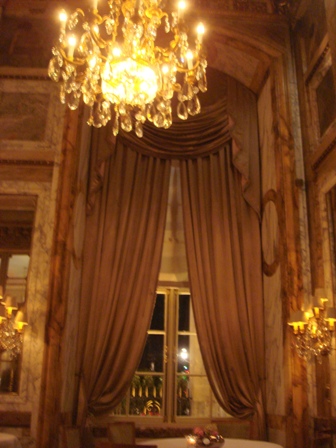
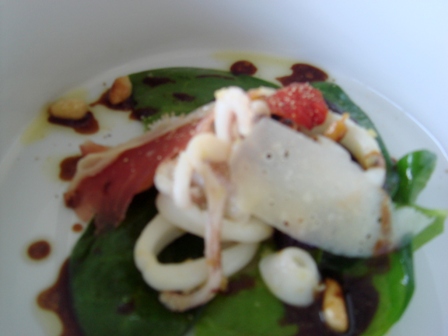
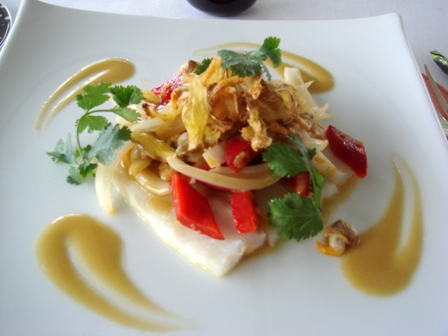
We sit down to dinner, and all of us are enthralled by the mahogany table’s exquisite glow, and by the porcelain tableware, with its deep sea-urchin red powerfully striking out against the wood. A table in a private setting has far more charm than a table in a restaurant, even the grandest of them. The courses devised by Bernard Dance, which I have helped him develop and hone, are as follows: Cream of sole / Thai scampi / Fillet of sole with Aquitaine caviar and chervil / Roast turbot with veal jus and braised fennel / Fillet of red mullet with red wine sauce / Sweetbreads / Lamb roast in a pastry crust with confit turnips in jus / Saddle of rabbit / Squab mole / 18 month aged Comté / Duo of mango and grapefruit with tea jus / Madeleines. The precision of the flavors, the impeccably timed cooking, and the limpidity of the tastes on the plate make for some astounding pairings with the wines. I am aware that Richard and Benoît spend a considerable amount of time seeking out the pairings that will bring out the brightest in their champagnes. Now I have had to invent, innovate and make bold choices in order to catch their attention. With one exception, the pairings prove to be spectacular.
The 1975 Moët & Chandon poured from a magnum is a solid champagne that is at a turning point in its life, still young before it will begin to show signs of maturity. It is faced off against the first two dishes, and the pairings evoke multi-dimensional mental images. The cream of sole grounds the champagne, which settles onto a firmly solid foundation, allowing it to develop its aromatic palette. It is not drawn out, but rather well-grounded by the pairing. The subtle, delicate scampi sauce, in turn, is a whipshot, lashing the champagne into shape; the drink sparkles wildly and shines remarkably bright. We have here, with the pairings, two fascinating approaches to enhancing champagne through precise dishes, and – I am proud to say – ones that are quite unexpected for the guests and hosts I am hosting.
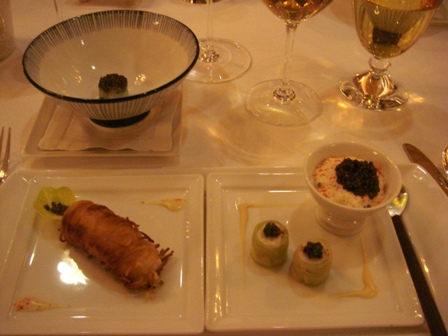
Moët & Chandon’s 1928 Rilly red is a still wine, produced without bubbles, and a striking example of Pinot Noir. There are no possible points of comparison for it, other than, perhaps, some older Alsatian reds. I am particularly proud of the pairing I dreamed up without ever having tasted the wine, because the caviar’s saline quality and the virile flesh of the sole are a devilishly good match for this excellent red, which is a gustatory extraterrestrial for us all. I planned on serving the 1928 Cramant with the cheese course, but in an earlier draft of the menu, I suggested comparing the Rilly and the Cramant, red and white wines from the same mythical vintage, by pairing them with the same dish. I then rejected the idea, but the wine is nevertheless served. It is blindingly clear that the Cramant does not pair well at all with the dish, a clash that gives an even stronger sense of how well the red goes with the caviar. Another 1928 Cramant is opened later to reach its desired destination.
The 1959 Château Margaux, whose dusty bitter smell alarmed me, has completely enveloped that smell, which is no longer anywhere to be nosed out. I remark with Benoît, who is sitting next to me at the table, that there is still a minuscule trace of dust, but the wine is exceptional. When Margaux plays its feminine wiles to the hilt, it is irresistable. The subtle, seductively delicate body of that great wine is stupefying.
As I have done almost every time there has been a Petrus served at my dinners, a red mullet accompanies the 1953 Petrus. Richard is awed, and applauds the pairing, because we have now successfully navigated three red wines through the world of Captain Nemo.
As I have no point of comparison for the 1921 Moët & Chandon, which is to be disgorged on the spot, before our eyes, I thought that its rightful place would be between a Petrus and a Romanée-Conti, the two juggernauts of their regions. A first bottle is disgorged, but it does not expel the compacted lees. A second disgorgement of another bottle is successful. I like the champagne from the first, which is delicately acidic, but the second one, as Benoît predicted, is absolutely splendid. I am intensely moved as I drink that champagne, partly because the vintage is legendary, but also because the wine is perfect. It is a perfectly balanced champagne in a form one almost never encounters. It is difficult to describe the fairytale wonder of the thing, as it is a unique procession of rare and beautiful things. The simply cooked sweetbreads are best suited to this elixir. I feel a thrill run through me in drinking a wine from that vintage.
The nose on the 1972 Domaine de la Romanée-Conti Romanée-Conti draws us through the well-guarded gates of paradise. Once you smell this wine, you understand what it means to enter a world of absolute elitism. The few guests who have never tasted Romanée-Conti feel they are experiencing something unworldly. The wine has a matchless nose, and on the palate, the pleasure is complete. I would suggest that if the saline quality that characterizes the Domaine de la Romanée-Conti is indeed present, the perfection of the body’s structure makes this the most Bordeaux-like of Burgundies. It is uncommon. It does not draw on its Burgundian charms, but rather chooses to show off its perfect structure. It is the greatest 1972 Romanée-Conti I have ever tasted.
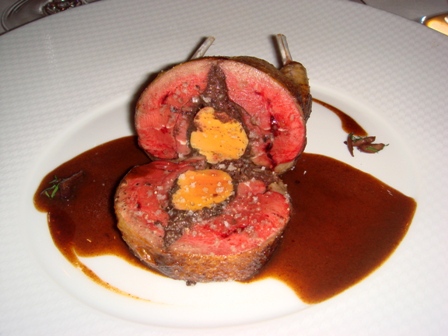
Next to it, alas, the 1987 Henri Jayer Vosne-Romanée Cros Parantoux, which I chose from a subdued vintage in order not to upstage the Romanée-Conti, is somewhat less sublime. I suspect there is an issue with the cork, but Benoît declares that idea unfounded. It could be heat damage. The wine is not what it should be. It is a shame, but the Romanée-Conti provides enough pleasure for the both of them, paired with the lamb roast.
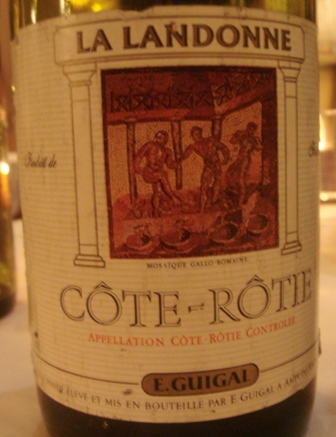
The 1978 Guigal Côte-Rôtie La Mouline is absolutely magnificent. You could not dream of a greater variety than what these four magical reds have to offer – the 1959 Margaux with its heightened feminine charm, the 1953 Petrus with its uncommonly perfect structure, the 1972 Romanée-Conti, a paradise of vinous complexity, and this La Mouline, from an exceptional year, with its deceptively simple approach, a serene and balanced thing, opening its arms to us, then uncovering a breathtakingly refined encyclopedia of talents. Four magical wines it would be well-nigh impossible to rank. The saddle of rabbit is delicious in its simplicity, and pairs to a tee with the simplicity of the La Mouline.
The 1972 Domaine de la Romanée-Conti Montrachet confirms that this is perhaps the greatest white wine in the world. It no longer has the explosive quality of its youth, but it is a heady tangle of aromatic debauchery, as one would expect. The greatest risk I took was in matching it with the squab mole. The risk pays off, but it would be better to prepare the same dish and take away the mole sauce, which is what I suggested during our preparations. Traces of it on the squab would suffice, as the pairing of the squab’s flesh, flavored by that preparation, with the white is poignant and exciting. This white wine from a discreet vintage is grandiose.
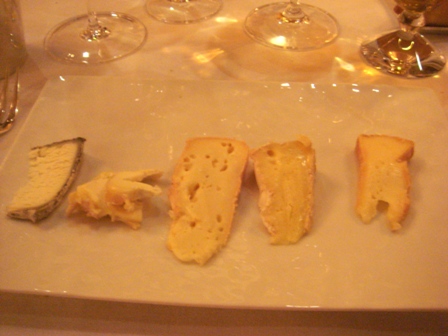
The 1888 Jean Bourdy Vin Blanc d’Arlay is one of my guilty pleasures. I love its unmistakably Jura tastes of walnut, with a subtlety that is magnified tenfold by the 120 years of its life. Comparing it against the 1928 Moët & Chandon Cramant is justified. The older wine is by far the more brawny, but the Cramant, with its charming acidity, reacts well against a Comté that has been aged only 18 months so that it could highlight the wines.
The 1904 Château d’Yquem has a scent that deserves to be included on the list of world heritage monuments – a currently fashionable thing – because it is extraordinary. On the palate, it is a heavenly flame, a Mount Etna of joy. One could not possibly imagine a more Platonically perfect Sauternes. Of unimaginable length, it has all the scents of the Yquems I love, combining mangoes and grapefruits, with lighter notes of dark fruit jam. The 1845 Vin de Chypre plays a chord that has no analogy. The scent is as wondrous as the Yquem’s, with pepper and licorice notes. I asked that the Madeleines be brushed with licorice liqueur. They are uncommonly delicate. The wine is the most perfect expression of pure pleasure.
We move on to the drawing room to drink a magnum of 1959 Moët & Chandon champagne, a wine that proves to be quite a qualitative leap from the 1975 served at the start of the meal. It is a lovely champagne. As with all of Moët’s still wines, the 1900 Moët & Chandon Vin du Mesnil leads us into a world of science fiction, to an unknown planet. The wine is possessed of a striking, lemony freshness that is mind-boggling for its 108 years. Benoît had doubts about the wine when he smelled it before the meal. I was much more confident. And when we drink it, its balance is pleasing.
Now, we must take a step back, as I have asked the guests to vote at the end of the meal, before we go on to the last two wines in the drawing room, in order to make sure I collect each person’s vote, which, because there are so many wines to choose from, should single out the top five rather than the usual four. Six wines are singled out as the best wine of the night: the 1904 Yquem four times, the 1845 Chypre three times, the 1953 Petrus and 1921 Moët twice, and the 1959 Margaux and 1972 Romanée-Conti once apiece.
Benoît Gouez, Moët’s cellar master, votes as follows: 1 – 1921 Moët, 2 – 1953 Petrus, 3 – 1972 Romanée-Conti, 4 – 1978 Guigal La Mouline, 5 – 1928 Moët Rilly red. Richard Geoffroy, Dom Pérignon’s cellar master, votes as follows: 1 – 1845 Chypre, 2 – 1904 Yquem, 3 – 1921 Moët, 4 – 1959 Margaux, 5 – 1978 La Mouline. The overall winners are: 1 – 1904 Yquem, 2 – 1845 Chypre, 3 – 1978 La Mouline, 4 – 1953 Petrus, 5 – 1921 Moët.
My vote: 1 – 1972 Domaine de la Romanée Conti Romanée-Conti, 2 – 1845 Chypre, 3 – 1904 Château d’Yquem, 4 – 1921 Moët & Chandon, 5 – 1953 Petrus.
It is well past 2 o’clock in the morning when I reach my bedroom, which is flooded with red roses in heady bunches. Lying in my bed, I have a beatific smile on my face. Because everything has gone as smoothly as could be imagined. The kitchen team prepared a masterful meal. The service was precise and unbelievably attentive. The table was set as no restaurant could have. My friends felt a ripple of pleasure running down their spine with each of the meal’s highlights. Friendship and splendid wines. There is joy in the air.
 Le lendemain toujours en famille, nous allons prendre un brunch dominical au