AN INCREDIBLE EXPLORATION OF THE WORLD OF ROMANÉE CONTI dimanche, 16 décembre 2012

AN INCREDIBLE EXPLORATION OF THE WORLD OF ROMANÉE CONTI, WITH 46 WINES FROM THE DOMAINE, INCLUDING 15 ROMANÉE CONTI, 6 OF WHICH ARE PREPHYLLOXERIC

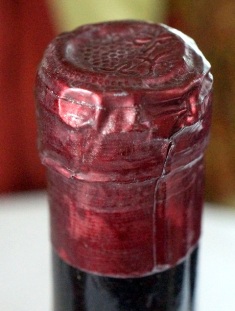
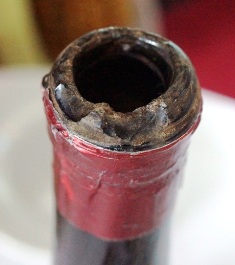
Warning : there is a big concern about the authenticity of several wines, as it appears that some bottles have been used twice or more after being refilled. I did not change my comments, as it shows that everyone can be fooled when he is in an atmosphere which is considered as offering honesty. It is a good lesson.

1 – THE REGISTRATION

As I write these lines, I have no idea as to what will happen tomorrow. I know a wine merchant who lives in Italy, whose name is French. From time to time, but not regularly, I buy wine from him. He has of late started organising dinners based on rare wines, in a similar fashion to the ones I organise. One day, I write to him to inform him that I find his prices out of proportion with what they should be. He answers: “Why? Do you find my prices too high?” This proves that he has misunderstood me, for his job is to sell wine, and he knows the current prices. My criticism was targeting the fact that I find it unreasonable to find one-of-a-kind, extremely rare wines at prices quite close to those of the most banal of wine events.

A couple of months later, I receive an offer for a dinner with an unbelievable list of extremely rare wines. It is quite shocking to see so many vintages of Romanée Conti, including 1929 and 1945. I turn the page to have a look at the price, and realise that my remarks have had an effect, for the demanded participation fee is way above all the fees that I have ever asked, even for my most expensive dinners. This offer has got some nerve, and so does the program. I would happily file this offer in the cabinet of forgotten proposals, but the wine merchant calls me and tells me: “Taking into account your Romanée Conti experience, I suggest that you replace your participation fee by a contribution in Romanée Conti.”

This sparks my interest. And since a 1945 Romanée Conti has been included on the list, I need to match this with my most prestigious bottles. I offer to bring a 1922 and a 1944 Romanée Conti, two wines from prephylloxeric vines, which can match the rarity of the 1945. My offer is accepted. A few days later, I learn that my friend Tomo will also take part in this dinner. This pleases me, for sharing such rare wines with strangers is not as rewarding an experience as sharing them with friends.

I drive down to the Hostellerie de Levernois where one of three scheduled meals of this wine weekend is to take place and, as I fill up the tank of my car, I receive an SMS from the wine merchant, informing me that one of the guests will not show up and asking me if I can find a last-minute replacement. At such short notice, it is clearly impossible to find someone. But if the guest who will be a no-show is the one who was supposed to bring the 1945 Romanée Conti, this changes things. Because in my mind, my two rarities cannot be fully embraced if they are not paired with the 1945, for I chose the closest vintages to the 1945, to create what could be an interesting juxtaposition.

I arrive at the hotel and find Tomo; we decide to have dinner together. The merchant who is my contact for this event, who I know only via emails, is in his room and has asked for room service. Maybe he doesn’t want to be disturbed. The suspense is still ongoing. What will happen during this massive tasting of legendary Romanée Conti? Tomorrow will tell.

2 – DINNER WITH TOMO

Tomo and I have signed up for a gargantuan Romanée Conti week-end. There is an uncertainty about the program, because it is possible that the guest who confirmed, only a few hours ago, that he will not show up could be the one bringing the 1945 Romanée Conti. That puts me in a bit of a pickle regarding my own contribution to this dinner.

We are having dinner at the restaurant of the Hostellerie de Levernois. The wine list is quite copious and smart, since the prices certainly whet the appetite. We start our aperitif with a 1995 Champagne Henriot Cuvée des Enchanteleurs which is delightfully accomplished. It is a smoky wine, with beautiful hints of candied fruit. It is deep and intense—a real delight.

We order a 2007 Chambolle-Musigny Les Amoureuses domaine Roumier ; we know it is a light vintage, but we want to enjoy its delicacy. With the black truffle risotto and its beautifully concentrated sauce, it turns out that the champagne is the best pairing by far, whereas one could have thought that it would have been with the red wine. But the latter excels with the delicious pigeon and its remarkably meaty texture. And yet, once we have marveled at the delicacy of this extremely subtle wine, we are forced to admit that it is lacking something; it is not power, for we asked precisely for this light vintage, but a lack of complexity. And I have to say that I was slightly disappointed with this wine from Roumier, which is probably the reason why, despite an out-of-this-world program already scheduled for tomorrow, we yield to temptation and are unreasonable. A wonderful cheese selection arrives and a blue cheese from Termignon catches my eye. I suffer from a chronic infatuation with this cheese which drives me crazy. And my intuition tells me that we need to pair it with a Château Grillet.

The restaurant wine list indeed includes a 1987. The blue cheese from Termignon paired with this 1987 Château Grillet is a definite proof of the existence of gastronomic nirvana. This wine is a masterpiece and I have to admit that I would never have expected a 1987 Château Grillet to reach such heights. It is the acme of this dinner, offering a balance similar to a Riesling, an unbelievable freshness, and an unparalleled balance. It is fluid, straight, smooth like a forbidden fruit—a real blessing. I am convinced that this has to do with a particular moment in time and that the same wine, on another day, would not create the same taste pleasure. But right here, right now, it pairs exceptionally well with the blue cheese from Termignon.

We still do not know what tomorrow will bring concerning the Romanée Conti wine list. We might as well go to sleep and dream sweet dreams.

3 – WINE TASTING AT THE DOMAINE DE LA ROMANÉE CONTI

The weekend program for the participants of tonight’s dinner starts with a visit of the Domaine de la Romanée Conti. Since I show up a bit ahead of schedule, I have a chat with Aubert de Villaine who asks me how many people are supposed to take part. When I answer that there should be about fifteen people, he is startled and tells me that it is not possible to taste straight from the barrel if there are fifteen of us, since distributing wine with the pipette would take too long and would be difficult because of the limited space in the cellars. In the meeting room at the domaine’s headquarters, the guests start to arrive. There are some Danes—among whom I am happy to recognise Peter Sisseck, the winemaker-owner of the famous Spanish wine Pingus—along with some Italians, Swiss, and only a couple of French people. Aubert de Villaine greets us cordially, and directs us to the cellars where the tastings are traditionally organised. Except for Peter and Tomo, I don’t know anyone in our group, and I make the acquaintance of René, a Dane who lives in Basel, and the organiser of this event. I learn that this indeed is not a dinner as I still thought it was a couple of days ago, but a real complete week-end during which this group, which gathers together the members of the “White Club”, will drink the wines in the program, as well as other non-programmed ones, during the course of three official meals and three non-official meals.

The only wine that Aubert de Villaine will announce is the 2004 Vosne Romanée Domaine de la Romanée Conti, for all the others will be tasted blind. It has a pleasant nose, slightly tart and peppery. It is well structured. It is a generous yet quite short wine.

The 2006 Romanée Saint-Vivant Domaine de la Romanée Conti has a more intense nose, and is more voluptuous in the mouth. It is a refined, rich, well-balanced wine. I can taste its subtlety. Aubert de Villaine explains that it is still in its adolescence. He talks quite poetically of the anger of the wine, still repressed in its bottle, desperate to express its personality. I really like this wine.

The 1999 Echézeaux Domaine de la Romanée Conti is of a very different style. It is shorter than the previous one, but richer. I detect a slight green taste in the finish. The wine is marginally unripe, but it is possible to taste its delicate thread and its mellowness of texture.

The 1992 La Tâche Domaine de la Romanée Conti has a very beautiful aroma. Aubert de Villaine tells us that this vintage was written off by wine critics. One can taste an older wine, very delicate, round, but it is served cold, which limits the pleasure. However, it is possible to taste its fruitiness and its beautiful complexity. It is a wine that I have always appreciated.

The next wine is tasted blind again, and as I smell the 1956 Romanée Conti Domaine de la Romanée Conti, I have an epiphany. I do not train in the art of blind tasting, nor do I excel in it, but it is a truly unbelievable revelation. I am convinced that I have recognised the wine we are drinking. And the curious thing is that I have absolutely no doubt about it. I dare to announce that I know what wine it is, and it is indeed the 1956 Romanée Conti which I have already tasted in the past. I feel it has the archetypal Romanée Conti nose, with those hints of wilted rose petals. The finish is extraordinary. This wine has been recorked in 1995 and it is absolutely immense. It is of extreme elegance. Aubert de Villaine explains that this is a disembodied wine, which has shed its mortal body and lives in another dimension altogether, that of the spirit of wines. For me, this wine is the soul of the Romanée Conti.

The 1977 Montrachet Domaine de la Romanée Conti is of a colour that already shows signs of age. I have a slight problem with the nose. The attack in the mouth is lemony, quite beautiful, with a slight lack of liveliness. When it is left to warm up for a bit, the taste of honey appears. The wine then improves and even becomes great.

I feel that Aubert de Villaine is happy to be reacquainted with these wines, some of which he had not opened in a long time. Everyone can appreciate his pertinence and accuracy when describing his wines and his domaine. Everyone is moved by his great generosity.

4 – LUNCH AT A SMALL MANOR IN MERCUREY

Without a clear plan of action, we separate into small groups and head for a great bourgeois manor house in Mercurey which hosts the whole group except for my mentor the wine merchant, Tomo, and myself.

In the great lounge with exotic wallpaper that evokes the tropical richness of the Douanier Rousseau, I can spot on one of the tables a 2003 double magnum of Château Palmer, uncorked. While this wine was not on the list, I can easily imagine that we will go from one surprise to the next—and I will not be disappointed. To drink this Palmer after our visit at the Romanée Conti is somehow a disservice to the Bordeaux wine, for it has really hard tannins and comes across as a bit rough after the wines of the Domaine. This goes to show that tasting conditions have a clear influence on one’s perception.

The apéritif turns out to be the 1985 magnum of Champagne Comtes de Champagne Taittinger. The first impression that is given by this champagne is of acidity. A few minutes later, it is the dosage that comes through. This champagne is usually better than the one we drink today.

We head for the dining room where a long table has been prepared with glasses from the Lalique company, whose owner is part of our group. He is one of the sponsors of the White Club, along with a Swiss watchmaker and a producer of mineral water, which is original to say the least in a wine tasting.

The meal is beautifully executed, but without looking for wine pairings. It just provides sustenance. The wines are served in flights of five.

The nose of the 1989 Grands Echézeaux Domaine de la Romanée Conti is relatively closed. I personally feel like the Lalique glasses confine the aromas of the wines to the glass instead of contributing to their expansion. The mouth is extremely delicate. It is a great wine.

The 1996 Richebourg Domaine de la Romanée Conti is very beautiful, offering more precision, more tightness, and more liveliness.

The 2003 La Tâche Domaine de la Romanée Conti is nothing but charm and elegance. It is slick and seductive. It is stricter in the finish. It wins us over with its attack, and when it expands in the glass, it becomes extremely velvety. This wine is fantastic.

The 2003 Romanée Conti Domaine de la Romanée Conti strikes me with its depth. It has beautiful complexity and willingly displays an aroma of wilted rose. No need to look for it, it is there, already incredibly expressive and long. It is a beautiful achievement. This wine is about length and depth. Its persistence in the mouth seems like it will never end. The 2003 La Tâche is more generous and has a more glorious finish, but is less deep than the 2003 Romanée Conti.

The 2005 Romanée Saint-Vivant Domaine de la Romanée Conti expresses true joie de vivre and extreme tension. It cracks like a whip. It is not feminine, it charges in. Its finish is wonderful.

We now turn to the second flight.

The 1959 Romanée Conti Domaine de la Romanée Conti has a slightly evolved nose. The wine is a bit inhibited, and I can feel that we ought to be patient, for its complexity is still a bit shy. This wine is slightly disappointing, but too much is expected of it, a bit like the 1959 Richebourg that I opened recently and which disappointed me. But when it expands, it shows how great it can be.

The 1957 Romanée Conti Domaine de la Romanée Conti has a livelier nose. The wine is definitely more alive than the 1959. It has a beautiful texture. It is very pretty, lively and expressive. However, it is undoubtedly less moving than the 1956 that was opened at the last minute this morning and served cold in the cellars of the Domaine.

The 1947 La Tâche Domaine de la Romanée Conti has a very beautiful bouquet. It is extremely assertive in the mouth. It is slightly damaged in the finish but it is a truly beautiful wine. When it expands, it becomes fantastic, and I write down that “this wine is worth over 100 points”, and also “what an insane wine!” It is probably one the greatest wines of this journey through the world of the Romanée Conti. Its velvety texture is legendary. However, I notice that it is less complex than the 2003 Romanée Conti of which I am enormously fond.

The 1944 La Tâche Domaine de la Romanée Conti is interesting, even though it is somewhat tired. It is of a very brown colour. It is a very beautiful wine, with a slight taste of coffee.

The 1928 La Tâche Romanée Chevillot négociant is completely unknown to me. It has been bottled by a wine merchant who was allowed to bottle La Tâche and to call it Tâche Romanée. It is of a very brown colour. Its nose smells of coal and earth. The mouth is superb, contrasting with the sight and the smell. It shows its age in the finish, but the mid-palate is very moving. It is a very beautiful wine, even though it is a bit tired, for its message is still intact, and the texture is rich. It is, however, more historical than real.

We now turn our attention to the third flight of wines.

The 1997 Romanée Conti Domaine de la Romanée Conti is very generous, and typical of the Romanée Conti. It is a natural Romanée Conti, easy to understand—a top-of-the-range wine, so easy to drink!

The joker wine is quite beautiful. I find similarities with the 1997 wine we have just tasted. It is very pretty, and very natural too. I do not identify it. It is a slightly tight 1988 Vosne RomanéeCros Parantoux Henri Jayer.

The 1978 Romanée Conti Domaine de la Romanée Conti has beautiful balance and richness. The wine has slightly roasted flavours and I feel like I am reaching my tasting limits. Again, I find this wine to be a bit tight.

The magnum of 1982 La Tâche Domaine de la Romanée Conti is a magnificently generous and opulent wine. It is another signature wine of the Domaine de la Romanée Conti, a magical wine which becomes fantastic when it expands in the glass. It has the soul of the domaine, and moves me beyond measure.

The 1963 Richebourg Domaine de la Romanée Conti has an intense aroma of truffles. It is a pretty wine, but it gradually shows signs of exhaustion. When I come back to it for the third time, its finish is tired.

The interest of unplanned wines is that they force a certain humility upon the wine taster. It is quite easy to identify that the next wine comes from Bordeaux. I think of Cheval Blanc for a second, but dismiss the idea because I didn’t find it great enough. It turns out to be a mythical wine—1982 Château Cheval Blanc. Admittedly, it is not easy to come after the Burgundy wines. When I drink it, I cannot claim to be able to fully embrace what this wine actually represents.

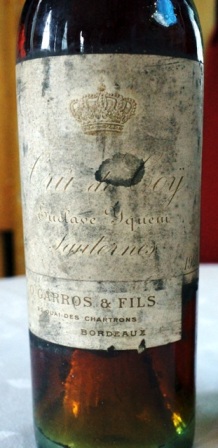
And then, another mystery is served to us. The moderately camphorated nose makes me think of a 1941 Yquem—the very same that I put aside in one of my recent dinners because it displeased me so much—but here, the wine has not suffered. I think of a 1964 Lafaurie Peyraguey, because of its botrytised richness. It turns out I am completely wrong, for it is actually a 1929 Yquem. Shame on me! But I have to point out that I do not perceive the emotion that is normally expressed by this tremendous wine.

5 – DINNER AT THE HOSTELLERIE DE LEVERNOIS

It is now late in the afternoon. We have just finished this dazzling presentation of rare wines. I would have liked to take a nap at the hotel, but time waits for no man, and I have an impressive number of wines to uncork for tonight’s dinner. Tomo and I head back to Levernois. I barely have ten minutes to catch my breath and now have to face the most unbelievable accumulation of wines from the Domaine de la Romanée Conti, and I will handle them all and uncork them one by one. If the quality of the corks for the recent vintages is beyond reproach, it is not the same for the old corks which I have to struggle with, to such an extent that the fingers of my right hand—the one that pulls gently on the cork—begin to ache. For the 1983 Romanée Conti, the cork is far more compressed than all the others and I have to fight like a mad man to pull it out. Naturally, I am interested in the two wines I brought with me. The 1922 Romanée Conti has a horrible aroma. I am saddened for it seems to be beyond help. The 1944 Romanée Conti has, on the other hand, an aroma that I really like. Please remember this and keep reading, you will see how surprising the world of vintage wines can be.

And where is the 1945 Romanée Conti? For my signing up for this dinner was based on its presence. When we were at the domaine this morning, Aubert de Villaine asked questions about its origin, and René, the master of ceremonies, had reassured him. But I can’t see it. Romain, the wine merchant who had pressed me to join those dinners, asks me to go and talk to René, who explains that the bottle that was sold to him doesn’t correspond to the photo of the bottle that he intended to buy, and that he had therefore not picked it up and asked for a refund. As he is well aware that I had decided to take part in this dinner because of the 1945, he promises that he will organise another dinner with a 1945. Everything tells me that I can trust him, and I keep opening the wines. I am not finished and already the members of the groups that stay at Mercurey begin to arrive. I can consign my nap to oblivion.

I barely have time to get dressed and walk back down to a cellar where everyone is enjoying an aperitif with a jeroboam of 1961 Champagne Perrier-Jouët. Why not, considering excess seems to be the word of the day! The colour is hazy. It is not disagreeable, but it is absolutely not what it should be. I hardly drink of it, because I don’t like it. With Peter Sisseck, we joke about the fact that it was probably stored and displayed on a shelf in a nightclub where it was damaged by the heat.

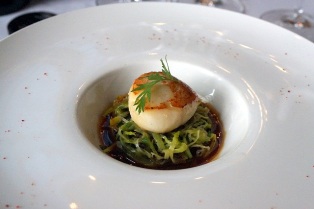
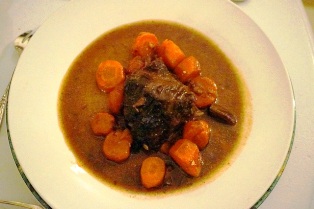
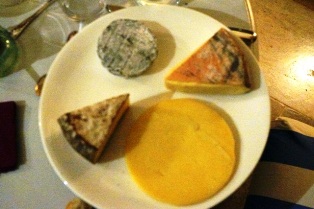
When you think on a big scale, it also includes the food. Here is the menu which still makes quite an impression on my scales two days later: Gillardeau oysters and sea urchin panna cotta with Osciètre caviar / Shellfish broth and mimosa crispy wafer / The perfect egg with porcini, Belotta ham and hen pheasant cream / Scallops with truffles, leek and celery / Lobster cooked in its shell, paccheri pasta stuffed with King crab, preserved lemon and artichoke / Acquarello risotto with bone marrow and black truffles / White boudin of young partridge with chestnuts, duck foie gras from the Landes region, infused in a porcini broth / Lièvre à la royale, cauliflower terrine and wild mushrooms / A selection of fresh and matured cheeses / Variations on the comice pear with caramel / Manjari chocolate tart, crème brûlée with Bourbon vanilla, ivory ice-cream.

This meal was absolutely not imagined to pair with the wines, but it is delicious and beautifully executed. It was way too copious, but necessary to sustain the rhythm of the wines.

On the program, there are only red wines, which would have been difficult, considering the beginning of the menu. As a result, René insists we open a 2007 Montrachet Domaine de la Romanée Conti. It is splendid and it smells of dairy products and patisserie. It is rich, generous, very tasty in the finish, extremely long. It is elegance incarnate.

The 2008 Montrachet Domaine de la Romanée Conti has a very elegant nose. It has more of a petrol aroma. It is more mineral, and has more botrytis than the 2007 one. It is a deep wine. There is an aroma of honey. If the 2007 is pleasant and ready to drink now, the 2008 should be kept in the cellar for a bit longer.

Since the bottles that I opened go from one pair of hands to the next, I ask René to reorganise them in the order of the program. On the table, there are 27 wines from the Domaine de la Romanée Conti. This is completely surreal.

And as if that isn’t already enough, René decides to pour us a mystery wine. It is tasted blind by our table of fifteen wine enthusiasts. Practically everyone suggest Pétrus; more precisely, the majority suggest 1961 for the vintage. My friend Tomo thinks of 1998, whereas I think of 1990. What a surprise when we discover it is actually a 1900 Château Margaux, with a Barton & Guestier label, recorked in 1999 and oddly, without the name Margaux written on the cork. Peter Sisseck tells me that this wine is so young that if it actually is not 1900 Château Margaux, an award should be given to the winemaker who has managed to create such a phenomenal young wine.

And indeed this wine is absolutely out of this world. It is worth a hundred Parker points, that is obvious, but it is so much more than that. Balance, emotion, length, depth—it has everything. And I have indeed made a mistake about its age, but it is not the first time that sublime vintage wines fool everyone. The reason everyone thought of Pétrus was because of this truffle taste, of rare precision. It is a beautiful lesson, and a splendid wine. It has inimitable perfection and absolute elegance. It could very well be the winner at the end of the day.

The 2007 Romanée Saint-Vivant Domaine de la Romanée Conti has a nose which is typical of the Romanée Conti wines. The mouth is elegant, but also strict and restrained. It is an elegant, measured and pleasant wine—a great wine.

The 2002 La Tâche Domaine de la Romanée Conti has a powerful and insanely young nose. In the mouth it is happy, charming, but also powerful. It clearly has the style of the domaine. It is glorious.

The 1993 Echézeaux Domaine de la Romanée Conti has a subdued bouquet. The mouth flavours pair magnificently with the porcini. It is elegant, but doesn’t have as much personality as the La Tâche. It gradually gets more full-bodied.

The 1997 Romanée Saint-Vivant Domaine de la Romanée Conti remains austere, but typical of the domaine wines.

The 1990 Richebourg Domaine de la Romanée Conti is remarkably pure on the nose. It is extremely elegant, balancing accomplishment and coherence. This wine is in a state of grace. It is of infinite length.

The 1983 Romanée Conti Domaine de la Romanée Conti has a subtle bouquet. Paired with the scallops and truffles, it is glorious. It is infinitely long. I love this Romanée Conti which I have already tasted many times in the past. It is clearly not a powerful vintage, but it is as elegant as Coco Chanel. I can taste the rose and the salt.

The 1981 Romanée Saint-Vivant Domaine de la Romanée Conti has a very beautiful nose. It is beautiful too in the mouth, even though it really does not compare with the 1983 Romanée Conti.

The 1975 Romanée Saint-Vivant Domaine de la Romanée Conti is really typical of the wines of the domaine. Salt is very present. In the mouth, the wine is much tastier than the nose promises it to be. It performs much better than could have been expected.

The 1973 La Tâche Domaine de la Romanée Conti has a very beautiful bouquet and is quite tasty in the mouth. What a pleasant surprise coming from that vintage! The last four wines are surprising, for they come from small vintages, but turn out to be brilliant. The 1983 Romanée Conti has a little something extra because of the complexity of its finish, but the most unbelievable of the four, which against all odds comes on top for me, is the 1975, and I am delighted to see that around the table, the other guests think so too.

The 1956 Richebourg Domaine de la Romanée Conti has the signature bouquet of the Romanée Conti wines, with a rare power. It has similarities with the 1956 Romanée Conti of this morning, but being served at the table, it is more opulent. It has a slightly bitter finish, but it is a very beautiful wine.

The nose of the 1954 Romanée Conti Domaine de la Romanée Conti is not perfect. In the mouth, the wine is slightly tired and evokes an amontillado. It tastes burnt, and yet it has something to say, which makes the 1956 even more alive.

The 1944 Romanée Conti Domaine de la Romanée Conti, which is one of my contributions, has a very unappealing colour. There is a hint of vinegar on the nose. In the mouth, it is not a complete blank, but it is definitely not up to the standards of the domaine. There is still a faint trace of chocolate. It is not dead in the mouth, but I am really furious.

The 1945 Richebourg Domaine de la Romanée Conti has a slightly camphorated nose. The mouth is beautiful even though it is a little bit chemical. René is much nicer to this wine than I am. This is a weak flight of wines. The 1956 emerges as the most alive of the four, and quite beautiful it is too.

The 1943 Richebourg Domaine de la Romanée Conti, which was added to the list to please me as a reminder of my birth year, has a beautiful colour. It evokes mushrooms on the nose, and its intensity will never weaken. We ought to wait before tasting it, but it will never turn into the memory of what I have experienced with this wine, one of the greatest I have ever tasted from the domaine. This mushroom aroma prevents you from falling in love with it.

The magnum of 1940 Richebourg Domaine de la Romanée Conti is of a very brown colour. The nose is okay, but borderline faulty. It is an acceptable wine, but it shows too many signs of exhaustion. The finish is too tired.

The magnum of 1940 La Tâche Domaine de la Romanée Conti is also of a very tired colour. The nose is better. In the mouth, it is perfectly drinkable, even though it too is slightly tired. The finish is very limited.

The 1937 Romanée Conti Domaine de la Romanée Conti is of a much more beautiful colour, even though it is slightly hazy. There is a hint of tobacco on the nose. The attack is beautiful, but the finish lacks precision at this moment of its life.

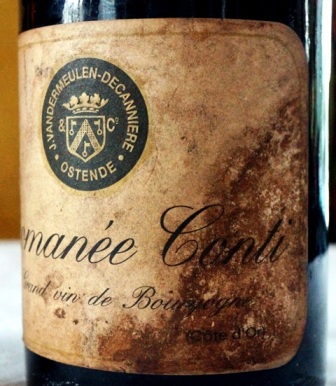
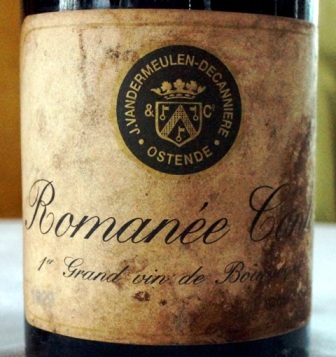
The 1929 Romanée Conti Domaine de la Romanée Conti Van der Meulen is of a dark colour. The nose is very pretty. One can smell a wine which is slightly fortified, and roasted aromas too. It is a beautiful wine, but it is not the legend it is supposed to be.

The 1923 Romanée Conti Domaine de la Romanée Conti Van der Meulen is also of a dark colour. The nose is very velvety, and it is the first wine in which I can perceive that menthol freshness. It has the same profile as the 1929, only much better. It is a great wine, and the true expression of a prephylloxeric wine.

The 1922 Romanée Conti Domaine de la Romanée Conti is my second contribution to this dinner. It has a clear colour and is wonderful. It is the best of this flight which includes four Romanée Conti. It combines freshness and extreme tension. I am so happy that this wine makes up for the disappointing 1944.

The 1937 Romanée Conti is improving. Both the 1922 and the 1937 have clear colours and are definitely what a Romanée Conti is supposed to be, whereas the 1923 and 1929 are of darker colours and give the impression that they were fortified by Van der Meulen. The 1937 has improved and is quite similar to the 1922 which is now regal. If we go back a couple hours, the 1922 was smelling of death and the 1944 had wonderful aromas. Wines evolve in mysterious ways!

The 1935 Romanée Conti Domaine de la Romanée Conti has a very pretty and typical nose of Romanée Conti. In the mouth, it is a truly great Romanée Conti. The race is on between the 1922, the 1935 and the 1937. The 1935 is probably the richest, but it could also have been slightly fortified. The 1922 is therefore the winner for me, ahead of the 1937 and the 1935, while the 1923 is turning out to be a more and more attractive outsider.

One can hardly imagine that we have just tasted six Romanée Conti made from prephylloxeric vines—1922, 1923, 1929, 1935, 1937 and 1944! The 1935 has great power, alcohol, and is a beautiful wine; the 1923 is becoming more elegant, peppery, and it is a great wine, even if it had a little bit of help; the 1922 epitomises elegance, with all the refinement and purity of the Romanée Conti; the 1937 is nothing but subtlety, a little brother to the 1922, even if it is not as pretty; the menthol freshness of the 1935 is surprisingly unusual.

The colour of the 1962 La Tâche Domaine de la Romanée Conti hesitates between red and brown. The nose is magnificent. It is a soft yet deep wine. It is another truly great wine, but not the legendary wine I was expecting.

The last drop of the 1922 is pure rose. I am deeply moved.

The 1959 La Tâche Domaine de la Romanée Conti is of a similar colour to the 1962. The nose is not perfect, but the mouth is a lot tastier. It is generous but imperfect. 1959 is definitely not my lucky number.

It appears that all the young wines, as well as the oldest ones, are spectacularly good. It is the mid-life wines, from the 1940s and 1950s, which are problematic. When you realize that the 1956 tasted this morning in the cellars of the Domaine de la Romanée Conti is one of the most beautiful of the day, it suggests that there is a real storage problem with the wines from the 1940s and the 1950s. But there is so much more positive than negative in today’s tastings that it allows me to experience a truly unique moment.

René, who still believes he has not been generous enough, asks if we still have some energy left. I say yes. And then enters what I will call the John Wayne wine. In all the westerns of this American actor, victory is decided in the last minutes of the movie. And it is more or less what happens with the 1969 Romanée Conti Domaine de la Romanée Conti. It is of a clear colour, with the authentic bouquet of the Romanée Conti. It is perfect, elegant, beautiful, even though it shows a tiny lack of tension. It turns up to be paired with the chocolate dessert, but at this point, we are capable of focusing exclusively on the wine, one of the most beautiful of the evening.

6 – COMMENTARIES AND CONCLUSIONS

Such a rhythm is so excessive that I have announced that I will not take part in the lunch scheduled for the next day, which I had originally signed up for. The idea of letting go of the opportunity of a meal with 17 wines from the Domaine de la Romanée Conti—including a 1990 La Tâche—can seem utter folly. But it would indeed have been sheer madness to have taken part in it.

What can we learn from this absolute extravaganza of a tasting? Here is a cosmopolitan group of wine buffs who have the financial means to indulge in the rarest wines in the world. When you have the budget for it, why not hunt for the strange and rare? The order of the day was profusion, not measure. One could criticise this excess, but René did it with such generosity that you can only respect this desire to share.

Of course, the 1945 Romanée Conti was a no-show, and it was the wine that had made me sign up for this dinner in the first place. If another 1945 Romanée Conti ends up being opened on another occasion, it will be an extra pleasure for me.

What remains, for me, is this unique exploration in the taste history of the Romanée Conti. I now have notes on more than 300 wines from the domaine, spanning 74 different vintages. I have therefore confirmed a significant insight into the wines of this domaine. I am deeply grateful to the organisers of this once-in-a-lifetime event. I would never have organised it that way. But different can sometimes be good. And long live the Romanée Conti!

A 12h 12mn et 12 secondes le 12/12/12 mercredi, 12 décembre 2012

Dans mon entreprise industrielle, à 12h 12mn et 10 secondes, j’avais le bouchon en main. J’essaie de le tourner. Trop serré, je n’arrive pas à l’ouvrir.
Un collaborateur prend les choses en mains et l’ouvre, mais à 12h 12mn et 24 secondes.
A 12 secondes près, on ne va pas chercher la petite bête.

Par un hasard non calculé, nous étions douze à boire le Champagne Henriot Cuvée des Enchanteleurs 1996 en magnum.

Tout le monde a apprécié ce champagne intense, au fruit fort, aux saveurs de citron confit. Un champagne que j’aime beaucoup.

Je suis heureux d’avoir célébré ainsi cette conjonction unique : 12/12/12 à 12:12:12.

Que faire en ce jour quand on s’appelle Audouze ? mardi, 11 décembre 2012

Quand j’étais gamin, on m’a appelé des milliers de fois "au treize" et le plus surprenant est que chacun croyait qu’il était le premier à avoir inventé ce surnom !

Alors, quand le calendrier m’offre une date qui est 12/12/12, je me sens concerné !

A 12 heures 12, il va falloir que je me recueille.

Que vais-je faire ? Vais-je y penser ?

12 heures, 12 minutes, 12 secondes le 12/12/12, je crois que ça s’arrose.

A vérifier.

dîner à Grains Nobles après la dégustation de la Romanée Conti mardi, 11 décembre 2012

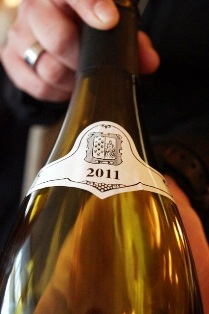
Après la présentation des vins du domaine de la Romanée Conti par Aubert de Villaine, Pascal Marquet, directeur de Grains Nobles, retient à dîner quelques personnes autour d’Aubert de Villaine, dont Michel Bettane, Bernard Burtschy et moi. Sergio, qui a géré la dégustation et dirige la restauration de l’endroit avec sa femme, est d’origine colombienne. Le jeune chef est aussi hispanique. Il est très motivé, nous a expliqué les plats. Il travaille bien et l’on sent qu’il est ambitieux. Avant de passer à table, j’ouvre le vin que j’ai apporté. A peine ai-je soulevé trois millimètres qu’une affreuse odeur de bouchon envahit mes narines, puis la pièce. Le vin est un Côtes du Jura blanc Robert Jeannin 1973 qui m’avait plu lorsque je l’ai saisi en cave pour sa belle couleur. Il est bouchonné ou en a les apparences et ne revivra pas. Je n’ai pas réussi à ‘audouzer’ mon vin ce qui a permis à Michel et Bernard de faire gentiment un peu d’humour à mes dépens.
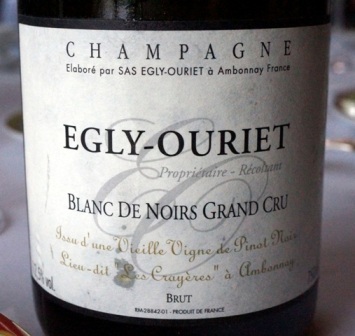
Nous commençons par un Champagne Egly-Ouriet rosé grand cru magnum sans année. Alors que je suis un fan des champagnes de cette maison, ce rosé ne me convainc pas du tout. Il n’a pas d’âme. Et le contraste est extrême avec un Champagne Egly-Ouriet Cuvée Brut non dosé qui a passé 61 mois en cave et a été dégorgé en juillet 2004. D’après ce que j’ai compris, ce champagne n’a pas été commercialisé. Il a une personnalité affirmée. Je l’adore. Le temps lui a donné de la souplesse et a rendu beaucoup plus facile à accepter l’absence de dosage. J’aime ce champagne qui raconte des complexités.
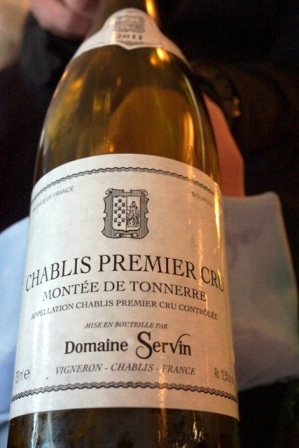
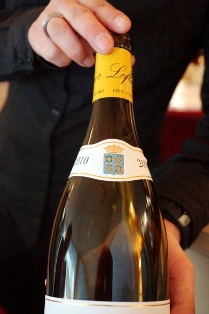
Dîner avec Michel Bettane et Bernard Burtschy, c’est fascinant, car on apprend des tonnes de choses nouvelles, en remarquant à quel point ils sont proches dans leurs analyses, mais on prend aussi une sacrée leçon d’humilité, tant on se sent nain à côté de ces géants de la connaissance du vin. Les deux éreintent avec une vivacité rare le Rioja Vina Tondonia 1964 qu’ils trouvent très mal fait. Je peux comprendre leur jugement, tout en étant moins sévère.

A l’inverse, ils encensent le Château Bel Air marquis d’Aligre 1970 en vantant à l’envi ses qualités. Je peux comprendre leur jugement, tout en étant moins laudatif.

Le chef nous a proposé un très bon foie gras au subtil chutney, des coquilles Saint-Jacques délicieuses et un plateau de fromages goûteux. Voilà une bien heureuse surprise.

Aubert de Villaine présente les 2009 du domaine de la Romanée Conti mardi, 11 décembre 2012

Chaque année, Aubert de Villaine vient présenter au siège de la société "Grains Nobles" les vins du domaine de la Romanée Conti du millésime qui a trois ans. Dans l’étroite cave voûtée probablement aussi vieille que la parcelle de la Romanée Conti, ou peu s’en faut, les habitués sont nombreux à venir célébrer le vin le plus emblématique du monde. Ils vont écouter religieusement Aubert de Villaine qui parle tout doucement, et Michel Bettane qui ajoute des anecdotes colorées sur les vins, pendant que Bernard Burtschy prend des notes sur son ordinateur.

Aubert de Villaine parle du film de l’année 2009 et dit qu’en août 2009 on savait déjà que l’année serait bonne, même si le début d’année fut assez difficile. Août fut chaud, marqué fort classiquement par l’orage du 15 août. Le beau temps a duré jusqu’en octobre. Les vendanges ont été faites du 10 au 18 septembre. Les raisins fins étaient très fins.

Pendant qu’Aubert continue ses considérations sur ce grand millésime, on nous sert un Pernand-Vergelesses 1er cru Ile de Vergelesses Chandon de Briailles 2007 dont Pascal Marquet, le directeur de Grains Nobles, nous dit à titre de boutade qu’il sert à aviner nos verres. Je dirais plutôt qu’il sert à préparer nos palais. Le vin a un nez pur assez linéaire. La bouche est agréable, accueillante, au final bien frais. Ce n’est pas un vin long et complexe. C’est plus un vin de repas de copains, vin carré sans grande originalité. Il est bien fait et plutôt gourmand.

Une fois le décor planté, nous commençons par le Corton Grand Cru Prince Florent de Mérode 2009 dont le domaine de la Romanée Conti est le fermier depuis novembre 2008, suite à plusieurs décès successifs dans la famille du prince. Il y a trois climats en Corton dans ce domaine : le Clos du Roi, les Bressandes et les Renardes. Mais Aubert n’a pas voulu faire les trois et a préféré se concentrer pour la première année sur les plus vieilles vignes. La couleur du vin est assez foncée. Le nez est profond et charmant. Le contraste est vif avec le vin précédent car ce vin est profond, riche, poivré, conquérant. Le final est strict et pur. C’est un vin soldat qui deviendra un vin de plaisir. La sensation est végétale. Aubert de Villaine dit qu’il y a peut-être un peu trop de fût neuf. Le rendement de ce vin est en 2009 de 24 ou 25 hecto/ha. Aubert de Villaine indique qu’en 2012, le rendement est de seulement 11 hecto/ha. Il ajoute : "ce vin regarde vers la terre et ne regarde pas vers le ciel". Il a un grand potentiel de vieillissement. Il est sauvage, gibier.

L’Echézeaux domaine de la Romanée Conti 2009 a une jolie robe rouge, plus foncée que celle du Corton. Le nez est caractéristique du domaine, profond, pénétrant. Voilà, tout le charme du domaine est là. Soyeux, délicat, subtil, ce vin a en finale une jolie râpe. Il a une forte trace en bouche. C’est un beau vin, que j’aime toujours, car c’est lui qui ouvre la porte des saveurs du domaine. Il les pianote avec douceur. Il y a un peu de feuille de cassis dans le final. Ce vin a une belle râpe et un beau végétal. J’aime sa délicatesse.

Le Grands-Echézeaux domaine de la Romanée Conti 2009 est un peu plus foncé. Le nez est très semblable au précédent, mais on sent une structure plus pleine. Le vin est plus volontaire, aussi on perd un peu l’impression de subtilité de l’Echézeaux. Le vin est plus riche, mais à ce stade de sa vie, je préfère le précédent. Le Grands-Echézeaux est un vin de plaisir, généreux, souriant. Mais plus que l’Echézeaux, il aura besoin de temps. Il a une grande rémanence gustative. Il sera très grand.

La Romanée Saint-Vivant domaine de la Romanée Conti 2009 est aussi un peu plus foncée. Le nez est très végétal avec un peu de pierre à fusil. L’attaque est fluide, douce, charmeuse. Tout est en finesse. Il a la grâce de l’Echézeaux, avec une finesse et une noblesse en plus. Féminin, il a la grâce, mais aussi la matière. Fraîcheur, équilibre, nez intense, ce vin montre tout le potentiel de subtilité de la Romanée Conti. Il est tellement gourmand que je bois vite mon verre, sans en garder pour des comparaisons ultérieures.

Le Richebourg domaine de la Romanée Conti 2009 est un vin plutôt foncé. Le nez est profond, fonceur. Il est un peu réduit, faisant penser en traces au caramel. La bouche est fruitée, gourmande. C’est un guerrier après la Romanée Saint-Vivant. Il est plus conquérant mais n’est pas encore bien assemblé. Il faut vraiment attendre alors que les vins jouant plus sur la subtilité sont plus faciles à boire aujourd’hui. Ce sera une bombe dans quinze ans. Le nez est de feuille de cassis, et la râpe va vers l’amertume. Il a un grand potentiel de richesse et de grandeur, à attendre patiemment.

La Tâche domaine de la Romanée Conti 2009 est d’un rouge à peine moins soutenu. Le nez est très profond, marqué par la jeunesse au point que l’on a une impression de soufre. En bouche, il est voluptueux, riche. Aubert de Villaine dit : "sans violence". Il a une matière et une structure très fortes. Les tannins sont riches. La fraîcheur est un peu mentholée. Le final est plein de grâce et contraste avec l’attaque forte. Ce qui me frappe, au-delà de la gourmandise, c’est la fraîcheur finale. Il faut attendre. Il est moins glorieux et épanoui que celui que j’ai bu lors de la paulée de l’Académie du Vin de France. C’est un très grand vin.

La Romanée Conti domaine de la Romanée Conti 2009 est d’un rouge assez clair. Le nez est d’un raffinement extrême mais pas très expansif. L’attaque, c’est du velours. Ensuite, en milieu de bouche, c’est un combat de saveurs. Et ce qui frappe, c’est la complexité, la profondeur et la conviction. Le vin raconte, et interpelle tous azimuts. C’est un vin d’une pénétration extrême. On est dans le fruit, et la rose et le sel ne sont pas là. Ils apparaîtront plus tard. Ce vin trompette. Il est tellement complexe qu’il est là où on ne l’attend pas. Il joue avec le dégustateur. Si La Tâche n’est pas encore assemblée, la Romanée Conti est divine. Ce vin est une leçon, tout en subtilité. Il prendra d’autres caractéristiques dans dix ans. C’est un rêve.

Le Montrachet domaine de la Romanée Conti 2009 est d’un jaune déjà un peu doré. Le nez est intense, d’un vin plus âgé. Il est opulent et lacté. En bouche, c’est un coup de massue tellement il est grand, fort, équilibré, riche et rare. Aubert de Villaine dit qu’il est plus minéral que d’habitude. Il est très grand, profond, encore jeune. Je ressens des pâtes de fruits, de la figue et du café, avec des arômes faciles à lire. C’est un vin d’une richesse rare, trop jeune encore. C’est un vin magnifique qu’il faudra attendre.

On sent, après ce voyage incroyable que l’on est face à une très grande année qu’il faudra savoir attendre. Mon classement en fonction de ce que j’ai bu ce soir, qui ne se reproduirait jamais de la même façon, est : 1 – Romanée Conti, 2 – Montrachet, 3 – Romanée Saint-Vivant. Plusieurs de ces vins pourraient devenir légendaires.

dîner de vignerons – les vins dimanche, 9 décembre 2012

Champagne Delamotte magnum 2002

Champagne Delamotte magnum 1970

Corton Charlemagne Bonneau du Martray magnum 1988

Musigny blanc Comte de Vogüé 1992

Clos de Tart Mommessin 1978

La Romanée Comte Liger-Belair 1970

La Tâche Domaine de la Romanée Conti 1971

Champagne Dom Pérignon Rosé Oenothèque magnum 1982

Chambertin Clos de Bèze Domaine Armand Rousseau 1983

Musigny Vieilles Vignes rouge Comte de Vogüé 1991

Le Corton Bouchard Père & Fils 1985

Hermitage La Chapelle Paul Jaboulet Aîné 1990

Château Climens 1937

Bastardino Setubal Fonseca 1912

Château Caillou Haut-Barsac 1934

Champagne Salon 1996

12ème dîner annuel de vignerons amis de Bipin Desai au restaurant Laurent samedi, 8 décembre 2012

Le dîner annuel des vignerons amis de Bipin Desai se tient au restaurant Laurent. C’est le douzième que j’organise depuis 2001 et comme le format est celui de mes dîners, il sera comptabilisé comme 165ème dîner de wine-dinners. Ces douze dîners n’auraient pas existé sans Bipin Desai, grand amateur de vins et organisateur de dîners de prestige.

Les amis qui répondent à mon invitation sont : Didier Depond, Caroline Frey, Richard Geoffroy, Thomas Henriot, Louis Michel Liger-Belair, Bérénice Lurton, Jean-Charles de la Morinière, Jean-Luc Pépin, Sylvain Pitiot, Eric Rousseau, Aubert de Villaine. Hélas, la forte neige qui s’est abattue sur une partie de la France nous privera de la présence de Thomas Henriot et un contretemps de celle de Richard Geoffroy.

A 17 heures, j’ouvre les vins. J’aurais pu me reposer sur l’efficace équipe des sommeliers du restaurant Laurent, mais comme un médecin accoucheur, j’aime voir comment se passe la naissance de tous ces vins. J’ouvre donc toutes les bouteilles. La seule qui m’interpelle est celle du Chambertin 1983 que je trouve camphrée ou chimique. Il est probable que la mauvaise odeur disparaîtra, mais elle semble tenace.

Beaucoup de bouteilles ont été reconditionnées aux différents domaines. La Tâche 1971 l’a été en 1996, la Romanée 1970 l’a été en 1999, le Corton 1985 l’a été en 2003, l’Hermitage 1990 l’a été en 2008 et le Climens 1937 l’a été il y a peu de temps.

J’avais prévu de mettre en intermède au milieu des six vins rouges de Bourgogne le magnum de Dom Pérignon de Richard Geoffroy. Comme il ne viendra pas, nous convenons avec Patrick Lair de ne pas l’ouvrir. Le Clos de Tart 1978 le remplacera sur le risotto.

Les amis sont tous à l’heure et nous commençons l’apéritif d’un friture d’éperlans avec le Champagne Delamotte magnum 2002. Ce champagne est un joli blanc de blancs qui fait plaisir à boire mais nécessitera quelques années avant d’avoir la personnalité affirmée du Champagne Delamotte magnum 1970 de grande expression qui nous est servi à table avec la friture qu’accompagne une sauce crémée goûteuse. Le champagne a un nez extraordinaire de présence. En bouche, il est pénétrant, adjectif que j’utiliserai souvent tout au long du repas. Ce champagne d’une très grande personnalité est plus qu’une heureuse surprise, c’est un grand champagne.

Le menu créé par Alain Pégouret et Philippe Bourguignon est : coquilles Saint-Jacques marinées et champignons de couche / Pigeon à peine fumé, pommes soufflées « Laurent » / Risotto à la truffe blanche d’Alba / Rognon de veau de lait grilloté, poêlée de champignons sauvages / Pâtes farcies, sauce d’un lièvre à la Royale / Gaufrette aux poires et au poivre de Séchuan, crème de châtaignes / Palmiers.

Le Corton Charlemagne Bonneau du Martray magnum 1988 est d’une extrême élégance et d’une grande sensibilité. Le sucré de la coquille Saint-Jacques répond parfaitement à sa délicatesse, alors que le Musigny blanc Comte de Vogüé 1992, tout en puissance et en pénétration se marie beaucoup moins bien avec le plat, sauf peut-être avec les fines lamelles de champignons. Nous avons là deux expressions très différentes du blanc de Bourgogne, l’une dans l’élégance et le charme, et l’autre dans l’affirmation et la conviction. Le Musigny est d’une année éblouissante en blanc, ce que l’on constate sur ce vin qui appellerait un plat plus fort pour s’y confronter.

Le pigeon est tout en douceur et subtilité. On pourrait presque se demander si le Corton Charlemagne ne lui eût pas convenu. Mais il a une belle brochette de vins à affronter. Bipin Desai est agacé du fait que l’ordre des vins qui lui sont servis n’est pas celui du menu. Il ne comprend pas et veut qu’on lui explique. En fait, comme j’ai fait déplacer le Clos de Tart pour accompagner le risotto, les vins servis ne sont pas dans l’ordre. C’est alors, qu’un quarteron de vignerons loin d’être en retraite, par un coup d’Etat imparable, m’ont contraint à faire ouvrir le Dom Pérignon, au prétexte fallacieux que Richard Geoffroy ne serait pas content qu’il ne fût pas bu. C’est donc à l’insu de mon plein gré que le Clos de Tart Mommessin 1978 a retrouvé sa place dans le déroulement du repas.

La Romanée Comte Liger-Belair 1970 est le plus doux des trois vins qui sont servis, d’un grand raffinement mais un peu moins long que les deux autres. Il est nettement plus agréable que celui que j’avais bu avec Louis-Michel dans l’impressionnante verticale de Romanée Liger-Belair faite en Autriche il y a six mois. Le vin convient bien au pigeon dont les pommes soufflées sont une bénédiction.

La Tâche Domaine de la Romanée Conti 1971 est impressionnante. Son nez est d’une grande émotion et son parcours en bouche est infini. Quelle rémanence gustative ! Ce vin est un modèle de raffinement. Et il a tout de l’âme du domaine de la Romanée Conti que j’avais pu trouver à l’aveugle il y a peu de semaines sur le même vin. Celui de ce jour a une plus grande tension que le précédent.

Le Clos de Tart Mommessin 1978 dont j’ai découvert que la capsule avait été découpée avant que je ne la reçoive, a un parfum extrêmement riche de complexité. En bouche il est long, et finit sur une râpe très bourguignonne que j’apprécie énormément. La Tâche a aussi cette belle râpe, mais moins intense que le Clos de Tart que je trouve le plus approprié au plat, car La Tâche est un tel cadeau qu’on pourrait la boire seule. Ces trois vins ont beaucoup de points communs et je suis content de les avoir regroupés.

Le Champagne Dom Pérignon Rosé Œnothèque magnum 1982 est arrivé dans ma cave dans une magnifique boite laquée de noir et dotée d’une étiquette métallique indiquant : "Rosé Vintage 1982 / Chef de cave’s Private Cellar". Sur l’étiquette flashy de rose mauve figure sous le nom du champagne : "Altum Villare". C’est la première fois que je vois Hautvillers nommé ainsi. Après ces considérations sur l’enveloppe, voyons un peu le contenu. Le rose est d’une intensité rare et d’une jeunesse surprenante. Le parfum est intense. Le vin est pénétrant et l’accord qui se forme avec le risotto est d’une extrême sensualité. L’accord est l’un des deux plus brillants de ce repas.

Bien sûr, ce champagne ne laisse pas indifférent. C’est tout à l’honneur de la prestigieuse maison de champagne d’avoir imposé des codes de luxe et de luxure qui conditionnent l’émotion que l’on ressent. On est bien, mais force est de constater que le message est assez linéaire, même si la longueur est là. Cette impression s’est corrigée le lendemain, quand, buvant le fond de la bouteilles avec peu de bulles, j’ai pu constater la noblesse du vin de base de ce grand champagne, devenu plus ambré que rose.

Merci les vignerons rebelles qui m’ont imposé ce rapt du Dom Pérignon.

Le Corton Bouchard Père & Fils 1985 est le plus compact et le plus simple des trois bourgognes qui accompagnent le rognon de veau. Je suis sûr qu’il eût été meilleur si Thomas avait été présent.

Avec Eric Rousseau, nous constatons que l’attaque du Chambertin Clos de Bèze Domaine Armand Rousseau 1983 n’est pas totalement pure, même si l’on est proche de ce qu’on peut attendre. Et c’est le plat fort goûteux qui répare toutes les blessures, d’autant qu’elles sont légères. C’est un beau chambertin joyeux de vivre, mais ce n’est pas le plus grand que j’aie bu de cette emblématique domaine.

Le Musigny Vieilles Vignes rouge Comte de Vogüé 1991 est aussi pénétrant en rouge qu’il peut l’être en blanc. Il faut dire que l’année 1991 est superbe en ce moment. Ce vin puissant, tranchant, est un bon exemple du bourgogne conquérant. Il est à l’aise avec la plat qu’il est le seul à dompter, les deux autres vins jouant plus à l’apprivoiser.

J’ai beaucoup bavardé avec ma voisine Caroline Frey des mérites des différents millésimes de l’Hermitage La Chapelle. Et il nous est facile de tomber d’accord sur le fait que l’Hermitage La Chapelle Paul Jaboulet Aîné 1990 fait partie des très grandes années de ce vin. Le vin est carré, cohérent, lisible, et l’apparente facilité de lecture n’exclut pas la complexité bien intégrée. La longueur est très belle, finissant en coup de fouet et l’accord avec les pâtes farcies, mais surtout avec la sauce d’un lièvre à la Royale est un accord de pure gourmandise. C’est un très joli vin. Et l’accord fait partie des deux plus beaux.

Le Château Climens 1937 est d’une robe presque noire. C’est le plus foncé des 1937 que j’ai rencontrés. Son parfum est d’une séduction extrême mais surtout d’une pureté sans égale. Et ce qui est intéressant avec les sauternes de ce calibre, c’est qu’on ne peut pas se poser la question : "pourrait-il être meilleur ?". Il est parfait profond, long en bouche , distillant un plaisir infini.

Le repas se finit sur le vin que j’ai apporté, un Bastardino Setubal Fonseca 1912. J’explique la raison de cet apport. Deux jours après ce dîner, ma mère, si elle était toujours vivante aurait eu juste cent ans. N’ayant pas de repas familial prévu pour cet anniversaire, j’ai pensé, que boire ce vin de cent ans avec des vignerons que j’apprécie et dont certains sont des amis, serait rendre à ma mère un bel hommage. Mes amis y ont été sensibles et surtout les deux jeunes femmes présentes, mères elles aussi.

Je suis content de constater que tout le monde plébiscite ce vin extraordinaire. A l’ouverture, en le sentant, je savais qu’il serait grand. Il est plus grand encore que mon attente. Le nez est pénétrant, de pruneaux et de douceurs. En bouche, c’est beaucoup plus qu’un porto. Car il y a un fort café et même du goudron. Il a la force d’un Pedro Ximenez et la douceur d’un porto. Bipin Desai m’en complimente, ce qui n’est pas rien. Ce vin est d’un intense plaisir, quasi infini.

L’usage dans ces dîners est de ne pas voter, puisque les vignerons sont présents. Pour mémoire, je noterai mes quatre préférés, qui correspondent à mon goût : 1 – Bastardino Setubal Fonseca 1912, 2 – Château Climens 1937, 3 – La Tâche Domaine de la Romanée Conti 1971 et en 4 ex aequo : Corton Charlemagne Bonneau du Martray magnum 1988 et Champagne Delamotte magnum 1970. Ce n’est pas un jugement qualitatif mais un jugement de goût.

L’ambiance de ce repas a été d’une convivialité extrême, et d’une grande amitié. Chacun était heureux d’être là. Bipin a essayé d’imposer que chacun présente et commente son vin. Les premiers s’en sont acquittés avec grâce, mais les conversations spontanées ont progressivement pris le dessus.

Lors de tels repas, on ne veut pas se quitter. J’avais apporté dans ma musette Un Château Caillou Haut-Barsac 1934 qui, lors de mes rangements, avait attiré mon attention par son niveau bas qui n’avait pas altéré sa belle couleur. Je propose de l’ouvrir avec ceux qui restent, dans le salon de l’entrée du restaurant. Il aurait fallu filmer la grimace de Bérénice Lurton lorsqu’elle a approché le verre de son nez ! Il est évident que si ce vin avait été ouvert en même temps que les autres, cette odeur aurait disparu depuis longtemps. Or elle est là et se dissipe d’ailleurs assez vite. Ce Barsac doré, infiniment plus clair que le Climens ne pouvait pas nous passionner longtemps, aussi Didier Depond fait ouvrir un Champagne Salon 1996, d’autant plus magnifique qu’il fait suite au sauternes, qui signe de façon remarquable par sa belle maturité et son opulence un moment d’intense amitié.

Nous avons lancé des pistes pour fêter de belle façon les 40 ans de l’un et les 50 ans d’un autre. L’envie est évidente de se revoir pour partager des moments d’une aussi grande intensité.

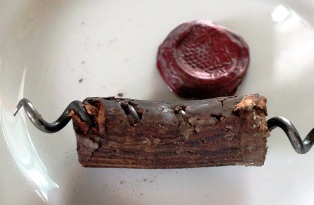
le bouchon de La Tâche est couvert par une petite cire. Sa qualité est superbe

le bouchon de l’Hermitage a eu un curieux parcours

Aubert de Villaine avec Bipin Desai et Bérénice Lurton

la table en fin de soirée

12TH EDITION OF BIPIN DESAI’S WINEMAKER FRIENDS DINNER AT THE RESTAURANT LAURENT samedi, 8 décembre 2012

The annual dinner of Bipin Desai’s winemaker friends dinner takes place at the restaurant Laurent. This is the twelfth edition of an event that I have been organising since 2001 and, since the format is the same as that of my dinners, it will be counted as the 165th edition of my wine-dinners. These twelve events would not have existed without Bipin Desai, a great wine aficionado and an organiser of prestigious dinners.

The friends answering my call are: Didier Depond, Caroline Frey, Richard Geoffroy, Thomas Henriot, Louis Michel Liger-Belair, Bérénice Lurton, Jean-Charles de la Morinière, Jean-Luc Pépin, Sylvain Pitiot, Eric Rousseau and Aubert de Villaine. Unfortunately, the heavy snow falling over a good part of France will prevent us from enjoying the company of Thomas Henriot and, unexpectedly, Richard Geoffroy will not join us either.

At 5pm, I proceed to the opening of the wines. I could just have let the restaurant’s very efficient team of sommeliers do their job but, like a physician delivering a baby, I like to see how all those wines are brought to life. I therefore open all the bottles. The only one that I am slightly concerned about is the 1983 Chambertin, which smells camphorated or chemical. It is likely that this will disappear, but it seems quite persistent.

Many wines have been rebottled and/or recorked at the various domaines. The 1971 La Tâche followed this process in 1996, as did the 1970 Romanée in 1999, the 1985 Corton in 2003, the 1990 Hermitage in 2008. The 1937 Climens also recently went through this process.

I had scheduled, as an interlude in the middle of this concert of six Burgundy red wines, to serve Richard Geoffroy’s magnum of Dom Pérignon. Since he eventually does not take part in this dinner, we agree with Patrick Lair that we will not open it. It will be replaced by the 1978 Clos de Tart which will be paired with the risotto.

Our friends are all on time and we start the apéritif with deep-fried sprats and the 2002 magnum of Champagne Delamotte. This is a beautiful, pleasant to drink blanc de blancs, but will need a couple more years to obtain the strong personality of the 1970 magnum of Champagne Delamotte which is served at the table with the sprats and a very tasty creamy sauce. This second champagne has an extraordinarily assertive nose. In the mouth, it is quite penetrating, and I will use this adjective quite a lot during this dinner. This champagne with a great personality is more than a good surprise; it really is a great champagne.

The menu created by Alain Pégouret and Philippe Bourguignon is as follows: marinated scallops and layers of mushrooms / Lightly smoked pigeon, pommes soufflées Laurent-style / Risotto with white truffle from Alba / Lightly grilled veal kidneys, sautéed wild mushrooms / Stuffed pasta, sauce from a Hare à la royale / Delicate wafers with pears and Sichuan pepper, chestnut cream / Palmier cookies.

The 1988 Corton Charlemagne Bonneau du Martray is extremely elegant and highly delicate. The sweetness of the scallop is paired perfectly with its delicacy, whereas the 1992 Musigny blanc Comte de Vogüé, which is all power and penetration, does not pair so well with the dish, except maybe with the thin slices of mushrooms. These are two very different expressions of Burgundy whites, one being all about elegance and charm, the other being about assertiveness and conviction. The Musigny comes from a fantastic vintage for whites, which is easily confirmed by this wine which calls for a match with stronger dish.

The pigeon is all softness and subtlety. Once can wonder if the Corton Charlemagne could actually have been a good pairing here. But there is a beautiful range of wines to try out. Bipin Desai is annoyed by the fact that the order in which the wines are served to him does not correspond to the order established for the menu. He doesn’t understand why, and wants explanations. Actually, since I moved the Clos de Tart to be paired with the risotto, the wines are not served in the correct order. And then suddenly, a handful of the winemakers, far from staying in the background, attempt a coup d’état and force me to open the Dom Perignon, on the fallacious pretext that Richard Geoffroy would not be happy if it ended up not being served. And just like that, the 1978 Clos de Tart Mommessin is magically back to its original spot in the wine list schedule.

The 1970 Romanée Comte Liger-Belair is the most delicate of the three wines that are served, of great refinement but slightly shorter in the mouth than the other two. It is much more pleasant that the one I drank with Louis-Michel during the impressive vertical flight of 41 vintages of Romanée Liger-Belair that took place in Austria six months ago. The wine pairs well with the pigeon and its divine pommes soufflées.

The 1971 La Tâche Domaine de la Romanée Conti is impressive. It has a profoundly moving nose, and the way it runs its course in your mouth makes you wonder when it will stop. What persistence! It is refinement incarnate. It is the expression of the soul of the Domaine de la Romanée Conti, which I was able to identify during a blind tasting of the same wine a couple of weeks ago. Today’s wine has even more tension than the previous one.

The 1978 Clos de Tart Mommessin, for which I had discovered that the cap had been cut off before I received the bottle, is extremely rich in complex aromas. In the mouth, it is long, and finishes on this typical Burgundy roughness which I like a lot. The La Tâche also has this beautiful roughness, but less intensely so, and I find the Clos de Tart’s more appropriate to the dish, because the La Tâche is such a gift that it could be drunk by itself. These three wines have a lot in common and I am glad that I grouped them together.

The 1982 Champagne Dom Pérignon Rosé Œnothèque magnum arrived in my cellar in a splendid black-laquered box, with a metallic label that reads: « Rosé Vintage 1982 / Chef de cave’s Private Cellar ». Under a flashy, purple-pink label, one can read under the name of the champagne, « Altum Villare ». It is the first time that I have seen Hautvillers spelt this way. After these musings about the packaging, let’s tackle what is inside: the pink colour is unusually intense and surprisingly young. The aromas are intense. It is a penetrating wine, and the pairing with the risotto is extremely sensual. It is one of the two most brilliant pairings of the dinner.

Of course, this champagne cannot leave one indifferent. It is to this prestigious champagne house’s credit to have imposed codes luxury and lust which affect the emotion that one experiences. It is indeed pleasant, but one cannot but notice that the message is quite linear, even if the length is there. This impression is modified the next day, when I drink what is left in the bottle; the bubbles have dissipated, and I can taste the nobility of the base wine of this great champagne, which has become more amber-coloured than pink.

I would like to thank the group of rebellious winemakers who forced me to steal the Dom Pérignon.

The 1985 Corton Bouchard Père & Fils is the most compact and the simplest of the three Burgundy wines that are paired with the veal kidney. I am pretty sure that it would have been better if Thomas had been able to join us.

With Éric Rousseau, we observe that the attack on the palate of the 1983 Chambertin Clos de Bèze Domaine Armand Rousseau is not completely frank, even if it is quite close to what could have been expected from this wine. And this wine’s wounds are healed by the extremely tasty dish with which it is paired, all the more so since these wounds are, in the end, superficial. It is a beautiful Chambertin, full of life, but it is not the greatest that I have had from that archetypal domaine.

The 1991 Musigny Vieilles Vignes rouge Comte de Vogüé is as penetrating in its red version as it can be in white. The 1991 vintage is indeed superb at the moment. This powerful, sharp wine is a good example of a triumphant Burgundy. It pairs easily with the dish that it is the only one to tame, while the two other wines are simply trying to domesticate it.

I have long discussions with Caroline Frey, who sits next to me at the table; we exchange views on the various vintages of the Hermitage La Chapelle. And we easily agree that the 1990 Hermitage La Chapelle Paul Jaboulet Aîné is among the very best vintages of this wine. It is a square wine, coherent, apparently easily readable, which does not preclude a very well integrated complexity. The length is beautiful, finishing like a whiplash, and the pairing with the stuffed pasta, especially with the sauce of the hare “à la Royale”, is pure gluttony. This is a very beautiful wine. And the pairing is one of the most seductive.

The 1937 Château Climens is of an almost black colour. It has the deepest colour of all the 1937 I have tasted so far. Its aromas are extremely seductive but, more importantly, of supreme purity. And what is interesting about the Sauternes of this level is that you cannot wonder if it could be better, because it is indeed perfect, deep, very long, providing you with infinite pleasure.

The meal ends with my wine contribution, a 1912 Bastardino Setubal Fonseca. I need to explain why I brought this wine. Two days after this dinner, my mother, had she still been alive, would have been 100 years old. Since I have no family meal scheduled to celebrate this anniversary, I thought that to drink this 100-year-old wine with winemakers that I appreciate, some of who even being friends of mine, would be a beautiful way to pay tribute to my mother. My friends note this particular attention, especially the two young women present tonight, who are mothers also.

I am pleased to realise that everyone praises this extraordinary wine. When I opened it, and smelled it, I knew it was going to be a great wine. And it exceeds my expectations. The nose is penetrating, smelling of prunes and sweets. In the mouth, it is so much more than a port. For it tastes of strong coffee, even of tar. It has the strength of a Pedro Ximenez and the delicacy of a Port. Bipin Desai congratulates me on my choice, which is no small feat. This is an intensely, almost infinitely pleasurable wine.

The tradition in those dinners is not to vote, since the winemakers take part in them. For memory, I will give points to my four favourite wines, which correspond to my taste:1 – 1912 Bastardino Setubal Fonseca, 2 – 1937 Château Climens, 3 – 1971 La Tâche Domaine de la Romanée Conti and tied for fourth place:1988 Corton Charlemagne Bonneau du Martray magnum and 1970 Champagne Delamotte magnum. This is not a qualitative judgment, but a judgment based on personal taste.

The mood of this dinner is extremely friendly, and the guests share great friendships. Everyone is happy to be present. Bipin tries to force everyone to present and comment his or her wine. The first winemakers were happy to oblige, but spontaneous conversations progressively take over.

During dinners such as these, one is loath to bring it to an end. I had brought one more trick up my sleeve: a 1934 Château Caillou Haut-Barsac which, while I was reorganising my cellars, had caught my eye because of its low level but pristine and beautiful colour. I suggest opening it with those of us still there, in the lounge at the entrance of the restaurant. One should have captured on film the expression on Bérénice Lurton’s face when she put her nose to the glass! It is quite obvious that if that wine had been opened at the same time as the others, the smell would have long since dissipated. But it is quite present, yet vanishing rather quickly. This golden Barsac, infinitely more clear than the Climens, could not keep us entertained for long, so Didier Depond offers a 1996 Champagne Salon, made even more magnificent for being served after the Sauternes, marking in a remarkable way, with opulence and maturity, an intense moment of friendship.

We have exchanged suggestions for celebrating in a fitting way the 40th birthday of one of the guests, and the 50th of another. We are obviously delighted with the prospect of seeing one another again to share such intense moments.

Un autre Clos Saint-Denis au restaurant Guy Savoy vendredi, 7 décembre 2012

Il se confirmera une fois de plus que je ne sais jamais dire non. Lorsque Bipin Desai est arrivé à Paris, il m’appelle pour confirmer notre dîner au Bristol, la veille du dîner de vignerons, et il me dit : "je dois déjeuner demain au restaurant Guy Savoy. Mon convive m’a fait faux bond. Voulez-vous venir ?". Contre toute raison, j’ai dit oui. Vive la déraison !

Arrivé en avance, j’étudie la carte des vins. Il y a quelques belles niches, mais le fond de cave est dans un Himalaya tarifaire. Un vin qui se vendait 600 francs en primeurs il y a dix ans se trouve à 5.600 €. Même Serguei Bubka n’aurait jamais demandé que l’on mette la barre à une telle hauteur. Il est vrai que j’ai choisi le pire exemple. Bipin arrive et il prend les choses en main sans me demander. Il décide même du menu.

Ce sera : saumon figé sur glace, consommé brûlant, perles de citron / colors of caviar / soupe d’artichaut à la truffe noire, brioche feuilletée aux champignons et truffes / bar en écailles grillées aux épices douces.

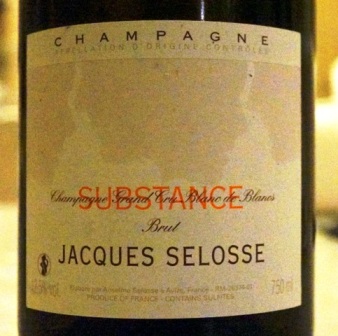
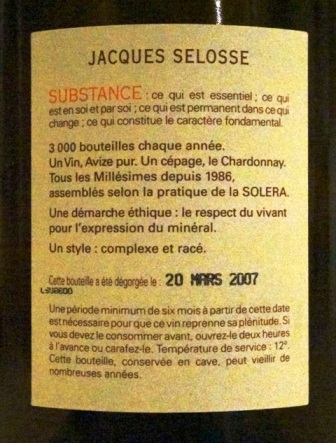
Caroline Frey participera au dîner ce soir aussi Bipin commande un Champagne Billecart-Salmon Grande Cuvée Brut 1996. Le champagne a une extrême personnalité et une longueur remarquable. Très typé, profond, il est remarquable en tout point. C’est une belle découverte pour moi, car je ne suis pas très familier des champagnes de cette maison. Il y a un fumé racé, un peu comme cemlui que l’on trouve dans Substance de Selosse.

L’amuse-buche est un bouillon chaud très frais en bouche avec ce que je crois reconnaître comme de la citronnelle et du citron vert. Sous une tasse yin et yang, car elle a toujours une moitié retournée, il y a une petite bouchée dont le fond de betterave rouge est d’une rare délicatesse.

Un chef qui s’appelle Solivérès mais n’est pas parent avec le chef du Taillevent vient préparer devant nous le saumon cru. Il est gelé sur glace, ce qui cuit la face qui est au contact, on ajoute des ingrédients dont des perles de citron rose et des carrés de cerfeuil, et l’on couvre le tout d’un bouillon chaud. Ce plat est d’une créativité extrême, d’inspiration japonisante. Le champagne est un bon compagnon de ce plat. J’essaie avec le rouge et, à condition de savoir y faire, des ricochets gustatifs se créent entre le plat et le vin.

Le décor est planté : Guy Savoy, c’est de la création pure.

Le vin que Bipin a choisi sur la suggestion provocatrice de Sylvain, c’est le Clos Saint-Denis domaine Dujac 1998. Provocatrice, car Sylvain pense que le 1996 que nous avons bu hier n’est pas parfait, alors que le 1998 le serait. Voilà le thème d’un beau match. Vite, il faut vérifier.

Lorsque le vin est servi, on sent que le vin servi par Marco dégageait des arômes infiniment plus puissants que celui servi par Sylvain. Sylvain ouvre à l’espagnolette alors que Marco ouvrait au grand air. La puissance olfactive était hier. La suggestion est aujourd’hui. C’est fou ce que les deux parfums ont en commun.

En bouche le 1998 est plus rond, plus consensuel que le 1996, plus gourmand aussi. Mais il a moins de tension et de longueur. Alors, que dire ? Ce sont deux styles différents. Pour le plaisir pur et immédiat, c’est le 1998 qui gagne. Sur la personnalité et la profondeur, c’est le 1996 qui gagne. Il y en a pour tous les goûts.

Bipin s’étonne que le "colors of caviar" me soit inconnu. C’est peut-être la barrière tarifaire qui n’est pas la même pour lui et pour moi. Le plat est délicieux et le caviar prend une longueur extraordinaire avec son sabayon au caviar. La mâche est un régal et le caviar a une longueur en bouche irréelle.

Le champagne n’est pas le meilleur ami de ce plat. C’est un Dom Pérignon qu’il faudrait pour le dompter.

La soupe d’artichaut, plat emblématique, est superbe. Le Dujac réagit à la perfection, surtout avec la brioche. Le bar est délicieux mais la vanille est un peu trop prononcée pour s’acoquiner avec le champagne ou le vin.

Que dire de ce repas ? D’abord que c’est un excès de folie quand on sait ce qui nous attend ce soir. Ensuite que Guy Savoy est le chef le plus créatif de tout Paris. Que ceci ne me fâche pas avec ses pairs, car je suis dans l’enthousiasme. Le service est de haute précision, Sylvain a été à nos côtés avec talent. J’ai été fou d’accepter ce déjeuner. Mais que je suis heureux !

le chef montre la préparation du saumon à une table voisine